Friday, May 8, 2015

"America, Where Are You Now...."- Steppenwolf’s The Monster-Take Three


A YouTube Film Clip Of Steppenwolf Performing Monster. Ah, Those Were The Days

From The Pen Of Frank Jackman

Steppenwolf: 16 Greatest Hits, Steppenwolf, Digital Sound, 1990

America where are you now?

Don't you care about your sons and daughters?

Don't you know we need you now

We can't fight alone against the monster

Chorus Line From The Monster

The heavy rock band Steppenwolf (maybe acid rock is better signifying that the band started in the American dream gone awry 1960s night when the likes of the Jefferson Airplane, The Doors, The Byrds and groups like the transformed from muppet Beatles and Stones held forth, rather than in the ebb-tide 1970s when the harder sounds of groups like Aerosmith and Black Sabbath were  needed to drown out the fact that  we were in decisive retreat),  one of many that was thrown up by the musical counter-culture of the mid to late 1960's was a cut above and apart from some of the others due to their scorching lyrics provided mainly, but not solely, by gravelly-voiced lead singer John Kay. That musical counter-culture not only put a premium on band-written materials, as against the old Tin Pan Alley somebody wrote the lyrics, somebody else sang the song division before Bob Dylan and the Beatles made singer-songwriters fashionable) but also was a serious reaction to the vanilla-ization of rock and popular music in the earlier part of the decade that drove many of us from the AM radio dials and into “exotic” stuff like electric blues (country too, come to think of it) and the various strands of folk music.    

Some bands played, consciously played, to the “drop out” notion popular at the times. “Drop out” of rat-race bourgeois society and its money imperative, its “white picket fence with little white house attached” visions. That is the place where many of the young, the post-World War II baby-boomer young, now sadly older, had grown up and were in the process of repudiating for a grander vision of the world, the “world turned upside down” as an old time British folk tune had it. Drop out and create a niche somewhere (a commune maybe out away from the rat-race places which did spring up in the likes of Taos, Oregon, and the hills of old Vermont which if you care to see what hellish thing happened to that old vision once the seers got older you can go to and witness first hand these days), so some physical somewhere perhaps but certainly some other mental somewhere and the music reflected that disenchantment. That mental somewhere involved liberal use of drugs to induce, well, who knows what it induced but it felt like a new state of consciousness so make of that what you will. The drugs used, in retrospect, to make you less “uptight” not a bad thing then, or today. The whole underlying premise though whether well thought out or not was that music, the music of the shamans of the youth tribe, was the revolution. An idea that for a short while before all hell broke loose with the criminal antics of Lyndon Johnson and one Richard M. Nixon, all hell broke loose with Tet, with May 1968, with Chicago 1968, with the “days of rage,” with Altamont and with a hundred other lesser downers I subscribed to. Before those events and a draft notice made me get “religion” on the need for “in-their-face” political struggle.        

Musically much of that stuff was ephemeral, merely background music, and has not survived (except in lonely YouTube cyberspace). Yeah, Neal Young, the Airplane, the Doors, the Byrds still sound good but a lot of it is wha-wha music now you know Ten Years After, a lot of Rod Stewart, even the acid-etched albums by the Beatles and Stones, it is no wonder that the latter do not have any tunes from Their Satanic Majesties on their playlists).   Others, flash pan “music is the revolution,” period exclamation point, end of conversation bands assumed a few pithy lyrics would carry the day and dirty old bourgeois society would run and hide in horror leaving the field open, open for, uh, us. That music too, except for gems like The Ballad Of Easy Rider, is safely ensconced in vast cyberspace.

Steppenwolf was different, was political from the get-go taking on the deadliness of bourgeois culture, worse the chewing up of their young in unwinnable wars with no apologies or second thoughts, the pusher man, the draft resister and lots of other subjects (and a few traditional songs too about the love that got away, things like that).  Not all the lyrics worked, then or now. (See below for some that do). Not all the words are now some forty plus years later memorable. After all every song is written with some current audience in mind, and notions of immortality as the fate of most songs are displaced. Certainly some of the less political lyrics seem entirely forgettable. As does some of the heavy decibel rock sound that seems to wander at times like, as was the case more often than not, and more often that we, deep in some a then hermetic drug thrall, would have acknowledged, or worried about. But know this- when you think today about trying to escape from the rat-race of daily living then you have an enduring anthem Born To Be Wild that still stirs the young (and not so young). If Bob Dylan's Like A Rolling Stone was one musical pillar of the youth revolt of the 1960's then Born To Be Wild was the other.

And if you needed (or need) a quick history lesson about the nature of American society in the 1960's, what it was doing to its young, where it had been and where it was heading (and seemingly still is as we finish up the Afghan wars and the war signals for deep intervention into the Syria civil war or another war in Iraq get louder, or both are beating the war drums fiercely) then the trilogy under the title "The Monster" (the chorus which I have posted above and lyrics below) said it all.

Then there were songs like The Pusher Man a song that could be usefully used as an argument in favor of decriminalization of drugs today and get our people the hell out of jail and moving on with their lives and others then more topical songs like Draft Resister to fill out their playlist. The group did not have the staying power of others like The Rolling Stones but if you want to know, approximately, what it was like for rock groups to seriously put rock and roll and a hard political edge together give a listen to the group sometime.

Words and music by John Kay, Jerry Edmonton, Nick St. Nicholas and Larry Byrom

(Monster)

Once the religious, the hunted and weary

Chasing the promise of freedom and hope

Came to this country to build a new vision

Far from the reaches of kingdom and pope

Like good Christians, some would burn the witches

Later some got slaves to gather riches

But still from near and far to seek America

They came by thousands to court the wild

And she just patiently smiled and bore a child

To be their spirit and guiding light

And once the ties with the crown had been broken

Westward in saddle and wagon it went

And 'til the railroad linked ocean to ocean

Many the lives which had come to an end

While we bullied, stole and bought our a homeland

We began the slaughter of the red man

But still from near and far to seek America

They came by thousands to court the wild

And she just patiently smiled and bore a child

To be their spirit and guiding light

The blue and grey they stomped it

They kicked it just like a dog

And when the war over
They stuffed it just like a hog
And though the past has it's share of injustice
Kind was the spirit in many a way
But it's protectors and friends have been sleeping
Now it's a monster and will not obey
(Suicide)
The spirit was freedom and justice
And it's keepers seem generous and kind
It's leaders were supposed to serve the country
But now they won't pay it no mind
'Cause the people grew fat and got lazy
And now their vote is a meaningless joke
They babble about law and order
But it's all just an echo of what they've been told
Yeah, there's a monster on the loose
It's got our heads into a noose
And it just sits there watchin'
Our cities have turned into jungles
And corruption is stranglin' the land
The police force is watching the people
And the people just can't understand
We don't know how to mind our own business
'Cause the whole worlds got to be just like us
Now we are fighting a war over there
No matter who's the winner
We can't pay the cost
'Cause there's a monster on the loose
It's got our heads into a noose
And it just sits there watching
(America)
America where are you now?
Don't you care about your sons and daughters?
Don't you know we need you now
We can't fight alone against the monster
© Copyright MCA Music (BMI)
All rights for the USA controlled and administered by
MCA Corporation of America, INC

--Used with permission--
Born To Be Wild

Words and music by Mars Bonfire
Get your motor runnin'
Head out on the highway
Lookin' for adventure
And whatever comes our way
Yeah Darlin' go make it happen
Take the world in a love embrace
Fire all of your guns at once
And explode into space
I like smoke and lightning
Heavy metal thunder
Racin' with the wind
And the feelin' that I'm under
Yeah Darlin' go make it happen
Take the world in a love embrace
Fire all of your guns at once
And explode into space
Like a true nature's child
We were born, born to be wild
We can climb so high
I never wanna die
Born to be wild
Born to be wild
© MCA Music (BMI)
All rights for the USA controlled and administered by
MCA Corporation of America, INC

--Used with permission--
THE PUSHER
From the 1968 release "Steppenwolf"
Words and music by Hoyt Axton
You know I've smoked a lot of grass
O' Lord, I've popped a lot of pills
But I never touched nothin'
That my spirit could kill
You know, I've seen a lot of people walkin' 'round
With tombstones in their eyes
But the pusher don't care
Ah, if you live or if you die
God damn, The Pusher
God damn, I say The Pusher
I said God damn, God damn The Pusher man
You know the dealer, the dealer is a man
With the love grass in his hand
Oh but the pusher is a monster
Good God, he's not a natural man
The dealer for a nickel
Lord, will sell you lots of sweet dreams
Ah, but the pusher ruin your body
Lord, he'll leave your, he'll leave your mind to scream
God damn, The Pusher
God damn, God damn the Pusher
I said God damn, God, God damn The Pusher man
Well, now if I were the president of this land
You know, I'd declare total war on The Pusher man
I'd cut him if he stands, and I'd shoot him if he'd run
Yes I'd kill him with my Bible and my razor and my gun
God damn The Pusher
Gad damn The Pusher
I said God damn, God damn The Pusher man\
© Irving Music Inc. (BMI)
--Used with permission--

In Honor Of The 144th Anniversary Of The Paris Commune-All Honor To The Communards


Some events can be honorably commemorated every five, ten, twenty-five years or so like the French Revolution. Other events, and here I include the uprising which went on to form the Paris Commune, established on March 18, 1871, the first time the working class as such took power if only for a short time and only in one city, need to be honorably commemorated yearly. We can, those of us in what now is a remnant who still believe in the old time verities and who still fight for such things as working-class led revolution, socialism and a fairer shake in the appropriation of the world’s good, still draw lessons from that experience. (Sadly the bulk of the world’s working classes have either dismissed socialist solutions out of hand these days when the situation in places like Greece, Spain and lots of East Europe countries cry out for such solutions or the links to such previous socialist ideas has become so attenuated that the ideas are not even in play.) Draw lessons that might help us in the one-sided fight against the human logjam that the international capitalist system, complete with its imperial coterie at the top, has bequeathed us almost a century and one half later and that is ripe, no overripe to be replaced by a more human scale way of producing the good of this wicked world. Hence the commemoration in this the 144th anniversary year.

Some “talking head” commentator in the lead-up to the celebration of the French Revolution on July 14th, brought in for the occasion I presume, I heard recently on a television talk show reflecting the same sentiment I have heard elsewhere from other academic and ideological sources, had declared the French Revolution dead. By that he meant that the lessons to be learned from that experience has been exhausted, that in the post-modern world that event over two hundred years ago had become passĂ©, passĂ© in the whirlwind of the American century now in full bloom (an American century that we thought had run its course in the wake of the Vietnam defeat but drew new life, if only by default, with the demise of the Soviet Union and its sphere of influence). While not arguing here with the validity of that statement on the French revolution, a classic bourgeois revolution when the bourgeoisie was a progressive movement in human history and actually drew some connections between the Enlightenment philosophies that gave it inspiration and the tasks of the risen people, there are still lessons to be drawn from the Commune. If for no other reason than we still await that international working class society that such luminaries as the communist Karl Marx expanded upon in the 19th century.          

Obviously like the subsequent Russian revolutions of 1905 and 1917, the Chinese revolutions of the 1920s and 1940s, the Vietnamese which took up a great deal of the middle third of the twentieth century, and others the Paris Commune was formed in the crucible of war, or threat of war. Karl Marx, among others, the great Russian revolutionary Leon Trotsky for one, had noted that war is the mother of revolution and the defeat of the French armies and the virtual occupation by the victorious German armies around Paris certainly conformed to that idea that the then current government was in disarray and the social fabric after a near starvation situation required more. Classic pre-revolutionary phenomena. Moreover the Commune had been thrust upon the working masses of Paris by the usual treachery of the bourgeois government thrown up after Louis Bonaparte lost control. That had not been the most promising start to any new society. But you work with what you have to work with and defend as Marx, the First International, and precious few others did the best you can despite the odds, and the disarray. So no hard and fast blueprint on revolutionary upheavals could come ready-made from that experience.  

To my mind, and this is influenced by the subsequent Russian revolutions of 1905 and February and October 1917, no question the decisive problem of the Commune was what later became to be known as the crisis of revolutionary leadership. Of course they should have expropriated the banks and centered their efforts around strengthening the authority of the Central Committee of the National   Guard and not let lots of windbags and weirdos have their say based on barely deserved reputations but the result of those failures were that no serious party or parties were available to take charge and create a strong government to defend against the Thiers counter-attack from Versailles. (Also no appeals to other communes to come to the defense of Paris and no work among the Versailles soldiers.) It is problematic whether given the small weight of the industrial proletariat (masses factory workers like at Putilov in Petrograd rather than the small shop artisans and workman which dominated the Paris landscape), the lack of weaponry to fend off both the Germans and the Versailles armies, and food supply whether even if such a revolutionary leadership had existed that the Commune could have continued to exist in such isolated circumstances but the contours for the future of working class revolution would have been much different. The central and critical role of a revolutionary leadership which got fudged around in places like Germany where the working class party for all intents and purposes was barely a parliamentary party in the struggle against capitalism would have been clarified and at least a few revolutions, including those in Germany between 1918 and 1924. That is the bitter lesson we still before us today.   

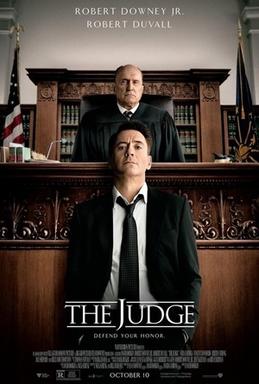
Family Secrets-Robert Downey, Jr.’s The Judge


DVD Review

From The Pen Of Frank Jackman

The Judge, starring Robert Downey,Jr., Robert Duvall, 2014  

A couple of things that I learned from my cranky old Irish Catholic grandfather, cranky once he had a stroke and had to be invalided out of Carver Fire Department that he dearly loved, that came to my mind when watching the film under review, Robert Downey, Jr.’s The Judge. First, my grandfather, or rather my grandfather and his people had been kicked out of Irish from nothing more than they had run out of luck. Run out of luck in that case being when the absentee Anglo-Irish landlord owner of the midget farm they were trying to survive on decided to call in their debts and not having any money when they resisted foreclosure the landlord went to Her Majesty’s court (this was back in the 19th century during benighted Queen Victoria’s time) about it the judge dismissed their concerns out of hand. Adding insult to injury that same judge when my grandfather and his kindred physically resisted eviction and wound up in gaol (jail) for some serious assault and battery charges the judge ordered them out of the country on penalty of a severe sentence. So the first lesson in life he told me was that while justice was blind, she was blind to injustice more often than not. I would translate that wisdom later to something the sardonic comedy Lenny Bruce, who had had a fistful of run-ins with Lady Justice, said after on such run-in-“in the halls of justice, the only justice is in the halls.” After a lifetime of observations and my own run-ins that still seems about right. The second thing the old man told me, and that may be reflected from the first idea, was an ageless adage which seemed entirely right in our claustrophobic old heavily Irish working class neighborhood, especially when the “shawlie social network” was on the prowl –“don’t air the family’s dirty linen in public.” Sound familiar in your family history?          

Those two ideas come together in this film where a kid who made good as a big time, big city lawyer Hank (played by Robert Downey, Jr. of Ironman one million or whatever number have been produced and late of the now old time “brat pack”) is called back home to his estranged family after his mother died. While there his father, Judge Palmer, the longtime local district judge (played by seemingly ancient Robert Duvall which reminded me that to has been many moons since he first “loved the smell of napalm” in Apocalypse Now early in his career) who had meted out justice good and bad got into trouble, legal trouble, criminal trouble. The trouble was that a man whom the judge had originally lightly sentenced on an assault case against his girlfriend when released from that sentence went back and killed her and on the second trial the judge had thrown the book at him. That case had weighed heavily on his mind and so one night after the judge had buried his own wife he ran into that killer in a convenience store, followed him out and then ran over him. Simply justice.           

Well not so simple since the judge believed that he had committed no crime, did not remember the event pleading duress, approaching senility, and a losing bout with cancer. And that is where long estranged Hank, the big time, big city hardball lawyer had to come in and save the day by defending his dad in court. Naturally there is much friction before the trial, generational friction, estrangement friction, that above-mentioned not airing dirty linen in public, and the hard fact that only grudgingly did the judge offer information to help defend himself. Well, the long and short of it was that the judge was found not guilty on the murder charge but got a four year sentence on manslaughter charges. That sentence was later commuted as his health worsened and he died with Hank at his side at the end of the film. That whole episode got Hank thinking though about how much he was still a small town boy. And got me thinking about those two things my grandfather told me.   

Thursday, May 7, 2015

Looking For The Heart Of Saturday Night, Christ The Heart Of Any Night-The Songs of Tom Waits-Take Five


From The Pen Of The Late Peter Paul Markin (who feel by the wayside looking too hard for his own Saturday night-RIP, Brother)     


A YouTube film clip of Tom Waits performing Looking For The Heart Of Saturday Night

If you, as I do, every once in a while, every once in a while when the norms of the today’s bourgeois-driven push, you know grab goods, grab the dough, grab some shelter from the storm, the storm that these days comes down like a hard rain falling, to get ahead in this wicked old world have to step back and take stock, maybe listen to some words of wisdom, or words that help explain how you got into that mess then you have come to the right address. Okay, okay on that bourgeois-driven today thing maybe going back further to Calvinist Puritan avenging angels times with John Winthrop and the Mayflower boys but you best ask Max Weber about that since he tried to hook the boys to the wheel of the capitalist profit, profit for you at the expense of me, system with the new dispensation coming out like hellfire from Geneva and points east and west. But you get the point.

If all that to-ing and fro-ing (nice touch, right) leaves you wondering where you fell off the edge, that edge city (edge city where you danced around with all the conventions of the days, danced around the get ahead world with blinkers on) where big cloud outrageous youthful dreams were dreamt and you took risks, damn did you take risks, thought nothing of that fact either, landed on your ass more than a few time but just picked yourself up and dusted your knees off and done stick around and listen up. Yeah, so if you are wondering,  have been pushed off your saintly wheels, yeah, pushed off your sainted wheels, and gotten yourself  into some angst-ridden despair about where you went off that angel-driven dream of your youth, now faded, tattered, and half- forgotten(but only half, only half, the wisp of the dream, the eternal peace dream, the figuring out how to contain that fire, that wanting habits fire in your belly dream sisters and brothers), and need some solace (need some way to stop the fret counting the coffee cups that while away your life), need to reach back to roots (reach back to roots that the 1950s golden age of America kicked the ass out of all the old to make us crave oneness, to forget about those old immigrant customs, made us forget that simple country blues, mountain breeze songs, cowboy ballads, Tex-Mex, Cajun Saturday night that made the people feel good times), reach back to the primeval forest maybe, put the headphones on some Tom Waits platter (oops, CD, YouTube selection, etc.- “platter” refers to a, ah, record, vinyl, put on a record player, hell, look it up in Wikipedia, okay) and remember what it was like when men and women sang just to sing the truth of what they saw and heard.

If the norms of don’t rock the boat (not in these uncertain times like any times in human existence were certain, damn, there was always something coming up from the first man-eating beast to the human race-eating nuclear bombs), the norms of keep your head down (that’s right brother, that’s right sister keep looking down, no left or rights for your placid world), keeping your head down being an art form now with appropriate ritual (that ritual looking more and more like the firing squad that took old Juan Romero’s life when he did bad those days out in Utah country), and excuses, because, well, because you don’t want to wind up like them (and fill in the blank of the “them,” usually dark, very dark like some deathless, starless night disturbing your sleep, begging, I swear, begging you to put that gun in full view on the table,   speaking some unknown language, maybe A-rab, maybe gibberish for all you know, moving furtively and stealthily against your good night) drive you crazy and you need, desperately need, to listen to those ancient drum beats, those primeval forest leave droppings maybe, that old time embedded DNA coda long lost to, oh yes, civilization, to some civilizing mission (think of that Mayflower gang or ask Max Weber), that spoke of the better angels of your nature when those angel dreams, half-forgotten but only half remember, ruled your days. Turn up the volume up another notch or two on that Tom Waits selection, maybe Jersey Girl or Brother, Can You Spare A Dime (can you?), Hold On, or Gunn Street Girl.

If you need to hear things, just to sort things out, just to recapture that angel-edge, recapture the time when you did no fear, you and everybody else’s sisters and brothers, that thing you build and from which you now should run, recapture that child-like wonder that made you come alive, made you think about from whence you came and how a turn, a slight turn this way or that, could have landed you on the wrong side. And I have the list of brothers and sisters who took that wrong road, when he wound up face down in some dusty back road arroyo down Sonora way when the deal went bust or when she, maybe a little kinky for all I know, decided that she would try a needle and a spoon, I swear, or she swore just for kicks and she wound up in Madame LaRue’s whorehouse working that bed to perdition. Hey, sweet dreams baby I tried to tell you when you play with fire, watch out.

So if you need to sort things out about boozers (and about titanic booze-crazed struggles in barrooms, on beaches, in the back seats of cars, lost in the mist of time down some crazed midnight, hell, four in the morning, penniless, cab fare-less night), losers (those who have lost their way, gotten it taken away from them like some maiden virginity), those who never had anything but lost, not those who never had a way to be lost, dopesters inhaling, in solitary hotel rooms among junkie brethren, gathering a needle and spoon in some subterranean dank cellar, down in dark alleys jack-rolling some poor drunk stiff out of his room rent for kicks (how uncool to drink low-shelf whiskeys or rotgut wines hell the guy deserved to be rolled, should feel lucky he got away with just a flipped wallet), out in nighttime canyons flame blaring off the walls, the seven seas of chemical dust, mainly blotter, maybe peyote (the sweet dreams of ten million years of ghost warriors working the layered canyon walls flickering against the campfire flames and the sight of two modern warriors ready to do justice for the white man's greed until the flames flickered out and they fell in a heap exhausted) if that earth angel connection comes through (Aunt Sally, always, some Aunt Sally coming up the stairs to ease the pain, to make one feel, no, not feel, better than any AMA doctor without a prescription pad), creating visions of long lost tribes trying, trying like hell, to get “connected,” connected in the campfire shadow night, hipsters (all dressed in black, mary mack dressed in black, speeding, speaking be-bop this and be-bop that to stay in fashion, hustling, always hustle, maybe pimping some street urchin, maybe cracking some guy’s head to create a “new world order” of the malignant, always moving), fallen sisters (sisters of mercy, sisters who need mercy, sisters who were mercifully made fallen in some mad dash night, merciful sister feed me, feed me good), midnight sifters (lifting in no particular order hubcaps, tires, wrenches, jacks, an occasional gem, some cheap jewelry in wrong neighborhoods, some paintings or whatever is not saleable left in some sneak back alley, it is the sifting that counts), grifters (hey, buddy watch this, now you see it, now you don’t, now you don’t see your long gone John dough, and Mister three card Monte long gone too ), drifters (here today gone tomorrow with or without dough, to Winnemucca, Ogden, Fresno, Frisco town, name your town, name your poison and the great big blue seas washing you clean out into the Japans ), the drift-less (cramped into one room hovels, shelters, seedy rooming houses afraid to stay in-doors or to go outside, afraid of the “them” too, afraid to be washed clean, angel clean), and small-time grafters (the ten-percent guys, failed insurance men, repo artists, bounty hunters, press agents, personal trainers, need I go on). You know where to look, right.

If you need to be refreshed on the subject of hoboes, bums, tramps (and remind me sometime to draw the distinction, the very real and acknowledged distinction between those three afore –mentioned classes of brethren once told to me by a forlorn grand master hobo, a guy down on his luck moving downward to bum), out in the railroad jungles in some Los Angeles ravine, some Gallup, New Mexico Southern Pacific  trestle (the old SP the only way to travel out west if you want to get west), some Hoboken broken down pier (ha, shades of the last page of Jack Kerouac’s classic), the fallen (fallen outside the gates of Eden, or, hell, inside too), those who want to fall (and let god figure out who made who fall, okay), Spanish Johnnies (slicked back black hair, tee shirt, shiv, cigarette butt hanging from a parted lip, belt buckle ready for action, leering, leering at that girl over there, some gringa for a change of pace, maybe your girl but watch out for that shiv, the bastard), stale cigarette butts (from Spanish Johnnie and all the johnnies, Camels, Luckies, no filters, no way), whiskey-soaked barroom floors (and whiskey-soaked drunks to mop the damn place up, for drinks and donuts, maybe just for the drinks), loners (jesus, books, big academic books with great pedigrees could be written on that subject so let’s just pass by), the lonely (ditto loners), sad sacks (kindred, one hundred times kindred to the loners and the lonely but not worthy of study, academic study anyway), the sad (encompassing all of the above) and others at the margins of society, the whole fellahin world, then Tom Waits is your stop.


Tom Waits is, frankly, an acquired taste, one listen will not do, one song will not do, but listen to a whole record (CD okay) and you won’t want to turn the thing off, high praise in anyone’s book, so a taste well worth acquiring as he storms heaven in words, in thought-out words, in cribbed, cramped, crumbled words, to express the pain, angst and anguish of modern living, yes, modern living.

See he ain’t looking for saints out there, out on the American mean streets he has pawed, maybe doesn’t believe in saints for all I know, but is out looking for busted black-hearted angels all dressed in some slinky silk thing to make man, a high-shelf whiskey man that night go off his moorings feeding her drinks and she a sponge (and who left him short one night in some unnamed, maybe nameless, gin mill when she split, after she split with the bartender who watered her drinks, hell, the thing was sweet all she needed to when he leaned into her was grab his sorry ass and get the damn wallet). Looking too, a child of the pin-up playboy 1950s, for girls with Monroe hips (hip swaying wickedly in the dead air night, and enflaming desire, hell lust, getting kicked out of proper small town hells by descendants of those aforementioned Mayflower boys promising the world for one forbidden night), got real, and got left for dead with cigar wrapping rings. Yeah, looking for the desperate out there who went off the righteous path and wound up too young face down in some forsaken woods who said she needed to hold on to something, and for all the misbegotten. 

Tom Waits gives voice in song, a big task, to the kind of characters that peopled Nelson Algren’s novels (The Last Carousel, Neon Wilderness, Walk on the Wild Side, and The Man with the Golden Arm). The, frankly, white trash Okie/Arkie Dove Linkhorns of the world who had to keep moving just for the sake of moving something in the DNA driving that whirlwind, genetically broken before they begin, broken before they hit these shores (their forbears thrown out of Europe for venal crimes and lusts, pig-stealing, deer-pouching, working the commons without a license, highwaymen, ancient jack-rollers, the flotsam and jetsam of the old world, damn them, the master-less men and women, ask old Max about them too), having been chased out, cast out of Europe, or some such place. In short, the people who do not make revolutions, those revolutions we keep hearing and reading about, the wretched of the earth and their kin, far from it, but those who surely, and desperately could use one. If you want to hear about those desperate brethren then here is your stop as well.

If, additionally, you need a primordial grizzled gravelly voice to attune your ear to the scratchy earth and occasional dissonant instrumentation to round out the picture go no further. Hey, let’s leave it at this- if you need someone who “feels your pain” for his characters you are home. Keep looking for the heart of Saturday night, Brother, keep looking.


In The Days When Capitalism Held Wonder In The World-With The Dutch Masters In Mind


A while back, not too long ago, a few months at most, I was thinking about when I was a kid growing up in the reds scare Cold War 1950s, a time when due to international politics one manifestation of the struggle for supremacy was the race to space, the race to see who could claim to get there first in a manned object and stake a claim. The way that translated to a kid, this kid, but certainly many others as well was to direct me, us, to the stars and to stare and wonder, wonder what the heck was out there, and whether what was out there was dangerous to Mother Earth or friendly. Maybe today such efforts are directed toward the earth and creating technology commiserate with our seemingly endless need to look at electronic gadgetry but then the heavens held our gaze and we judged those who reached for the stars as the vanguard, as the way forward. And it was not just kids either as my old friend Sam Lowell reminded me but kids, kids I knew anyway way seemed to get an extra jolt out of the idea of being kings (and queens but precious few girls shared the vision as far as Sam and I recall and maybe that is why we were “outcasts” in late elementary school and junior high when they were dreaming of sock hops and “cool” guys.  Sam can testify to that unsuccessful part since he almost became a victim of the “collateral damage” of the quest for the stars. After several attempts with anything from balsa wood models glided along a wire flight path between two poles to welded soup cans and a funnel filled with odd-ball chemicals (hey, come on I was ten or eleven what do you want) and nearly getting people killed or grievously injured (Sam, my late younger brother, Kenny, and Allan Johnson whom I had met in first grade), including myself, I left the task to safer hands. But the wonder stayed for a long while, the wonder about what was out there and what was new to discover. Then I slowly turned my face to more earthly matters (after also failing to figure out girls), trying to figure out how to organize this world more equitably through a litany of theoretical models.             

When I look at the picture of these clearly prosperous well-fed, Dutch merchant-adventurers (see above) I have the feeling that they too were wondering about what was out there, out beyond the coastal European seas, wondering how to get there first before the bounty they expected to find could be taken by other hands. Wondering, since these are Dutch burghers we are referring to, what they, better what their sea-captains would make of what F. Scott Fitzgerald in The Great Gatsby called the fresh green breast of the new world when they entered Long Island Sound. Wondered, maybe innocently, for a minute anyway, just like the space race wonder of my youth. Then I put my political hat on and thought back to that time, to a time when such types, wondering or not, led the drive away from the old stagnant feudal order, the old hokus-pokus religion (they all have the look of those who took their religion as an individual task, took it lightly once the crush of the Holy Catholic popish church had been lifted allowing them to wonder about earthly “doing and making”), and that there was a pretty penny to be made in the world.    

All of this got tied together for me one day after looking at the picture several times at the National Gallery in Washington, D.C. and realizing that back then those wonderings, that seeking out of individual worth, even that concept of “doing and making” in the world which drove their ethic, and which formed the rudiments of the capitalist ethos is what pushed human progress along. Fitfully, unevenly, and with plenty of inequality but pushed it along whatever the personal desires of the individuals portrayed in the picture. So while today I, we, can see that the old-time positive capitalist ethos has lost its head of steam and another system of organizing the productive forces of the world is necessary those smirky, self-satisfied burghers have an honorable place in human history. Yeah, and all their wonder too.            

Wednesday, May 6, 2015

Take Another Little Piece Of My Heart-With Blues Queen Janis Joplin In Mind  


It was never stated in so many words by anybody Sam Lowell knew, never given some academic jargon mumbo-jumbo like it was when the sociologist, social historians and cultural anthropologists got their hands on the work long after the high tide of the 1960s had ebbed, had turned into a remnant rear-guard action by the ragged stragglers who would just not let go but they had lived under a certain sign, a certain way to navigate the world and seek out kindred. Perhaps being young and carefree Sam’s “youth nation” could not articulate it that that way, maybe too afraid to speak of it out loud fearing to unleash some demons that they could not control. (Let’s call the phenomenon “youth nation” a term that today’s youth nation generation can relate to better since the advent of the great social media blast has elements of that older camaraderie rather than the more restrictive “hippie” or counter-culture generation since when the deal went down the numbers of hippies, the hip, did not have enough of a critical mass to keep everything going against the counter-offensive by those who were in charge yet many, many more of the young took snippets of what was offered, while not testing the limits of bourgeois society [Sam’s words for what bothering him at the time]).

Those, like Sam who had initially gotten caught up in the doings (dope, politics, life-styles, a new ethos) by the late Peter Paul Markin, one of the corner boys from around Jimmy Jack’s Diner in growing up town Carver and an early Janis Joplin fan having seen her out in Monterrey on one of his hitchhiking trips to Big Sur when that place mattered in the youth nation configuration and who despite his many contradictions had a preternatural bead on what was coming down, who had been washed clean by the fresh new breeze that came through the country in the early 1960s lived under the sign of “live fast, die young and make a good run at it.” Some later cynics, or maybe the too candid made the third part “and make a good corpse” but that was when all hope that the “newer world” was upon us had faded like a tissue in the wind. A time too when the overwrought pile up of corpses from overdoses, crashed cars, suicides, and just plain “from hunger” wanting habits like Markin’s being in the wrong place at the wrong time when the deal went down, went down badly made that part of the mantra more explicable.

Nobody said it all in so many word, although Sam and the surviving corner boys hinted at that very idea, that living fast idea, one night after the definite word had come up from down in Sonora in late 1976 that Markin had cashed his check when they gathered at Jimmy Jack’s to mull things over and Frankie Riley, who had called Markin “the Scribe”in the old days had said some guys are “dead men on leave” and nobody contradicted him. But mostly nobody could articulate it that that way, maybe too afraid to speak of it out loud fearing to unleash some demons that could not be controlled lived under that certain sign in sullen wonder. To be old, old being over thirty to youthful twenty something eyes who saw the getting ahead career, wife and family in some leafy suburb drinking elegant wines writing on the wall, reflecting the phrase of the time taking direct aim at parents “don’t trust anybody over thirty,” meant “square,” a residue expression for the tail end of the “beat” generation which whether Sam and the guys knew it or not was their launching pad as they  came of age in that 1960s red scare Cold War night. That was Markin’s time really, the time of sensing the breeze not the mud of the breeze itself.  Meant too, meant as a signal far greater than Markin’s reach that if one did not imbibe in whatever one desired by the time they did get to thirty it would be too late, way too late.     

So Sam, Markin, Frankie, all the guys who stayed around long enough who had not been inducted into the service or to have married their high school sweethearts pursued their  outrageous appetites moved from the traditional working class neighborhood fashion dress statement , winter flannel /summer plaid shirt, chinos, black winter or summer, loafers or engineer boots (saved for rumbles, or threats of rumbles when turf was an issue way before dope smooth such silliness out and hair (boys’ regular Lenny the barber called it without  a whiff of irony) and liquor addictions (cheap rotgut wines, smoother Southern Comfort once the cheap wines lost allure, low-shelf whiskeys when some town wino would buy for underage them) to the new ones of the era (new at least to young mostly white eyes not familiar with old-time Billie Holiday New York cafĂ© jazz needles and “beat” Village high tea time) with the emerging hip “drugstore” of every imaginable medication to salve the soul. Tried every kind of living arrangement as long as it drifted toward the communal (even on church-friendly floors and bedraggled Volkwagen bus campsites) and every kind of love, including the love that could not speak its name (this well before GLBTQ times). Tried every way to take dead aim at old bourgeois society and turn it upside down. Wanted to, desperately wanted to, listen to new music that reflected the new drug-induced karma that matched the chemicals spinning in their brains. No more rock and roll music, or any music, from Bobby Vee/Rydell/Darin, Fabian, Brenda Lee, Leslie Gore, Patsy Cline, that our parents might like, might even tolerate. Everything had be acid- etched.          

Sam had pegged it exactly right one night not long ago when he and some of the old gang who went through the 1960s experience were preparing for a Carver High class reunion when he told the gathering that “we sought to ‘live free,’ to break from convention and we expected out musical heroes (actually all of our heroes which in retrospect seemed of a piece with the outrageous appetites of the time) to partake of our newly established ethos, to lead the way. (That bit of wisdom despite the fact, to his occasional regret whenever he thought about what he could have done to “save” Markin,    he had eased out of the “hippie” life-style in the early 1970s and snuck back into law school and that career track while Markin had held out to his visions for much longer.) They had expected their heroes like their slightly older brothers and sisters who went wild over brooding Marlon Brando, sulky James Dean, and moody Elvis to live high off the edge. And so they did, so anyway did what became the holy trinity come concert night, come party time, Jim (Morrison), Jimi (Hendricks), and Janis (Joplin). They lived hard, lived out there on the edge subject to their own doubts, subject like the rest of us to those rat ass things that formed our childhoods and would not let go and they needed release just like us. So Jim twirled the whirling dervish shamanic dance, Jimi fired up his grinding guitar and Janis, little Janis with the big raspy voice sang like some old-time barrelhouse blues mama reincarnate. Sang like the ghost of Big Mama Thornton had her back, like Bessie Smith was holding her place in the devil-is-going-to-get you blues pantheon. Gave us down-hearted blues to fill the heavens, gave us, well, gave us whatever she had to give with every little beat of her heart. Yeah, and they, she lived fast, and died, died way too young not matter what our ethos stated. Markin would have understood that, understood it in aces.