Wednesday, May 20, 2015

Out In The Be-Bop Be-Bop 1960s Night- Save The Last Dance For Me-With The Drifters’ Song Of The Same Name In Mind.


From The Pen Of Peter Paul Markin

Scene: Jack Callahan, the great running back for the North Adamsville High School football team who seemingly single-handedly led the Red Raiders team to the Division III state championship in 1962 and who, more importantly, scored the winning touchdown against larger Division I cross-town rival Adamsville High, is “dressed to the nines” this night, this night of the annual Spring Frolic sponsored by the senior class each year as a parting gift to the school’s population since everybody is invited to this event. Jack, about six feet, two inches, one hundred and ninety-five pounds, wavy black hair, blue eyes, classic Irish face, and the picture of every North Adamsville Irish mother’s dream for a son, or if in the market for such things, companion for her daughter seems a little uneasy as he is selecting a record, a 45 RPM record (for the unknowing a small vinyl disc with one song on each side to be placed, “spun” really, on a record player for what appears from the time on the clock above his head the last dance of this year’s dance. From a glimpse at the label one can see the name of the group, The Drifters, one of the great harmony groups of the late 1950s and early 1960s and with that clue anybody with any sense, any teenager then with any sense, and that cohort is all that counts in this tale, knows that Jack has selected their classic last chance, last dance song Save The Last Dance For Me to end the evening’s festivities. To the right of Jack, maybe twenty feet away, head half-turned toward Jack is one Chrissie McNamara, the reason that Jack is uneasy at that moment. Chrissie, not the most beautiful girl in the senior that would be Minnie Callahan, Jack’s twin sister, but fetching, not the brightest girl in the class that would be Merdy Mullin but very bright, college bound very bright, and not the friendliest girl in the class that would be Sandy Sims but very friendly but if you put all three traits together you have the whole package, the best package in the class, female division.

Ask any of about fifteen guys, seniors, and a few college joes too, if they had any luck chasing a slender, long-legged, light brown-haired, blue-eyed girl named Chrissie and they will just sigh. Just sigh because ever since the tenth-grade (really the sixth- grade but we will not get into that) when Chrissie “corralled” Jack while he was sitting with his corner boys at Salducci’s Pizza Parlor they have been an “item,” been the class sweethearts if you want to know the truth. Actually maybe that “corralled” is not the right word since Chrissie, tired of taking her meaningful peeks at Jack, and he of her, during seventh period study and getting nowhere decided one Friday night to take charge and just went into the pizza parlor and plopped herself on Jack’s lap practically daring him to throw her off. He, in respond, held on to her so tight once she sat down that it would have taken a whole football team to get her off that lap, maybe the junior varsity thrown in too. And so it began. But as this scene unfolds there appears this spring of senior year when future plans are in the air to be trouble in paradise, something that Jack might be uneasy about but thinks the Drifters will help him out on.                            

Here is why he needs a quick-fix. A quick-fix too help Jack out of a certain dilemma because ever since the North Adamsville Class of 1962-sponsored version of the traditional late September Falling Leaves Dance he had periodically toyed with the idea of getting together with Diana Nelson. Diana, the best girl vocalist by far in the class definitely, in the town probably and in the county maybe. Sure he loves Chrissie, fully expects that he will marry her someday and have kids, houses, and dogs together but the way the next years figured with him going on a football scholarship to State U and Chrissie going to NYU, also on a scholarship, academic, meant that they would be away from each other for significant periods of time over the next four or so years and that is where the random thoughts about Diana had come in through the winter and now in high spring. To complicate things further Diana too is going to State U on a music scholarship which has added some fuel to that fire.

Here’s how it started, started innocently enough. One of the perks of being the un-anointed but acknowledged “king” of that fall’s Falling Leaves dance if only by virtue of touchdowns scored had been getting to hear the vocals of Diana, backed up by local rock band favorite, The Rockin’ Ramrods, right up on the stage in the school gym. That night to add to the gaiety of the occasion the whole gym had been decorated nicely by the senior dance committee to give the appearance that the place, pretty barren in normal times, the look of a ballroom in some downtown Boston hotel. He had told Diana that after her first set, told her how good her voice was (when Chrissie had gone to powder her nose or something) Diana, not without her own charms twinkled at that compliment and gave Jack her most winning smile, a smile that had Jack tossing in his sleep that night, and others too. Thereafter whenever they saw each other in the hallways at school, passed each other on the street, or at Salducci’s Pizza Parlor (everybody went there after school to get some real food after throwing down Ma-made or school-made lunches and to play the latest tunes on the mega-jukebox Tonio, the owner, had to draw in the kids after school) they would take their peeks, nothing serious, no moves made on either side but they sighed their own sighs in private. (Chrissie, by the way, for those who are wondering despite her three virtues could not sing a note, Jack who was only slightly less crazy about music than girls and knocking guys down on the football filed  didn’t even like her to hum a melody although he held his own counsel by not telling her that.)

Jack while complimenting Diana on her voice had also asked her how she was able to get a gig with the Ramrods, the hottest of hot bands in that period just before the Beatles and Stones would invade and turn the whole music world around, including local scenes like in North Adamsville, just as Elvis had done when they were kids, when they were listening to their older brothers and sisters’ records when they came of musical age. She was about to tell him how when Chrissie, nose powdered, drew a beeline for Jack and Diana told Jack she would tell him the story later, another time. (See in those days everybody knew Jack and Chrissie were an “item” and that Chrissie was very, well, protective of her man and beside the rule, perhaps honored more in the breech than the observance if one believed all the boys’ and girls’ “lav” stories, was that “items” were to be left alone and Diana was as aware of that fact as any other member of the school so for public consumption backed off just then but the look in her eye said something else.) 

As it turned out Jack never found out from Diana about how she had gotten that gig with the Ramrods and it was left to one of Jack’s corner boys, Allan Johnston, who had been at the event how Diana’s selection had been the result of a singing competition held by the town fathers and that he would relate some of the details of that competition some night when they could discuss the thing in private since Chrissie was on Jack’s shoulder at that time. See, one, Allan had eyes and ears and could see that Jack had more than a passing interest in Diana and did not want to ruffle Chrissie’s feathers since he liked her. See, two, Allan had had a “crush” on Miss [Ms.] Nelson since he started staring, permanently staring, at her ass when she had sat a few seats in front of him in ninth grade. At the time of that Falling Leaves dance she was “going steady,” or something like that, with some college joe, and had not given Allan the time of day, flirting or encouraging him  since about tenth grade, although they always talked about stuff, music and political stuff, two of his passions, and hers too. So here’s the “skinny,” from an interested party, Allan, told to me years later, okay:

“No question that about 1960, maybe into 1961, girl vocalists were the cat’s meow. [Okay, young women, but we didn’t call them that then, no way. Also “no way” as well is what we called them, called them among we corner boys at Salducci’s Pizza Parlor in the harsh summer night, especially when we got “no action.” I don’t have to draw you a diagram on what that meant, right?]. You can, if you were around then, reel off the names just as well as I can, Connie Francis, Carla Thomas, Patsy Cline, and the sparkplug Brenda Lee. I won’t even mention wanna-bes like Connie Stevens and Sandra Dee, Christ. See, serious classic rock by guys like Elvis (who was either dead or might as well have been since he was doing foolish films like Blue Hawaii), Bo Diddley, Chuck Berry (and his Mister’s women habits) and Jerry Lee Lewis (and his kissing cousins habit) was, well, passé, in that musical counter-revolution night when guys like Fabian and Bobby Vee ruled the girl heart throb universe. 

But music, like lots of other things abhors a vacuum and while guys were still singing, I guess, the girl singers [read young women, okay, and we will leave it at that] “spoke” to us more. Especially to record- buying girls who wanted to hear about teen romance, teen alienation, lost love, unstoppable hurts, betrayal (usually by the girl’s best friend and her boyfriend, although not always), lonely Friday nights, and other stuff that teenagers, boys and girls equally, have been mulling over, well, since they invented teenagers a long time ago.  

So it was natural for the musically-talented girls around North Adamsville, and maybe around the country for all I know, to test themselves against the big name talents and see what they had. See if they could make teen heaven- a record contract with all that entailed. In North Adamsville that was actually made easier by the town fathers (and they were all men, mostly old men in those days so fathers is right), if you can believe that. Why? Because for a couple of years in the early 1960s, maybe longer, they had been sponsoring a singing contest, a female vocalist, singing- contest. I heard later, and maybe it was true, that what drove them was that, unlike those mid-1950s evil male rockers mentioned above, the women vocalist models had a “calming effect” on the hard-bitten be-bop teen night. And calm was what the town fathers cared about most of all. That, and making sure that everything was in preparedness for any Soviet missile strike, complete with periodic air raid drills with us foolishly and unfathomably ducking under school desks if you can believe that, Christ again.      

In 1962 this contest, as it was in previous years, was held in the spring in the town hall auditorium. And among the contestants, obviously, was that already "spoken for" Diana Nelson who was by even the casual music listener the odds-on favorite. She had prepped a few of us with her unique rendition of Brenda Lee’s I’m Sorry so I knew she was a shoo-in. And she was. What was interesting about the competition was not her victory as much as the assorted talents, so-called, that entered this thing. If I recall there were perhaps fifteen vocalists in all. The way the thing got resolved was a kind of sing-off. A process of elimination sing-off. 

Half a dozen, naturally, were some variation of off-key and dismissible out of hand. These girls fought the worst when they got the hook. Especially one girl, Elena G., if anyone remembers her who did one of the worst versions  of Connie Francis’ Who’s Sorry Now I had (and have) ever heard. The more talented girls took their lost with more grace, probably realizing as Diana got into high gear that they were doomed. But here is the funny part. One of the final four girls was not a girl at all. Jimmy C. from right down the end of my street dressed himself up as girl [and not badly either from what Allan told Jack although none of us knew much about “drag queen” culture then] and sang a great version of Mary Wells’ Two Lovers. [Allan like the rest of us knew from nothing about different sexual preferences and thought Jimmy C. just did it as a goof. I heard a few years later that he had finally settled in Provincetown and that fact alone “hipped” me, after I got hip to the ways of the world a little better, to what he was about, sexually.] 

One part of winning was a one thousand dollar scholarship to State U. That was important, but Diana, when she talked to me about it a couple of days later just before class, said she really wanted to win so she could be featured at the Falling Leaves Dance, the other perk of winning. As you know I had big crush on her, no question, so I was amazed that she also said that she wanted me to be sure to be at the dance that next late September. Well, if you have been paying attention at all then you know I was there. I went alone, because just then I didn’t have a girlfriend, a girlfriend strong enough for me to want to go to the dance with anyway. But I was having a pretty good time. I even danced with Chrissie McNamara, a genuine fox, who every guy had the “hots” for since she, just the night before, had busted up with Jack Callahan, the football player. You could feel the ice forming when Jack, as the reigning football hero in town sat very close to Diana on stage, and Chrissie was on the floor fake-flirting with a lot of guys, including me. And Diana sang great, especially on Brenda Lee’s I Want To Be Wanted. She reached somewhere deep for that one. You could see, or I could see, and I am sure that Chrissie could see as well that Jack was bowled over by her.   

Toward the end of the evening, while the Rockin’ Ramrods were doing some heavy rock covers, Chuck Berry’s Sweet Little Sixteen I think, and she was taking a break, Diana came over to me and said, I swear she said it exactly like this- “save the last dance for me.” I asked her to repeat herself. She said Bobby (her college joe) was not here that evening for some reason I do not remember and that she wanted to dance the last dance with someone she liked. Well, what’s a guy to do when someone like Diana gives her imperial command? I checked my dance card and said “sure.” Now this last dance thing has been going on ever since they have had dances and ever since they have had teenagers at such events so no big deal, really. Oh, except this, as we were dancing that last dance to the Ramrod’s cover of The Dubs Could This Be Magic Diana, out of the blue, said this. “You know if you had done more than just stared at my ass in class (and in the corridors too, she added) in ninth grade maybe I wouldn’t have latched onto Bobby when he came around me in tenth grade.” No, a thousand times no, no, no, no…   

Sorry I got off track about my part of that fall evening but that was the way it was with me. In any case Jack never did anything about Diana at the time, and he and Chrissie patched whatever was eating at them which made them break-up before that dance.” 

And Jack never did anything about Diana at the spring dance either although Chrissie believed that he had, believed that something real was going on  and hence her sullen look at Jack as he prepared for that last dance with that Drifters’ song that he was planning to use to smooth things out with her. And it did, did smooth things out for Jack as he found out after the dance when they hit Adamsville Beach, the lovers’ lane hot spot in the old town.

[Jack and Diana did have a short affair during freshman year at State U but it never really went anywhere since Jack missed Chrissie and Diana was still hung up on Bobby. I don’t know what happen to that pair but Jack married Chrissie and is still married to her. Jack is known as Mr. Toyota around Hullsville, about twenty miles south of Adamsville since he runs the biggest dealership around and Chrissie, of course, is Mrs. Toyota.]         

Sunday, May 17, 2015

The Blues Aint Nothing But Lucille On Your Mind- With The Late B.B. King’s Lucille In Mind 


Here is the drill. Bart Webber had started out life, started out as a captive nation child listening to singers like Frank Sinatra who blew away all of the bobbysoxers of his mother’s generation before he pitter-pattered the Tin Pan Alley crowd, Bing Crosby, not the Bing of righteous Brother, Can You Spare A Dime? but White Christmas put to sleep stuff (and to his brother Bob and his Bobcats as well), the Inkspots spouting If I Didn’t Care and their trademark spoken verse on every song they touched, Miss Patti Page getting dreamy about local haunt Cape Cod, Miss Rosemary Clooney telling one and all to jump and come to her house, Miss Peggy Lee trying to get some no account man to do right, do right by his woman,    the Andrew Sisters yakking about their precious rums and cokes (soft drinks), the McGuire Sisters getting misty-eyed, the Dooley sisters dried-eyed, and all the big swing bands from the 1940s like Harry James, Tommy Dorsey (and his brother Jimmy who had his own band) as background music on the family radio in the 1950s which his mother always had on during the day to get her through her “golden age of working class prosperity and single official worker, dad, workaday daytime household world” and on Saturday night too when that dad, Prescott, joined in. Joined in so they could listen to Bill Marlin on local radio station WJDA and his Memory Lane show from seven to eleven where they could listen to the music that got them (and their generation) through the “from hunger” times of the 1930s Great Depression and then right on its heels when they slogged through (either in some watery European theater or the Pacific one take your pick) or anxiously waited at home for the other shoe to drop during World War II.

Bart, thinking back on the situation felt long afterward that he would have been wrong if he said that Delores and Prescott should not have had their memory music after all of that but frankly that stuff then (and now although less so) made him  grind his teeth. But he, and his three brothers, were a captive audience then and so to this day he could sing off Rum and Coca Cola, Don’t Sit Under The Apple Tree (the Glenn Miller version not the Andrew Sister’s) and Vera Lynn’s White Cliffs of Dover from memory. But that was not his music, okay. (Nor mine since we grew up in the same working class neighborhood in old Carver, the cranberry bog capital of the world, together and many nights in front of Hank’s Variety store we would steam about the hard fact that we could not turn that radio dial, or shut off that record player, under penalty of exile from Main Street.)     

Then of course since we are speaking about the 1950s came the great musical break-out, the age of classic rock and roll which Bart “dug” (his term since he more than the rest of us who hung around Jimmy Jack’s Clam Shack on Main Street [not the diner on Thornton Street, that would be later when the older guys moved on and we stepped up in their places in high school] was influenced by the remnant of the “beat” generation minute as it got refracted in Carver via his sneak trips to Harvard Square)   seriously dug to the point of dreaming his own jailbreak dreams about rock star futures (and girls hanging off every hand, yeah, mostly the girls part as time went on once he figured out his voice had broken around thirteen and that his off-key versions of the then current hits would not get him noticed on the mandatory American Bandstand ) but that Elvis-etched time too was just a bit soon for him, us, to be able to unlike Bart’s older brother, Prescott, call that stuff the music that he, I came of age to. Although the echoes of that time still run through his, our, minds as we recently proved yet again when we met in Boston at a ‘60s retro jukebox bar and could lip-synch  quote chapter and verse One Night With You (Elvis version, including the salacious One Night Of Sin original), Sweet Little Sixteen (Chuck Berry, of course), Let’s Have A Party ( the much underrated  Wanda Jackson), Be-Bop-a-Lula (Gene Vincent in the great one hit wonder night but what a hit), Bo Diddley (Bo, of course, who had long ago answered the question of who put the rock in rock and roll), Peggy Sue (too soon gone Buddy Holly) and a whole bunch more.   

The music that Bart really called his own though, and where we parted company since I could not abide, still can’t abide, that whiny music dealing mainly with death, thwarted love, and death, or did I say that, accompanied by, Jesus, banjos, mandos and harps, was the stuff from the folk minute of the 1960s which dovetailed with his, our coming of chronological, political and social age (the latter in the sense of recognizing, if not always acting on, the fact that there were others, kindred, out there beside us filled with angst, alienation and good will to seek solidarity with which neither of us tied up with knots with seven seals connected with until later after getting out of our dinky hometown of Carver and off into the big cities and campus towns where just at that moment there were kindred by the thousands with the same maladies and same desire to turn  the world upside down). By the way if you didn’t imbibe in the folk minute or were too young what I mean is the mountain tunes of the first generation of the Carter Family coming out of Clinch Mountain, Buell Kazell (from Harry Smith Anthology of American Folk Music times), Jimmy Rodgers the Texas yodeler who found fame at the same time as the Carters in old Podunk Bristol, Tennessee, the old country Child ballads (Northwest Europe old country collected by Child in Cambridge in the 1850s and taken up in that town again one hundred years later in some kind of act, conscious or unconscious, of historical affinity), the blue grass music (which grabbed Bart by the throat when Everett Lally, a college friend of his and member of the famed Lally Brothers blue grass band let him in on his treasure trove of music from that genre which he tried to interest me in one night before I cut him short although Everett was a cool guy, very cool for a guy from the hills and hollows of Appalachia), and the protest songs, songs against the madnesses of the times, nuclear war, brushfire war in places like Vietnam, against Mister James Crow’s midnight ways, against the barbaric death penalty, against a lot of what songwriter Malvina Reynolds called the “ticky-tack little cookie-cutter box” existences all of us were slated for if nothing else turned up by the likes of Bob Dylan, Joan Baez, Tom Paxton, Dave Von Ronk and Phil Ochs. Bart said that while he was in college (Boston College, the Jesuit school which was letting even heathen Protestants in as long as the they did not try to start the Reformation, again) the latter songs (With God On Our Side, Blowin’ In The Wind, The Time They Are A-Changing, I Ain’t Marching No More, Universal Soldier and stuff like that) that drove a lot of his interest once he connected their work with the Harvard Square coffeehouse scene (and the adjacent hanging out at the Hayes-Bickford Cafeteria which he has written plenty about elsewhere and need not detain us her where he hung on poverty nights, meaning many nights).

Bart said a lot of the drive toward folk music was to get out from under the anti-rock and rock musical counter-revolution that he kept hearing on his transistor radio during that early 1960s period with pretty boy singers (Fabian, a bunch of guys named Bobby, the Everly Brothers) and vapid young female consumer-driven female singer stuff (oh, Sandra Dee, Brenda Lee, Patsy Cline, Leslie Gore say no more). I passed that time, which I agree was a tough time in the rock genre that drove our desires, playing my classic rock and roll records almost to death and worn down grooves and began to hear a certain murmur from down South and out in Chicago with a blues beat that I swear sounded like it came out of the backbeat of rock. Of course both of us being nothing but prime examples of those alienated teenagers whom the high-brow sociologists were fretting about, worried that we were heading toward nihilism and not sure what to do about it, worried about our toward going to hell in a handbasket, like our hurts and depressions were what ailed the candid world I would not have characterized that trend that way for it would take a few decades to see what was what. Then though the pretty boy and vapid girl music just gave me a headache.  Bart too although like I said we split ways as he sought to seek out roots music that he kept hearing in the coffeehouses and on the radio once he found a station (accidently) which featured such folk music and got intrigued by the sounds.

Part of that search, my part but I dragged Bart along a little when I played to his roots interests after he found out that some of the country blues music would get some play on that folk music station, a big search over the long haul, was to get deeply immersed in the blues, mainly at first country blues and later the city, you know, Chicago blues. Those country guys though intrigued me once they were “discovered” down south in little towns plying away in the fields or some such work and were brought up to Newport to enflame a new generation of aficionados. The likes of Son House the mad man preacher-sinner man, Skip James with that falsetto voice singing out about how he would rather be the devil than to be that woman’s man, Bukka White (sweating blood and salt on that National Steel on Aberdeen Mississippi Woman and Panama Limited of course Creole Belle candy man Mississippi John Hurt.

But those guys basically stayed in the South went about their local business and vanished from big view until they were “discovered” by folk aficionados who headed south looking for, well, looking for roots, looking for something to hang onto  and it took a younger generation like Howlin’ Wolf, Muddy Waters, and the guy whose photograph graces this sketch, the late B.B. King, to move north, to follow the northern star to the big industrial cities (with a stop at Memphis going up river) to put some electric juice in those old guitars and chase my blues away just by playing like they too had made their own pacts with the devil. And made a lot of angst and alienation just a shade more bearable.  

B.B. King was by no means my first choice among electrified bluesmen, Muddy Waters and in a big way Howlin’ Wolf got closer to the nut for me, got closer to that feeling that the blues could set me free when I was, well, blue, could keep me upright when some woman was two-timing me, or worst was driving me crazy with her “do this and do that” just for the sake of seeing who was in charge, could chase away some bad dreams when the deal went down. Gave off an almost sanctified sense of time and place, after a hard juke joint or Chicago tavern Saturday night and you showed up kind of scruffy for church early Sunday morning hoping against hope that the service would be short. B.B. might not have been my number one but he stretched a big part of that arc. Praise be.

Saturday, May 16, 2015

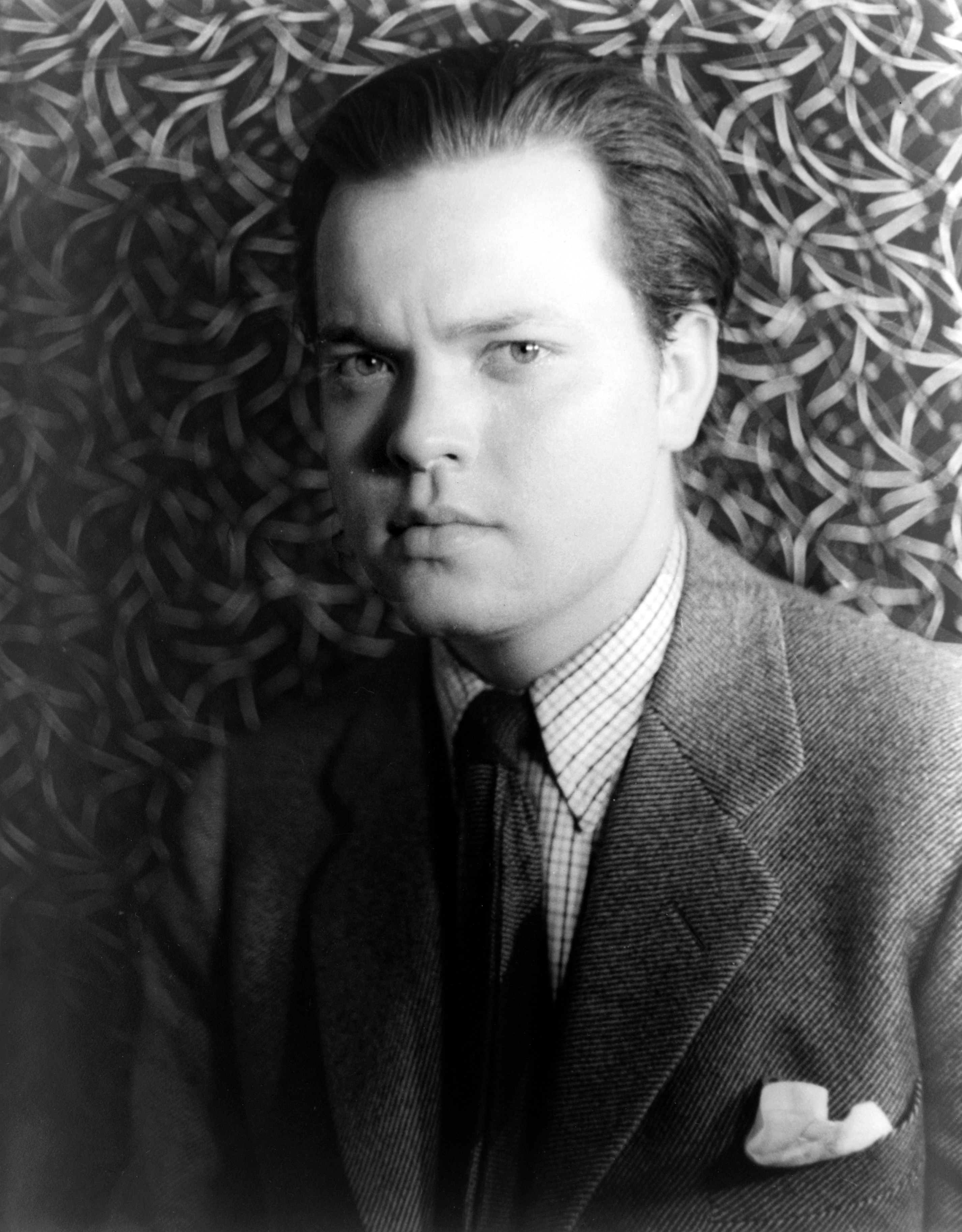
A Real 100th Anniversary Tribute For Citizen Welles


From The Pen Of Bart Webber

Frank Jackman is a funny guy, a funny kind of writer, or as he styles himself “a guy who likes to write” since he considers his real profession to be as the owner of a small tool and die shop in Carver, his hometown although he grew up in North Adamsville up the road about twenty miles toward Boston. Frank though is like lots of writers (I will dispense with the “guy who likes to write” business as he can defend himself on that characterization) in that he likes to, or does may be a better way to put the matter, “crib” from his own work. That may be so although I swear half of writing in any case is cribbing when you are dry for material, when the pen is useless (or the word processor these days) and the other half is recycling the half dozen or so good themes you have developed until you too like the reader want to burn the buggers. But see Frank fancies himself a guy who wants to say something new with each breathe he takes, with each new sketch he produces. Lately though he had “caught” himself out though in recycling a review of the classic black and white film, Citizen Kane, written, directed, produced, and acted in by the legendary movie man Orson Welles as a contribution in honor of his 100th birthday on May 6, 2015.      

Frank among his other writing venues has over the past decade or so contributed to two important blogs, important as they feed on his major interests, one the American Film blog, the other The American Folk Music blog. On that May 6th he happened to be driving to Boston meet up with Sam Lowell, Frankie Riley, Jack Callahan and me to have our periodic get together at Jackie Brennan’s Sunshine Grille to talk over drinks and a meal old times in Carver, the crazy and weird things we did in 1960s when we all came of age, and more recently of grandkids, mortality and the increasingly nagging aches and pains we have accumulated over a lifetime of self-indulgence and living lifestyles like we would go on forever, when he heard a segment on the BBC (via National Public Radio, NPR) touting Welles’ 100th birthday with an English  commentator who had written something like the definite biography of Brother Orson. Normally that kind of prompt would have had Frank currying for some three or four page sketch giving his take on the subject complete with some poster of one of Welles’ film efforts from Wikipedia and a film trailer via YouTube for the American Film blog. But as he confessed to us in a subsequent meeting the next week he had “mailed it in.” He had taken an adoring review from 2011 of Citizen Kane, grabbed a Wikipedia poster of the film, a YouTube movie trailer from and copied and pasted the BBC interview and called it a day. His excuse-pressing work on a small novella that had been stalling in his brain and which was starting to jell.

As Frank explained it to us he still felt queasy about the matter. After all how much of a sweat does one have to work up (or did he when he first wrote the piece in 2011 as he mentioned) for a film that has been on everybody and their uncle and aunt’s best world films list for decades. That day we also talked over our various takes on other Welles’ works and that nagging feeling we all had that as good as Citizen Kane was some of his other works were also worthy of mention as was his larger than life character and the consensus fact that he never reached his full potential due his own hubris, Hollywood’s own hubris and the alignment of the stars (that last opinion from Frankie Riley, always dependable for such remarks going back down to his days when we first met him at Myles Standish Junior High.               

A couple of days after that last conversation I started thinking that Welles’ really should have had a more thoughtful current contribution to his centenary. More thoughtful because he really did loom as a large figure in cinematic history, although his best work of writing, directing, acting and producing for film really had been done before any of us had come appreciate his work, or even had seen any of his films. Most of us, except Frankie who had seen Citizen Kane with his mother at the retro-rerun Strand Theater over in Plymouth when he was young, had only seen his work on television or wherever the Brattle Theater in Harvard Square had one of its periodic revivals of his works. So I decided to write a little sketch to do a certain justice to the man’s work.

Of course it is easy to give all the accolades Kane deserves from the great starting and finishing idea that holds the audience’s attention riveted to solving the mystery of the source of the last utterance of the fading Kane to the meaning of a man’s life, powerful or not, to the editing which gave the film it easy tempo, to the great shadowy black and white photography which had an almost painterly quality in spots, to the seamlessness of the ensemble cast who worked with Welles on that film and earlier and later works, to the acting of the moody, morose, at odds with himself role of Kane Welles played.

The beauty of the story line, the rags to riches to an unquiet deathbed line grasping at some youthful innocence is almost universal. Frankie told us that he had learned this from his Irish mother’s reaction to the film when she told him coming out of the theater that we all have some such ancient thoughts from childhood which we hold onto after all the failures and fissions of teenage and adulthood have faded from view that holds us in their thrall for whatever reason. Frankie mentioned that he still dreamed on nights when he went sleepless or tossed over about a May basket given to him by his third grade teacher, Miss Winot, whom he had a “crush” on if such a thing was possible for somebody so young and he would probably utter her name at his last gasp if he had the consciousness to do so. The rest of us had our jaws open at that and although we all probably later thought some Frankie type thoughts nobody else at that gathering mentioned any childhood bonded associations. Mrs. Riley also had told Frankie that she sympathized with Kane’s attempts to keep his dirty line private, a very Irish take on the man and something we all knew from ancient grandmother wisdom passed down in the old neighborhood in Carver.

But enough of Kane because I want to speak blasphemously here and mention that Welles’ role in Kane was not his best film performance, not by a long shot since, he was really playing a variation on his own self-image, playing to his own youthful vanities and hubris. Where Welles really did some acting was on lesser known films like the role he played as the fall guy Irish Blackie to scheming murderous Rita Hayworth’s in The Lady From Shang-hia, a film that in not talked about much but is underrated in his oeuvre, especially that famous mirror smashing scene at the end. Not enough credit has been given to his masterful white man in black face role in a film adaptation of Shakespeare’s Othello and as the comic/tragic figure of Falstaff in another Shakespeare adaptation. Maybe the best performance he ever gave was as the purely evil but also purely venal and banal small border town police captain in Touch Of Evil. That last role just over a decade or so after Kane has Welles with the jowly look of evil which brought that out the in larger than life character of Welles, this time with what seemed like marbles in his mouth voice better than any other film. Welles had his problems with the studio system of his day, had problems with the cookie-cutter system of keeping everything outside of approved controversy out of films, which meant that for a major director his produced only about a dozen films. But with that small body of work, those seminal roles, that larger than life character, and that unforgettable voice, a voice that stirred millions on the radio in the 1930s in his rendition of H.G. Well’s War Of the Worlds, Welles deserves to be remembered on his 100th birthday. Greetings.       

Tuesday, May 12, 2015

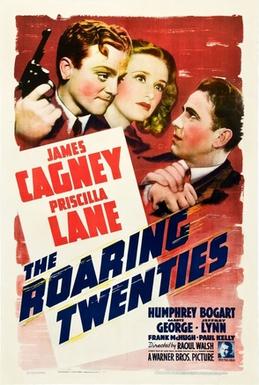
A Guy Who Knew All The Angles- James Cagney’s The Roaring Twenties


DVD Review

From The Pen Of Frank Jackman


The Roaring Twenties, starring James Cagney, Humphrey Bogart, 1939

Yeah, Eddie Barrett, a big time gangster, hood really, back in the 1920s when such guys were a dime a dozen although like all things involving money some guys were a little hungrier and ruthless about sating that hunger than the others, bought the ticket, took the ride, and in the end wound up very dead on some forsaken bloodied New York marbled stoop, un-mourned and unloved. Well, that last part is not exactly true, since over the hill flame Panama who knew Eddie when he was just a raw punk starting out and did her a good turn, took a big fall for her. Yeah, Panama of the easy street times and easy virtue shed a few tears when he punched his ticket.

See Eddie knew all the angles just like a lot of guys who grew up hard, grew up on the hard knocks working class streets of New York or any other big town, had “street smarts” which in his neighborhood was prized above real smarts since what was the latter going to get you except hustling from nine to five for dimes and donuts. While not every guy who grew up hard had to use all the angles at their disposal Eddie did, and hence a few wrong turns brought him to that stony death and those few for old time memories Panama tears. Eddie, played in the film under review, The Roaring Twenties, by James Cagney but the role could have been played by half a dozen hard-nosed guys, hard-nosed actors, then and now, because what Eddie had, how Eddie survived for a while in the world is something a lot of guys, and not just actors, would know, know without the script.   

Here’s the lay of the land and you judge whether Eddie did right, or got too tied up in the angles bit. Or maybe you will think that our boy just got waylaid by circumstances, you know, a combination of things that just proved too much to overcome. That is what a real smart guy (or gal) would think, lay it off on social conditions, and maybe they would be right but that is not what the street smart guys would say.  Eddie like a lot of street guys started out straight enough, had small New York, Bronx or Flatbush dreams around the early part of the 20th century when dreams were plentiful and prospects to do okay were not outlandish. See Eddie, well, Eddie was a grease monkey, a guy pretty handy around cars, worked for a guy for a while and then figured if everything went okay would open his own shop since even back then America was in love with the automobile and guys who could fix them were aces. But here is where those of you who want to discuss that “victim of circumstances” stuff could have a field day. Just as Eddie was coming to serious manhood the troubles in Europe, you know, World War I spilled over into America and Eddie would up in the American Expeditionary Force in Europe and he joined up for the fight, did his fair share of fighting on the trench-filled fronts, made a couple of buddies, and came home safe and sound. But that is when it all started to come undone. He came back, like in a lot of wars of late, not to a hero’s welcome, but to no job, no prospects, and no liquor, no liquor because of the Volstead Act which prohibited the sale of legal liquor all through those roaring twenties, the free-wielding Jazz Age that F. Scott Fitzgerald wrote about, wrote about the Mayfair swells part anyway and guys like Gatsby who were trying to crash the gates even though the odds were stacked against them, but which not everybody got a chance to dive into.

So no job, no dough, no prospects Eddie Barrett faced a turning point after a hack (cab-driver, okay) friend let him go in on his cab business and while doing that work got into trouble for delivering some illegal booze to Panama’s speakeasy. He took the bust, and Panama’s gratitude sealed with tears at the end, but also got wise to the ways of the world and being a street smart guy figured to ride the wave, the free and easy booze wave (although, and here he was smart unlike some guys then who drank up the profits and later guys who snorted the cocaine profits, he didn’t drink, not at first anyway). So our boy moved up the food chain, looked to be a guy who would survive the cut in the survival of the fittest struggle.

But two things get in his way, well, two things but really one thing, a dame, a frail, a frill or whatever they called a woman in their neighborhoods in those days, a torch singer too, who was looking to make it in the bright lights of the city.  This young woman though, Jean (played by virginal good-girl Priscilla Lane) is all wrong for Eddie, Eddie from the wrong side of the tracks, since she is a clean-cut girl next door-type whatever her singing aspirations. Panama, old standby through thick and thin Panama is more Eddie’s speed. But when a guy gets gone on a woman, well, you know almost anything can happen, street smart guy or not. So Eddie takes the tumble, figures that in order to keep her in clover that he has to move more quickly up the food chain. And that is where problem number two comes in. There are already guys ahead of you in line in that food chain, and so Eddie has to get rough, get pushy with the next guy up. In the process his runs into an old war buddy, George (played by a young Humphrey Bogart), who was also street smart and who was working for the next guy up the chain. They decide, uneasily, to join forces, and for a while they are making money hand over fist, are living on easy streets.

But here is where fate, the furious fate sisters, played Eddie wrong. First off despite the dough that virginal Jean did not go for Eddie but had eyes for, what did they call it, one of her own kind, another Eddie war buddy, a lawyer and so Eddie was out in the cold on that front. I will say he took that defeat like a man and let her go. Here though is where you never know what is going to happen. The Great Depression came along and wise investment stock-heavy like everybody from the barber to the bookie to the banker Eddie goes under, had to sell out to George, cheaply which stuck in his craw. Then that old war buddy lawyer, working for the District Attorney got involved in trying to smash the crime rackets and while Eddie was down on cheap street our friend George had moved up the chain. Naturally a guy who has moved up the chain will take umbrage if the coppers try to squeeze his action and so, for Jean’s sake, yeah, Eddie is still carrying the torch for her despite everything, has that final confrontation with George and his boys and winds up on those tear-stained bloody steps for his efforts. Yeah, Eddie knew all the angles, was a smart guy, but you know when a dame is involved all bets are off. Yeah, buy the ticket, take the ride.                

Monday, May 11, 2015


When Hard-Nosed Detectives Ruled The Roost-Dashiell Hammett’s Nightmare Town


Book Review

From The Pen Of Frank Jackman


Nightmare Town, Dashiell Hammett, Vintage, New York, 2000   


Over the past several years I have had occasion to review many books and film adaptations of the works of the two classic crime novel writers who are legitimately the forebears for all kinds of action-oriented hard-nosed fictional detectives today, Raymond Chandler and Dashiell Hammett. I am at it again here with this review of a treasure trove of Hammett’s shorter works which were published in Black Mask and other crime magazines, Nightmare Town. And again I am astounded by the sparse, rough, flowing language that Hammett’s brought to the early hard-boiled detective novel with seems to be clearly in line with Ernest Hemingway’s modernist usage. That was a time when he and Chandler broke out of the parlor pink type stories and gave them some punch, gave their guys and gals some swagger, made their detectives jump more than a few hoops before they caught the bad guys (and in a couple of stories here  gals) flat-footed. No wonder writers like Ernest Hemingway tipped their hats to Hammett and Chandler. No wonder as well that the reader of publications like Black Mask waited impatiently for the next issue.    

This book contains twenty-two of Hammett’s short crime sketches a few that have been seen in other collected works like The Big Knock-Over. Naturally not all the works are equally good although all show the wicked bent of Hammett’s mind in constructing plot-lines and distributing clues. Three story lines stick out; the title piece Nightmare Town, the four Sam Spade pieces (yes, there was a Samuel Spade sans millstone Miles Archer before he ran up against the cutthroats and dangerous femme in The Maltese Falcon), and the first draft of The Thin Man (and yes again there was a thin man before Nick and Nora Charles, and Asta, and wangled their ways into the story line looking for that very elusive eccentric thin man).

Nighmare Town is a classic hard guys tale out of the Old West. No, not the Old West of Billy the Kid and honorable killings done to stake a claim out to land and manhood there in the days before civilization and the end of the frontier (end of land really unless you wanted to swim the Japan seas) clapped down and leave the wild boys in the towns with nothing but time on their hands. But then along came Prohibition and every guy who had a crooked thought, some bravado, and a fairly quick trigger was trying to jump onto easy street since they all instinctively knew that people were still going to need their booze, and plenty of it, no matter the cost.  That premise drives the hard to figure otherwise action as the protagonist gets more, much more, that he bargained for by staying in that created out of nothing Western town which fronted for a huge illegal liquor operation.

The four Sam Spade stories are interesting for what they are, which is cleverly plotted detective stories of the conventional sort where Sam, along with the police, smart boy, and without any female distraction, again smart boy, solves what seem to be impossible crimes, for example, how the thief, or thieves got away (for a while) with jewelry store robbery when it looked like the who thing went up in smoke. The “what not” part of the stories is, take either a look at the film or a read of the book, that the lack of that female distraction, that femme Bridget or whatever her name was, as a formidable foil makes this Sam a little less romantic, a little less hard-boiled, and little left nifty since he is not tilting at windmills to bring a little rough justice into this wicked old world that the fully formed detective in The Maltese Falcon.  

The First Draft of the Thin Man suffers as well from the absence of the two, well, suave, debonair, and witty detectives which Hammett created later, Nick and Nora Charles (oh, alright and Asta too) when he reworked this piece. The story line here moreover sort of gets run over at the end when the plot ran out of steam after one of the main seen character winds up dead, very dead and the thin man is still out there somewhere. But if you want to see how a master writer wrote when writers wrote read this one to see how a work progresses. Hell read the whole  book to see how crime novel writers wrote in the old days.           
The Last Chance Dance- With The Kingsmen's Late Jack Ely And Louie, Louie In Mind


From The Pen Of Bart Webber

Fritz Jasper when he heard the news that the Kingsmen’s lead singer and guiding spirit (okay, okay the guy who kept things together) Jack Ely had passed away not only thought about the mortality rate of those of his generation of ’68 starting to take its toll, for the famous, the infamous, and the great unwashed, but that the Kingsmen probably had the greatest one-hit wonder song of the whole rock and roll 1960s. Somehow that one song Louie, Louie which depended more on the beat and sense of romantic adventure connected with the song got more mileage per turntable turn than one could shake a stick. Certainly it was not the lyrics which were frankly mostly unintelligible and those who have tried to decipher such things are still scratching their heads over that hard fact. In one hundred years obscure devotees will still be seeking the Roseate Stone on those lyrics. Jack Ely went to his grave keeping his own counsel about the whole issue.

Hell, who was Fritz kidding, mortality rates and one hits wonders were not what drove his thoughts when he heard about Ely’s passing but rather thoughts of vivacious Minnie Callahan the girl who got away, or maybe better let get away, during his high school days at Carver High. The song would forever after bring back that memory. He, in the intervening years, especially in the time immediately after they had graduated, after he had gone away to school and after he had spent some “tribal” acid-etched time on the hitchhike road with his friend, the late Peter Paul Markin, in the high life turbulent 1960s gold rush before returning to his safe, sedentary “normal” when he sensed the whirlwind days were ebbing and he went to graduate school to eke out a career as a senior civil servant. Minnie, had stayed around town after high school, had expressed to him dreams of a house on Pouty Point, the upscale section of town created after the land was sold by some old-time Finnish family who had given up a Mom and Pop existence trying to make a living from harvesting the cranberry bogs which were the lifeblood of the town’s economy since around the time of the Pilgrims it seemed. He could not see that then, had had to “sow his wilds oats” and by the time that he figured out what she had meant to him she was gone, who knows where, swallowed up in her own version of the 1960s magical mystery tour. When he did make inquiries on his occasional visits back to town when he was still in contact with his own estranged family it was too later, the family had also left town and the one source who could have helped him, Freddie Callahan, her brother, his best friend since junior high and his primary source of intelligence about her during those school days was “resting” out in Carver Cemetery, one of those 58,000 plus names etched in black marble down on the National Mall  in Washington, D.C. as a result of the war of their generation, Vietnam. 

Funny, Fritz thought, as Ely’s passing sparked thoughts back to sunnier times, he had been after Minnie since he first arrived in Carver when his father had had to relocate for his job out on U.S. Route 95 a few miles from town and he had run into her, literally, at Myles Standish Junior High after he became best friends with Freddie, whom he would continue to be friends with all through school until they lost contact except a few passed letters once Freddie’s number got called in the damn military draft that plagued a whole generation of young men then, and would continue to haunt many of those who have survived even now.

Freddie had warned him even then that she would break his heart, was nothing but a heart-breaker even then, one of those as he found out later when he would continue to attracted to the type, those virginal Irish Catholic girls who had their rosaries in one part of their brains and theirs lusts in the other all while making sure they were observed every Sunday morning at eight o’clock Mass. Jesus. (Jesus too the number times he would walk that mile or so to Sacred Heart Church in order to sit a few rows in back of her at that eight o’clock Mass and watch her ass. The Jesus part being that she knew, as he knew from her best friend, Ellen, Markin’s sister who told him, that he was looking at her ass, and not just there but in the corridors at school whenever she walked by.) So, yes, he had been forewarned but when seemingly involuntary hormonal actions dictates every move Freddie’s “advise,” his truthful friend talking was so much wind. So it went all through junior high when he would go over to the Callahan household sometimes knowing Freddie was not in just on the off chance that she would be in and maybe take pity on him. Take pity because he was as an outsider in a town where the relationships were fixed early and where the social peeking order were determined maybe at birth he was extremely shy around girls in general, Minnie in particular. Having three brothers and no nearby girl cousins did not help either. So junior high school drifted away with him and his Minnie Callahan dreams all asunder.     

That same situation, that same getting nowhere with Minnie, would have probably gone on high school as well, that same feeling that disturbed his sleep dreaming although maybe he would have gotten over it once he saw that Minnie had been matched up with the heroic senior halfback on the football team, Mickey Larkin once he spied her freshman year. It was not like he didn’t have other girls he was interested in, or were interested in him, although they tended to be the girls most influenced by the folk music craze that was being spear-headed by the emergence of Joan Baez as the “queen of the folk scene” and they all were ironing their hair to be as straight and long as hers and begging their dates to take them to coffeehouses in Cambridge some forty miles away to hear old British ballads and mountain music. Fritz though, having come of age in the prime of rock and roll hated folk music, hated it later too when Marston would drag him to those places when they were at Boston University. Nah, another guy with Minnie or girls interested in him would not have extinguished the flame, no way.   

And no way he would have gotten to first base with Minnie either except for one important event in his freshman year, the annual Fall Frolic which was sponsored as a fund-raiser by the Senior Class each year and which was the only event that the prideful senior class permitted underclassmen to attend, attend if they had the two dollar admission charge and by long enforced tradition if they kept out of the hair of any senior that they might run across. So usually until one became a senior and could take on the royal attributes most of the underclassmen, underclass guys were clinging to the walls for most of the evening. The girls though, if not with dates, not with senior dates were another matter and were fair game for senior boys. Needless to say Minnie was in attendance with one Mickey Larkin jealous fist and snarky remarks by half the girls in the school.  

Fritz had not figured to go to the event having no particular reason to go and having a serious disability in the dance world. He could not dance and he had two left feet. Freddie however had convinced him that he had go to “show the colors,” meaning to begin the long four year process becoming school royalty. If not then then perhaps never. So he went and held up his share of the wall for most of the evening hoping that he would survive, just survive.

The Fall Frolic really was a well-done affair with the senior dance committee going all out to make the drab gymnasium where the dance was held seem like a hotel ballroom what with all the flowers, bunting and disguising the bleachers by setting up tables along a couple of the walls (don’t worry those tables were exclusively for seniors and their dates, some rituals never change). The highlight though unlike most of the dances throughout the year was that the committee hired a live band, a live local band to provide the music, usually a band who could cover the latest hits, some classic rocks tunes, and of course, that last chance last dance song to end the evening. That year, somebody on the committee, Helen Kelly, Fritz thought as he thought back on the time, was friends with Rickey Rhodes, the lead singer of the “hot” local cover band around Boston, the Rockin’ Ramrods. So that night the Ramrods were scheduled to play.     

And play they did heating up the audience with lots of great covers of Elvis, Chuck Berry, Jerry Lee and Fritz could not remember who else but they were “hot” that night starting right from the first set. Fritz had been hanging onto the wall mainly although he did dance to Chuck Berry’s Sweet Little Sixteen since it was fast one with Ellen Marston who told him that she thought Minnie was looking in his direction (Fritz would later find out that Minnie had put Ellen up to that comment.). He blushed but thought nothing of as the song ended and he went back to the wall.

As the Ramrod’s opened up the second set (there were three as was usual in a big dance night) Fritz immediately picked up on the beat of a new song that everybody who hung out at Jimmy’s Jack’s Diner where he had the best jukebox in town was going crazy over, an unknown band from California, or he had heard they were from California, called the Kingsmen who were singing this song, Louie, Louie that had all the guys making suggestive moves, and the girls just kind of giggling, or getting into it. As they music played on Fritz spotted Minnie, Minnie looking radiant and beautiful and for the moment without Mickey. Maybe it was the way she looked, maybe, it was Ellen’s comment, hell, maybe he was just reacting against that string of long, straight-haired folkie girls that he had run into of late but whatever it was he found himself walking as if in a trance over to Minnie and making some very suggestive moves her way, Not bad for a two left-feet guy either. After he was done, flushed, turning red he turned around and went back to the wall. So nothing happened that night, nothing happened for a couple of weeks, but one night he went over to the Callahan house to see Freddie about something but he was not there according to Minnie. As he turned to go Minnie asked him if he would like to stay and listen to her latest records, one of them being her own recording of Louie, Louie. Thus started one of the great romances of the Carver High School Class of 1967.

Yeah, Fritz thought just at that moment, whatever happened to Minnie Callahan. Then he chuckled to himself, hell, what am I complaining about, he had gotten more shy boy dances later down at the Surf Ballroom from girls on that one song than he could shake a stick at. Not everything worked out but, thanks guys. Thanks, Jack Ely wherever you are and whatever the words were. RIP

Friday, May 8, 2015

On The 100th Birthday Of Citizen Welles-A Review Of Orson Welles Classic For The Ages- Citizen Kane  


The BBC celebrates Orson Welles 100th Birthday 

http://www.bbc.co.uk/programmes/articles/3r2qyBrTFpTPv2rZxGrJBtT/cinema-giant-orson-welles-at-100

From The Pen Of Frank Jackman-American Left History blog (2011)

Citizen Kane, starring Orson Welles, Everett Sloane, Joseph Cotton, directed by Orson Welles, hell, written by Orson Welles, RKO Radio Pictures, 1941


Recently I reviewed the 2011 Academy Award –winning film The Artist and commented in that review that the silent movie directors and producers of the 1920s (the actors I am not quite as sure of) would have given their eye-teeth (or at least their first born) to have had the technology available now back then to produce higher technical quality films. I am not so sure that I could say the same about director Orson Welles’ 1941 film classic, Citizen Kane.

Oh sure some of the technical stuff today could (and has on the re-mastered versions ) enhance the sound, and maybe some of the production values but this magnificent film does not rely on technical skill so much (although some of the scenes and backdrops are of high quality) as the driving plot line, the script, and above the acting of director Orson Welles’s merry band of Mercury Theater players (think Joseph Cotton, Agnes Moorehead, Everett Sloan and, oh yes, Orson Welles, among others).

The plot line and the way it unfolds beginning with a clever news-of-the-week video of Charles Foster Kane’s life after he passed away to bring us up to speed really is something to watch. Of course it did not hurt that this piece was a thinly-veiled portrait of the famed newspaperman and arch imperialist war-monger (the Spanish-American War and other little adventures be exact) William Randolph Hearst. He of “yellow journalism” fame although today he would be strictly minor league, maybe scandalous in Toledo or someplace like that but passe in the real war of scandal sheets.

Then to have the strong cinematic personality of actor Orson Welles (shown as well in other films like Falstaff, The Lady From Shang-hai, and The Third Man) play that strong Hearst personality just added to the drama. As well as did the flashbacks by various parties who knew Kane, had worked for Kane, had loved Kane, had hated Kane or were just pure baffled by him. And then that dramatic undercurrent throughout the film of Kane’s characteristic that would banish him from the godly pantheon, his utter incapacity to love anybody but himself that left him alone at the end. Yet he was still able to go back into deep childhood to remember the good part of his life, the part many of us harken back to as we age. We all, or almost all, have our Rosebud memories and maybe that is the connecting thread to the continuing relevance of this classic film. Just make sure you don’t go for popcorn out at the concession stand at some retro-theater or something out in the kitchen at the beginning of the film, okay. Trust me on that, please.