Saturday, April 4, 2015

Just Before The Sea Change - With The Dixie Cups Going To The Chapel Of Love In Mind


There were some things about Edward Rowley’s youthful activities that he would rather not forget, things that defined his life, gave him that “fifteen minutes of fame,” if only to himself and his, that everybody kept talking about that everyone deserved before they departed this life. That is what got him thinking one sunny afternoon in September about five years ago as he waited for the seasons to turn almost before his eyes about the times around 1964, around the time that he graduated from North Adamsville High School, around the time that he realized that the big breeze jail-break that he had kind of been waiting for was about to bust out over the land, over America. It was not like he was some kind of soothsayer anything like that back then, could read tea leaves or tarot cards like some latter day Madame La Rue who actually did read his future once down at the Gloversville Fair when she had come to that location with her daughter, Gypsy Anne, one hot August week when he was about twelve, read that he was made for big events. The big event that he was interested in just then was winning a doll, a stuffed animal or something like that for Gypsy Anne at the Skee game which he was an expert at.  And he did win her a stuffed animal and got a very big long wet kiss for his heroics. No way though that tarot reading when he was twelve left an impression for a while.


That big breeze blowing through the land thing was not his idea anyway but came from “the Scribe,” the late Peter Paul Markin, a corner boy at Jack Slack’s bowling alleys on Thornton Street where he occasionally hung out since he was childhood friends with the leader of that crowd, Frankie Riley, who read books and newspapers a lot and would go on and on about the thing on lonesome Friday nights when all the guys were waiting, well, just waiting that is all you need to know. Here is where that big breeze twelve million word description thing Markin was talking about intersected though. Edward’s take on the musical twists and turns back then is where he had something the kids at North Adamsville High would comment on, would ask him about to see which way the winds were blowing, would put their nickels, dimes and quarters in the jukeboxes to hear based on his recommendations. Even Markin deferred to him on this one, although the main way that Markin worked the jukebox was to con some lonely-heart girl who maybe had just broken up with her boyfriend, maybe had been dateless for a while, or was just silly enough to listen to him into playing what he wanted to hear based on what Edward had told him. Jesus Markin was a piece of work.

See Edward’s senses were very much directed by his tastes in music, by his immersion into all things rock and roll in the early 1960s where he sensed what he called silly “bubble gum” music (what high priest Markin called something like the musical counter-revolution but he was always putting stuff in political bull form like that) that had passed for rock.  Which, go figure, the girls liked, or liked the look of the guys singing the tunes, guys with flipped hair and dimples like Fabian and Bobby Rydell but was strictly nowhere with Edward. The breeze Edward felt was   going to bury that stuff under an avalanche of sounds going back to Elvis, and where Elvis got his stuff from like Lonnie Johnson and the R&B and black electric blues guys, the rockabilly hungry white boys, and forward to something else, something with more guitars all amped to big ass speakers that were just coming along to bring in the new dispensation.

More importantly since the issue of jailbreaks and sea changes were in the air Edward was the very first kid to grasp what would later be called “the folk minute of the early 1960s,” and not just by Markin when he wrote stuff about that time later before his sorry end. Everybody would eventually hone in on Dylan and Baez, dubbed the king and queen of the moment by the mass media always in a frenzy to anoint and label things that they had belatedly found about out about and run into the ground.  But when folks tunes started showing up on the jukebox at Jimmy Jack’s Diner it was guys like the Kingston Trio, the Lettermen, and the Lamplighters who got the play after school and some other girls, not the “bubble gum” girls went crazy over the stuff when Edward made recommendations. He had caught the folk moment almost by accident late one Sunday night when he picked up a station from New York City and heard Pete Seeger and Woody Guthrie songs being played, stuff that Mr. Dasher his seventh grade music teacher would play in class to broaden youthful minds, meaning trying to break the Elvis-driven rock and roll habit. So that musical sense combined with his ever present sense that things could be better in this wicked old world drilled into him by his kindly old grandmother who was an old devotee of the Catholic Worker movement kind of drove his aspirations (and Markin’s harping also triggered by his grandmother’s devotion to the Catholic Workers movement added in). But at first it really was the music that had been the cutting edge of what followed later, followed until about 1964 when that new breeze arrived in the land.

That fascination with music had occupied Edward’s mind since he had been about ten and had received a transistor radio for his birthday and out of curiosity decided to turn the dial to AM radio channels other that WJDA which his parents, may they rest in peace, certainly rest in peace from his incessant clamoring for rock and roll records and later folk albums, concert tickets, radio listening time on the big family radio in the living room, had on constantly and which drove him crazy. Drove him crazy because that music, well, frankly that music, the music of the Doris Days, the Peggy Lees, The Rosemary Clooneys, the various corny sister acts like the Andrews Sisters, the Frank Sinatras, the Vaughn Monroes, the Dick Haynes and an endless series of male quartets did not “jump,” gave him no “kicks,’ left him flat. As a compromise, no, in order to end the family civil war, they had purchased a transistor radio at Radio Shack and left him to his own devises.

One night, one late night in 1955, 1956 when Edward was fiddling with the dial he heard this sound out of Cleveland, Ohio, a little fuzzy but audible playing this be-bop sound, not jazz although it had horns, not rhythm and blues although sort of, but a new beat driven by some wild guitar by a guy named Warren Smith who was singing about his Ruby, his Rock ‘n’ Roll Ruby who only was available apparently to dance the night away. And she didn’t seem to care whether she danced by herself on the tabletops or with her guy. Yeah, so if you need a name for what ailed young Edward Rowley, something he could not quite articulate then call her woman, call her Ruby and you will not be far off. And so with that as a pedigree Edward became one of the town’s most knowledgeable devotees of the new sound.

Problem was that new sound, as happens frequently in music, got a little stale as time went on, as the original artists who captured his imagination faded from view one way or another and new guys, guys with nice Bobby this and Bobby that names, Patsy this and Brenda that names sang songs under the umbrella name rock and roll that his mother could love. Songs that could have easily fit into that WJDA box that his parents had been stuck in since about World War II.


So Edward was anxious for a new sound to go along with his feeling tired of the same old, same old stuff that had been hanging around in the American night since the damn nuclear hot flashes red scare Cold War started way before he had a clue about what that was all about. It had started with the music and then he got caught later in high school up with a guy in school, Daryl Wallace, a hipster, or that is what he called himself, a guy who liked “kicks” although being in high school in North Adamsville far from New York City, far from San Francisco, damn, far from Boston what those “kicks” were or what he or Eddie would do about getting those “kicks” never was made clear. But they played it out in a hokey way and for a while they were the town, really high school, “beatniks.”  So Eddie had had his short faux “beat” phase complete with flannel shirts, black chino pants, sunglasses, and a black beret (a beret that he kept hidden at home in his bedroom closet once he found out after his parents had seen and heard Jack Kerouac reading from the last page of On The Road on the Steve Allen Show that they severely disapproved of the man, the movement and anything that smacked of the “beat” and a beret always associated with French bohemians and foreignness would have had them seeing “red”). And for a while Daryl and Eddie played that out until Daryl moved away (at least that was the story that went around but there was a persistent rumor for a time that Mr. Wallace had dragooned Daryl into some military school in California in any case that disappearance from the town was the last he ever heard from his “beat” brother). Then came 1964 and  Eddie was fervently waiting for something to happen, for something to come out of the emptiness that he was feeling just as things started moving again with the emergence of the Beatles and the Stones as a harbinger of what was coming.

That is where Eddie had been psychologically when his mother first began to harass him about his hair. Although the hair thing like the beret was just the symbol of clash that Eddie knew was coming and knew also that now that he was older that he was going to be able to handle differently that when he was a kid.  Here is what one episode of the battle sounded like:                   

“Isn’t that hair of yours a little long Mr. Edward Rowley, Junior,” clucked Mrs. Edward Rowley, Senior, “You had better get it cut before your father gets back from his conference trip, if you know what is good for you.” That mothers’-song was being endlessly repeated in North Adamsville households (and not just those households either but in places like Carver, Hullsville, Shaker Heights, Ann Arbor, Manhattan, Cambridge any place where guys were waiting for the new dispensation and wearing hair a little longer than boys’ regular was the flash point) ever since the British invasion had brought longer hair into style (and a little less so, beards, that was later when guys got old enough to grow one without looking wispy, had taken a look at what their Victorian great-grandfathers grew and though it was “cool.” Cool along with new mishmash clothing and new age monikers to be called by.)

Of course when one was thinking about the British invasion in the year 1964 one was not thinking about the American Revolution or the War of 1812 but the Beatles. And while their music has taken 1964 teen world by a storm, a welcome storm after the long mainly musical counter-revolution since Elvis, Bo, Jerry Lee and Chuck ruled the rock night and had disappeared without a trace, the 1964 parent world was getting up in arms.

And not just about hair styles either. But about midnight trips on the clanking subway to Harvard Square coffeehouses to hear, to hear if you can believe this, folk music, mountain music, harp music or whatever performed by long-haired (male or female), long-bearded (male), blue jean–wearing (both), sandal-wearing (both), well, for lack of a better name “beatniks” (parents, as usual, being well behind the curve on teen cultural movements since by 1964 “beat”  except on silly television shows and by “wise” social commenters who could have been “Ike” brothers and sisters, was yesterday’s news).

Mrs. Rowley would constantly harp about “why couldn’t Eddie be like he was when he listened to Bobby Vinton and his Mr. Lonely or that lovely-voiced Roy Orbison and his It’s Over and other nice songs on the local teen radio station, WMEX (he hated that name Eddie by the way, Eddie was also what everybody called his father so you can figure out why he hated the moniker just then). Now it was the Beatles, the Rolling Stones and a cranky-voiced guy named Bob Dylan that has his attention. And that damn Judy Jackson with her short skirt and her, well her… looks” (Mrs. Rowley like every mother in the post-Pill world refusing to use the “s” word, a throw-back to their girlish days when their mothers did not use such a word.)     

Since Mrs. Rowley, Alice to the neighbors, was getting worked up anyway, she let out what was really bothering her about her Eddie’s behavior, "What about all the talk about doing right by the down-trodden Negros down in Alabama and Mississippi. And you and that damn Peter Markin, who used to be so nice when all you boys hung around together at Jimmy Jack’s Diner [Edward: corner boys, Ma, that is what we were and at Jack Slack’s alleys not Jimmy Jack’s that was for the jukebox and for checking out the girls who were putting dough in that jukebox] and I at least knew you were no causing trouble, talking about organizing a book drive to get books for the little Negro children down there. If your father ever heard that there would be hell to pay, hell to pay and maybe a strap coming out of the closet big as you are. Worse though, worse than worrying about Negros down South is that treasonous talk about leaving this country, leaving North Adamsville, defenseless against the communists with your talk of nuclear disarmament. Why couldn’t you have just left well enough alone and stuck with your idea of forming a band that would play nice songs that make kids feel good like Gale Garnet’s We’ll Sing In The Sunshine or that pretty Negro girl Dionne Warwick and Her Walk On By instead of getting everybody upset."

And since Mrs. Rowley, Alice, to the neighbors had mentioned the name Judy Jackson, Edward’s flame and according to Monday morning before school girls’ “lav” talk, Judy’s talk they had “done the deed” and you can figure out what the deed was let’s hear what was going on in the Jackson household since one of the reasons that Edward was wearing his hair longer was because Judy thought it was “sexy” and so that talk of doing the deed may well have been true if there were any sceptics. Hear this:      

“Young lady, that dress is too short for you to wear in public, take it off, burn it for all I care, and put on another one or you are not going out of this house,” barked Mrs. James Jackson, echoing a sentiment that many worried North Adamsville mothers were feeling (and not just those mothers either but in places like Gloversville, Hullsville, Shaker Heights, Dearborn, Cambridge any place where gals were waiting for the new dispensation and wearing their skirts a little longer than mid-calf was the flash point) about their daughters dressing too provocatively and practically telling the boys, well practically telling them you know what as she suppressed the “s” word that was forming in her head. She too working up a high horse head of steam continued, "And that Eddie [“Edward, Ma,” Judy keep repeating every time Mrs. Jackson, Dorothy to the neighbors, said Eddie], and his new found friends like Peter Markin taking you to those strange coffeehouses in Harvard Square with all the unwashed, untamed, unemployed “beatniks” instead of the high school dances on Saturday night. And that endless talk about the n-----s down South, about get books for the ignorant to read and other trash talk about how they are equal to us, and your father better not hear you talk like that, not at the dinner table since he has to work around them and their smells and ignorance over in that factory in Dorchester.  And don’t start with that Commie trash about peace and getting rid of weapons. They should draft the whole bunch of them and put them over in front of that Berlin Wall. Then they wouldn’t be so negative about America."

Scene: Edward, Judy and Peter Markin were sitting in the Club Nana in Harvard Square sipping coffee, maybe pecking at the one brownie between them, and listening to a local wanna-be folk singing strumming his stuff (who turned out to be none other than Eric Von Schmidt whose Joshua Gone Barbados and a couple of other songs would become folk staples and classics). Beside them cartons of books that they are sorting to be taken along with them when they head south this summer after graduation exercises at North Adamsville High School are completed in June. (By the way Peter’s parents were only slightly less irate about their son’s activities and used the word “Negro” when they were referring to black people, black people they wished their son definitely not to get involved with were only slightly less behind the times than Mrs. Rowley and Mrs. Jackson and so requires no separate screed by Mrs. Markin. See Peter did not mention word one about what he was, or was not, doing and thus spared himself the anguish that Edward and Judy put themselves through trying to “relate” to their parents, their mothers really since fathers were some vague threatened presence in the background in those households.)

They, trying to hold back their excitement have already been to some training sessions at the NAACP office over on Massachusetts Avenue in the Roxbury section of Boston and have purchased their tickets for the Greyhound bus as far as New York’s Port Authority where they will meet others who will be heading south on a chartered bus. But get this Peter turned to Edward and said, “Have you heard that song, Popsicles and Icicles by the Mermaids, it has got great melodic sense.” Edward made a very severe funny face. Yes, we are still just before the sea change after which even Peter will chuckle about “bubble gum” music. Good luck though, young travelers, good luck.


Friday, April 3, 2015

Don't Blame It On Rio-Alfred Hitchcock’s Notorious 


DVD Review

From The Pen Of Frank Jackman

Notorious, starring Ingrid Bergman, Cary Grant, Claude Rains, directed by Sir Alfred Hitchcock, 1946    

No question that in the aftermath of their defeat in World War II certain Nazis, having seen the writing on the wall in time before the Soviets and then the Americans stormed Berlin, got themselves conveniently shuffled out of Germany by any means necessary with whatever they could bring out and landed wherever they could find some hospitable locale. (Yeah, let the Fuehrer take the pill, make the big gesture, but a lot of the others were happy to desert a sinking ship, to live another day.) Maybe find places with a little sun, a little nightlife to wait out the exile, places like Rio and Buenos Aires which fit the bill. Those who made their escape though, at least those who still had political fire and unabated dreams of empire, when to those locales to make preparations for the next Reich. And it is the smashing of such a budding network in Rio which is at the heart of the film under review, Sir Alfred Hitchcock’s Notorious. Oh, wait a minute, I forgot, there is also a little love triangle to be taken care of as well, sorry.     

Here how love and intrigue combine to make this I believe Sir Alfred’s first serious romantic thriller. Alicia (played by, well, beautiful, Ingrid Bergman) playgirl daughter of a convicted Nazi spy who eventually committed suicide had been estranged from her father, despised what he had done. An American intelligence agency has gotten wind of that fact and sent Dev (played by, well, handsome, Cary Grant) to recruit her ultimately to flush out that Nazi network working out of Rio (although don’t blame, well, beautiful Rio for who shows up there). She balked at first but then relents under Dev’s charms, and her own sense of self-worth. Problem, big problem, always a big problem is that agent and handler, beautiful and handsome, fall in love while waiting for the new assignment to come in. That is sure to monkey up the works some way.           

And it does because Alicia’s assignment is to get information about whatever it is the bad boy Nazis are up to in their next round of wreaking havoc on the world. Her assignment: get close to one of the members of the circle, Alex (played by Claude Rains who always seems to be playing second fiddle to somebody for Ms. Bergman’s favors), who in the past had been smitten by Alicia. Well Alicia plays her part very well, too well since as part of getting close to Alex she is asked by Dev’s boss agent to marry him in order to get very close to what the network is up to (basically looking for minerals for bombs, atomic bombs, I would image given the time of the film, if anybody is asking). Of course that did not sit well with Dev since he had his doubts about Alicia and her, ah, virtues, given her notorious past.         

So Dev was in a snit and became at least formally cool to Alicia from there on in, leaving their relationship at a professional level. Well not quite “from here on in” because while trying to find out about what experiments were being performed under the cover of Alex’s home (okay, mansion) Alicia needed to get access to a wine cellar where it was suspected the nefarious work was being carried out. Which she got, by procuring the key to the wine cellar in a famous cinematic scene, but in the process the job got botched a little by, well, by Dev. By fair means or foul Alex thus found out the bitter truth that his wife was an American agent. That is a serious problem for him since, as in Germany, these Nazi thugs play rough with those who fall off the wagon. So Alex contrives (with his dear mother) to poison Alicia. No good, no good in the end anyway since Dev finally figured something had been wrong with Alicia and headed to Alex’s house, mansion, to save her. And he did, with a little help from Alex who really did love Alicia when the deal went down. Problem for Alex though was the rough boys were watching as he helped Alicia and Dev out the door. Out the door but out of luck as Dev left him in the lurch to face those rough boys. Do you want to bet they found him face down in some sleepy unnamed hollow with a couple of slugs in his head? So, yes, this really was a love story disguised as a thriller but any time the Nazis get their noses pushed around is okay by me. So, thanks Sir Alfred.                 

Thursday, April 2, 2015

When The Fight To Turn The World Upside Down Was In Full Flower- With The Doors The Unknown Soldier In Mind


Wait until the war is over
And we're both a little older
The unknown soldier
Breakfast where the news is read
Television children fed
Unborn living, living, dead
Bullet strikes the helmet's head

And it's all over
For the unknown soldier
It's all over
For the unknown soldier

Hut, hut, hut ho hee up

Comp'nee, halt
Present, arms

Make a grave for the unknown soldier
Nestled in your hollow shoulder
The unknown soldier

Breakfast where the news is read
Television children fed
Bullet strikes the helmet's head

And, it's all over
The war is over
It's all over
War is over

Well, all over, baby
All over, baby
Oh, over, yeah
All over, baby


Ooh, ha, ha, all over
All over, baby
Oh, woah, yeah, all over
All over, heh

Add song meaning

Songwriters
Robbie Krieger;John Densmore;Jim Morrison;Ray Manzarek


From The Pen of Frank Jackman


There was no seamless thread that wrapped the counter-cultural dominated 1960s up tightly, a decade or so that is beginning to look like a watershed time not just for the first wave immediate post-World War II baby-boomers who came of social and political age then washed clean by the new dispensation but for the country as a whole. More so since we of the generation of ’68 who are still up for a fight are continuing to fight a rearguard action to keep what little is left of accomplishments and the spirit of those time alive. A thousand things, or it seemed like a thousand things, something new in the social, economic, political or cultural forest popping up out of nowhere in many cases, came together in pretty rapid succession to draw down in flames the dread red scare Cold War freezes of our childhoods. The Cold War time when what did we know except to keep our obedient heads down under our desks or face down on the floor when the periodic air-raid shelter tests were performed at school to see if we were ready to face the bleak future if we survived some ill-meant commie atomic blast. (Personally I remember telling somebody then that I would, having seen newsreel footage of the bomb tests at Bikini, just as soon take my chances above desk, thank you, for all the good the other maneuver would do us.)

For a while anyway we were able to beat back that Cold War mentality, that cold-hearted angst, and calculated playing with our world, our world even if we had no say, zero, in creating what went on. Not so strangely, although maybe that is why people drifted away in droves once the old bourgeois order reasserted itself and pulled down the hammer, none of us who were caught up in the whirl thought it would on be for only a while or at least fade so fast just as we thought, young and healthy as we were, that we would live forever. But if you took a step back you could trace things a little, could make your own “live free” categories of the events that chipped away the ice of those dark nights.

Start in with the mid-1950s if you like, which is where I like to start dating my own sense of the new breeze coming through although being a pre-teenager then I would not have had sense enough to call it that, with the heat of the black struggle for some semblance of civil liberties down South with the fight for voter rights and the famous desegregation of buses in Montgomery and the painful desegregation of the schools in Little Rock (and some sense of greater  equality up North too as organizations like the NAACP and Urban League pushed an agenda for better education and housing). Also at that same time, and in gathering anecdotal evidence I have found that these are a common lynchpin, the first break-out of music with the crowning of rock and roll as the wave of the future (black rhythm and blues, scat, rockabilly music all mixed up and all stirred up), and the “discovery” of teen alienation and angst exemplified by sullen movie star sullen James Dean, who lived fast, and died fast a metaphor that would work its way through youth culture over the next generation. (And throw in surly “wild one” movie star Marlon Brando and a brooding Montgomery Cliff.)   

An odd-ball mix right there. Throw in, as well, although this was only at the end and only in very commercial form, the influence of the “beats,” the guys who blew the cool be-bop jazz that you would hear around cafés even if you did not understand it unlike rock and roll, the guys who hitchhiked across the American landscape creating a wanderlust in all who had heard about their exploits, and, of course, the bingo bongo poetry that threw the old modernists like T.S. Eliot and Ezra Pound out with a bang. Then start to throw in the struggles against the old authority in places like Frisco town where they practically ran the red-baiters in the HUAC out of town (what we, or some of us, would learn to call “bourgeois authority working hand in hand with the capitalists”), the old certitudes that had calmed our parents’ lives, made them reach out with both hands for the plenty in the “golden age of plenty.” Of course the biggest event that opened the doors for liberals, radicals, hell, even thoughtful conservatives was the sweet breeze coming down the road from Boston with the election of Jack Kennedy. Ike, the harmless uncle, the kindly grandfather, was for our parents we wanted guys who set the buzz going.    

That event opened up a new psyche, that it was okay to question authority, whatever the limitations and shortness of the Camelot times with the struggles against some hoary things like segregation, the death penalty, nuclear proliferation, the unevenness of social life which would get propelled later in the decade with fight for women’s liberation, gay liberation, and the fight against the draft, the damn war in Vietnam that drove a nail into the heart of our generation. A river of ideas, and a river of tears, have been, and can be, shed over that damn war, what it did to young people, those who fought, maybe especially those who fought, and those who refused to, that lingers on behind the scenes even today.

There were more things, things like the “pill” that opened up a whole can of worms about what everyone was incessantly curious about and hormonally interested in doing something about, a newer sensibility in music with the arrival of the protest folk songs for a new generation which pushed the struggle and the organizing forward. Cultural things like the experimenting with about seven different kinds of dope previously the hidden preserve of “cool cat” blacks and white hipsters, the outbreak of name changes with everybody seemingly trying to reinvent themselves in name, fashion, and affectation. More social experiments gathering in the “nation” through rock concerts, now acid-etched, new living arrangements with the arrival of the urban and rural communes (including sleeping on more than one floor in more than one church or mission). They all, if not all widespread, and not all successful as new lifestyles all got a fair workout during this period as well.     

Plenty of us in retrospective would weigh the various combinations of events differently in figuring out how the uprising started just as plenty of us have our specific dates for when the tide began to ebb, when the mean-spirited and authoritarian began their successful counter-offensive that we still live with for not taking the omens more seriously. (My ebb tide, as I have described elsewhere, was the events around May Day 1971 when we seriously tried, or thought we were seriously trying, to shut down the government in DC if it would no shut down the war and got nothing but billy-clubs, tear gas, beatings and mass arrests for our efforts. After those days I, and others, figured out the other side was more serious about preserving the old order than we were about creating the new and that we had better rethink how to slay the monster we were up against and act accordingly.)

Then we have the photograph (see above) that graces this short screed, and which pictorially encapsulates a lot of what went then, a lot about which side were you on when the deal went down. This photograph is almost impossible to imagine without some combination of that hell broth anti-war, anti-establishment, pro-newer world mix stirred up in the 1960s. Three self-assured women comfortable with the loose and individualistic fashion statements of the day from floppy hats to granny dresses to bare legs, bare legs, Jesus, that alone would have shocked their girdled, silk stocking mothers, especially if those bare legs included wearing a mini-skirt.

They are also uncomfortable about the damn Vietnam war, no outraged is a better way to put the matter, that was eating up boyfriends, brothers, just friends, guys they knew in college or on the street who were facing heavy decisions about the draft, Canada exile, prison or succumbing to the worst choice, military induction, at a heavy rate and they unlike their mothers who came through World War II waiting patiently and patriotically for their military heroes to come home, come home in one piece, have a very different sense of the heroic. A sense of the heroic going back to ancient times, Greek times anyway, when one group of women like their stay-at-home-waiting-for-the-other-shoe-to-drop World War II mothers demanded that their men come home on their shields if they had to rather than speak of defeat. Others, the ones that count here, refusing their potential soldier boys any favors if they went off to war, providing a distant echo, a foundation to make their request stand on some authority, for these three women pictured here. I wonder how many guys would confess to the lure of that enticement if they had refused induction. I did not but then I did not have any girlfriends who made that demand, mine early on anyway were as likely to want me to come back on a shield as those ancient Greek women. Too bad. More, much more of the latter, please as we continue in the nightmare world of endless war.                     

There Was Life Before Sam Spade-Dashiell Hammett’s The Hunter And Other Stories


Book Review

From The Pen Of Frank Jackman


The Hunter and Other Stories, Dashiell Hammett, edited by Richard Layman and Julie Rivett, The Mysterious Press, New York, 2013

I have spent a considerable amount of cyber-ink in this space extolling the crime detection virtues and spare and functional language of Dashiell Hammett’s major writings. That exaltation has, rightly, been centered on the crime novels, The Glass Key, The Red Harvest, The Dain Curse, The Thin Man and The Maltese Falcon, especially in the aftermath of the film adaptation of the latter putting hard-boiled but dogged detective Sam Spade, Humphrey Bogart and Mary Astor in a classic mix of the stuff that dreams are made of that still is very watchable over seventy-five years later. Although Dashiell Hammett had a relatively short, productive published writing career he did, as the book under review, The Hunter and Other Short Stories testified to write other material not as well known for crime detection magazines and other such journals. And, as is the case here, material, particularly early material which either never was published, or meant to be published.           

 A while back, maybe a year or so ago now I did a book review of F. Scott Fitzgerald’s The Last Tycoon, an unfinished novel at the time of his death. I noted there that despite the fairly recent frenzy of publishers or those who own the rights to the works of famous writers to publish lesser or previously unpublished work to a broader than academic or aficionado public that such efforts do not always serve that writer’s heritage to god effect. I get something of the same feeling here and although I greatly admired Fitzgerald work I was not an aficionado of his every word. With Hammett, yes. So in reading the stories presented here I had mixed feelings that this material while of serious interest to an aficionado is not something that such a person has to absolutely have access to in order to feel that he or she had got the essence of Hammett down.       

No question there are some decent stories here which show that Hammett had some real promise, had some real skill with using parsed but powerful language to set his tales up. The title story is one but many of the others did not draw this reader to read feverishly and devoured at one sitting like he did with the complicated Sam Spade in The Maltese Falcon or the murder and mayhem every which way in The Red Harvest. Interestingly the section that did work, did give me a feel for classic Hammett, were the various screenplays, especially the development of the character of the private detective, Gene Richmond, in the screenplay (never produced I believe) On The Make where like Spade with Bridget in Falcon he doesn’t get the trophy girl in the end. Commentary in each section giving the history of each story by the editors was very welcome and informative, and who also in the Introduction explain how this material had only recently come to light through their aficionado interests and plodding through the Hammett Archives.            

Wednesday, April 1, 2015

The Young Women With Long-Ironed Hair- With Joan Baez, Mimi Farina, And Judy Collins In Mind


The Young Women With Long-Ironed Hair- With Joan Baez, Mimi Farina, And Judy Collins In Mind

Funny how trends get started, how one person, or a few start something and it seems like the whole world follows, or the part of the world that hears about the new dispensation anyway, the part you want to connect with. That new dispensation for my generation began back in the late 1950s, early 1960s so maybe it was when older guys started to lock-step in gray flannel suits (Mad Men, retro-cool today, okay) and before Jack and Bobby Kennedy put the whammy on the fashion and broke many a haberdasher’s heart topped off by a soft felt hat. It would be deep into the 1960s before open-necks and colors other than white for shirts worked in but by then a lot of us were strictly denims and flannel shirts or some such non-suit combination. Maybe it was when one kid goofing off threw a hard plastic circle thing around his or her waist and every kid from Portland, Maine to Portland, Oregon had to have one, to be tossed aside in some dank corner of the garage after a few weeks when everybody got into yo-yos or Davey Crockett coonskin caps. Or maybe, and this might be closer to the herd instinct truth, it was after Elvis exploded onto the scene and every guy from twelve to two hundred in the world had to, whether they looked right with it or not, wear their sideburns just a little longer, even if they were kind of wispy and girls laughed at you for trying to out-king the “king” who they were waiting for not you.  

But maybe it was, and this is a truth which I can testify to, noting the photograph above, when some girls, probably college girls (now called young women but then still girls no matter how old except mothers or grandmothers, go figure) having seen Joan Baez on the cover of Time (or perhaps her sister Mimi on some Mimi and Richard Farina folk album cover)got out the ironing board at home or in her dorm and tried to iron their own hair whatever condition it was in, curly, twisty, flippy, whatever  don’t hold me to hairstyles to long and straight strands. (Surely as strong as the folk minute was just then say 1962, 63, 64, they did not see the photo of Joan on some grainy Arise and Sing folk magazine cover the folk scene was too young and small then to cause such a sea-change).

Looking at that photograph now, culled from a calendar put out by the New England Folk Archive Society, made me think back to the time when I believe that I would not go out with a girl (young woman, okay) if she did not have the appropriate “hair,” in other words no bee-hive or flip thing that was the high school rage among the not folk set, actually the social butterfly, cheerleader, motorcycle mama cliques. Which may now explain why I had so few dates in high school and none from Carver High (located about thirty miles south of Boston). But no question you could almost smell the singed hair at times, and every guy I knew liked the style, liked the style if they liked Joan Baez, maybe had some dreamy desire, and that was that.                   

My old friend Sam Lowell, a high school friend who I re-connected with via the “magic” of the Internet a few years ago, told me a funny story when we met at the Sunnyville Grille in Boston one time about our friend Julie Peters who shared our love of folk music back then (and later too as we joined a few others in the folk aficionado world after the heyday of the folk minute got lost in the storm of the British invasion). He had first met her in Harvard Square one night at the Café Blanc when they had their folk night (before every night was folk night at the place when Eric Von Schmidt put the place on the map by writing Joshua Gone Barbados which he sang and which Tom Rush went big with) and they had a coffee together, That night she had her hair kind of, oh he didn’t know what they called it but he thought something like beehive or flip or something which highlighted and enhanced her long face. Sam thought she looked fine. Sam (like myself) was not then hip to the long straight hair thing) and so he kind of let it pass without any comment.

Then one night a few weeks later after they had had a couple of dates she startled him when he picked her up at her dorm at Boston University to go over the Club Blue in the Square to see Dave Van Ronk hold forth in his folk historian gravelly-voiced way. She met him at the door with the mandatory long-stranded hair which frankly made her face even longer. When Sam asked her why the change Julie declared that she could not possibly go to Harvard Square looking like somebody from some suburban high school not after seeing her idol Joan Baez (and later Judy Collins too) with that great long hair which seemed very exotic, very Spanish.

Of course he compounded his troubles by making the  serious mistake of asking if she had it done at the beauty parlor or something and she looked at him with burning hate eyes since no self-respecting folkie college girl would go to such a place where her mother would go, So she joined the crowd, Sam got used to it and after a while she did begin to look like a folkie girl (and started wearing the inevitable peasant blouses instead of those cashmere sweaters or starched shirt things she used to wear).     

By the way let’s be clear on that Julie thing with Sam back the early 1960s. She and Sam went “dutch treat” to see Dave Van Ronk at the Club Blue. Sam and Julie were thus by definition not on a heavy date, neither had been intrigued by the other enough to be more than very good friends after the first few dates but folk music was their bond. Despite persistent Julie BU dorm roommate rumors what with Sam hanging around all the time listening to her albums on the record player they had never been lovers. A few years later she mentioned that Club Blue night to Sam as they waited to see Pete Seeger and Arlo Guthrie with me and my companion, Laura Talbot, to see if he remembered Van Ronk’s performance and while he thought he remembered he was not sure.

He asked Julie, “Was that the night he played that haunting version of Fair and Tender Ladies with Eric Von Schmidt backing him up on the banjo?” Julie had replied yes and that she too had never forgotten that song and how the house which usually had a certain amount of chatter going on even when someone was performing had been dead silent once he started singing.

As for the long-ironed haired women in the photograph their work in that folk minute and later speaks for itself. Joan Baez worked the Bob Dylan anointed “king and queen” of the folkies routine for a while for the time the folk minute lasted. Mimi (now passed on) teamed up with her husband, Richard Farina, who was tragically killed in a motorcycle crash in the mid-1960s, to write and sing some of the most haunting ballads of those new folk time (think Birmingham Sunday). Julie Collins, now coiffured like that mother Julie was beauty parlor running away from and that is okay, still produces beautiful sounds on her concert tours. But everyone should remember, every woman from that time anyway, should remember that burnt hair, and other sorrows, and know exactly who to blame. Yeah, we have the photo.           


Before The Deluge- Alfred Hitchcock’s Sabotage


DVD Review

From The Pen Of Frank Jackman

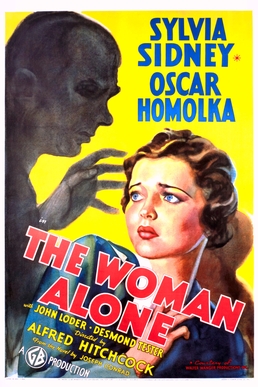
Sabotage, Sylvia Sidney, Oscar Homolka, directed by Alfred Hitchcock, 1936

The late suspense and thriller director Alfred Hitchcock (okay, okay, the late Sir Alfred Hitchcock since he pursued that title all his life) produced some genuine genre classics like Psycho and The Birds. But not all his work, especially his earlier work when he was as interested in framing a mood or doing clever cinemagraphic shots as scaring us half to death, reached that level. The film under review, 1936’s Sabotage, in a case in point. Frankly, the plot is plodding, the dialogue is stilted and the characters are if anything rather wooden. And while there are plenty of mood-creating facial shots and crowd scenes and some nice camera tricks this is strictly second-shelf Hitchcock.        

Let me make my case. The lights go out, the lights in 1936 London which causes a certain initial panic although the plucky British wind up laughing about this modern inconvenience. However this caper was no accident since it had been touched off by a foreign agent, Mr. Verloc (Oscar Homolka), who is using movie theater ownership in the heart of London as a cover. The country that Verloc is working for is not identified but it does not take too much imagination to assume that in 1936 that country would be Germany as the war clouds were again beginning to form in Europe. Of course if the idea is sabotage, here to put fear in the civilian population, then laughter is not what had been expected by the agent who was handling Verloc. So another, scarier, caper would be necessary to do the trick, bomb planted somewhere where it would cause carnage and put that desired fear into the hearts of ordinary citizens.           

But whatever the foreign network Verloc was working for Scotland Yard was on to him, had him covered by one of their top dog agents, Ted Spencer (John Loder) working undercover as a grocer’s assistant next to the theater. As the plot thickens Ted tries to see if Verloc’s wife (played by Sylvia Sidney) is involved in the plot so he takes her and her brother, Stevie, who is living with the Verlocs above the theater to dinner. She checks out clean. Along the way Verloc is making his preparations, connecting with a bomb-maker to do his dirty deed set for the Lord Mayor’s Day, a day when there will be throngs around town. A lot of the film is then set on the figure of Stevie who, Verloc being thwarted in his efforts to carry out the deed himself, becomes the sacrificial innocent lamb who will carry the bomb to its destination. The bomb goes off on a bus killing all, including Stevie. Mrs. Verloc is beside herself when she finds out Verloc had set Stevie up, had committed the deed, and kills him in a moment of anger and disgust. And she will go to prison as she is filled with remorse over her murder of her husband and tells Ted to take her in. End of story.       

Well not quite end of story. See, two things happen to let her off the hook. First Ted in the process of getting to know her has fallen for her and is ready to stake all on them getting away, a not unusual cinematic and literary devise when love-smitten cops have to put their loved ones in gaol. Second the bomb-maker to cover his tracks goes to Verloc’s apartment to recover any evidence (especially a bird-cage, complete with bird, he had sent along the bomb in). But the cops are on to him. Cornered, he blows himself up with what today would seem an eerily current bomb-jacket thus destroying all the evidence of Mrs. Verloc’s crime. And the chastised pair set of into the sunset, or rather fog. See what I mean. The only guy who plays to form as a bad guy is Verloc who looks sufficiently like a primitive bad guy to do such evil work. Fortunately old Sir Hitchcock will do better as he goes along.    
In The Time Of The 1960s Folk Minute- With Tom Rush’s No Regrets In Mind 


DVD Review

From The Pen Of Frank Jackman 

No Regrets, narrated by Tom Rush and whoever else he could corral from the old Boston/Cambridge folk scene minute still around, 2014  

I know your leavin's too long over due
For far too long I've had nothing new to show to you
Goodbye dry eyes I watched your plane fade off west of the moon
It felt so strange to walk away alone

No regrets
No tears goodbye
Don't want you back
We'd only cry again
Say goodbye again

The hours that were yours echo like empty rooms
Thoughts we used to share I now keep alone
I woke last night and spoke to you
Not thinkin' you were gone
It felt so strange to lie awake alone

No regrets
No tears goodbye
Don't want you back
We'd only cry again
Say goodbye again

Our friends have tried to turn my nights to day
Strange faces in your place can't keep the ghosts away
Just beyond the darkest hour, just behind the dawn
It feels so strange to lead my life alone

No regrets
No tears goodbye
Don't want you back
We'd only cry again
Say goodbye again

A few years ago in an earlier 1960s folk minute nostalgia fit I, at the request of my old time friend, Bart Webber,  from Carver, a town about thirty miles south of Boston and close enough to have been washed by the folk minute, did some reviews of other male folk performers from that period. Bart had just seen a fragile seeming, froggy-voiced Bob Dylan in one of stages of his apparently never-ending concerts tours and had been shaken by the sight and had wondered about the fate of other such folk performers. That request turned into a series of reviews of male folk-singers entitled Not Bob Dylan (and after that, also at Bart’s  request, a series entitled Not Joan Baez based on some of the same premises and based as well on the mass media having back then declared that pair the “king and queen” of the burgeoning folk music minute scene).

That first series had asked two central questions-why did those male folk singers not challenge Dylan who as I noted the media of the day had crowned king of the folk minute for supremacy in the smoky (then, now the few remaining are mercifully smoke-free although then I smoked as heavily as any guy who though such behavior was, ah, manly) coffeehouse night and, if they had not passed on, were they still working the smoke-free church basement, homemade cookies and coffee circuit that constitutes the remnant of that folk minute even in the old hotbeds like Cambridge and Boston. Were they still singing and song-writing, that pairing of singer and writer having been becoming more prevalent, especially in the folk milieu in the wake of Bob Dylan’s word explosions back then. The days when the ground was shifting under the Tin Pan Alley kingdom.   

Here is the general format I used for asking and answering those two questions which still apply today if one is hell-bent on figuring out the characters who rose and fell during that time: 

“If I were to ask someone, in the year 2010 as I have done periodically both before and after, to name a male folk singer from the 1960s I would assume that if I were to get any answer to that question that the name would be Bob Dylan (that “getting any answer” prompted by the increasing non-recognition of the folk genre by anybody under say forty, those influenced by hip-hop, techno-music and just straight popular music). And that would be a good and appropriate choice. One can endlessly dispute whether or not Dylan was (or wanted to be since he clearly had tired of the role, or seemed to by about 1966 when he for all intents and purposes “retired” for a while prompted by a serious motorcycle accident) the voice of the Generation of ’68 (so named for the fateful events of that watershed year, especially the Democratic Convention in America in the summer of that year when the old-guard pulled the hammer down and in Paris where the smell of revolution was palpably in the air for the first time since about World War II, when those, including me, who tried to turn the world upside down to make it more livable began to feel that the movement was reaching some ebb tide) but in terms of longevity and productivity, the never-ending touring until this day and releasing of X amount of bootleg recordings, the copyrighting of every variation of every song, including traditional songs, he ever covered and the squelching of the part of the work that he has control over on YouTube he fits the bill as a known quality. However, there were a slew of other male folk singers who tried to find their niche in the folk milieu and who, like Dylan, today continue to produce work and to perform. The artist under review, Tom Rush, is one such singer/songwriter.

“The following is a question that I have been posing in reviewing the work of a number of male folk singers from the 1960s and it is certainly an appropriate question to ask of Tom Rush as well. Did they aspire to be the “king” of the genre? I do not know if Tom Rush, like his contemporary Bob Dylan, started out wanting to be the king of the hill among male folk singers but he certainly had some things going for him. A decent acoustic guitar but a very interesting (and strong baritone) voice to fit the lyrics of love, hope, and longing that he was singing about at the time, particularly the No Regrets/Rockport Sunday combination which along with Wasn’t That A Mighty Storm and Joshua Gone Barbados were staples early on. During much of this period along with his own songs he was covering other artists, particularly Joni Mitchell and her Urge For Going and The Circle Game, so it is not clear to me that he had that same Dylan drive by let’s say 1968.

As for the songs on this album I mentioned that he covered Joni Mitchell in this period. A very nice version of Urge For Going that captures the wintry, got to get out of here, imaginary that Joni was trying to evoke about things back in her Canadian homeland. And the timelessness and great lyrical sense of his No Regrets, as the Generation of ’68 sees another generational cycle starting, as is apparent now if it was not then. The covers of fellow Cambridge folk scene fixture Eric Von Schmidt on Joshua Gone Barbados and Galveston Flood are well done. As is the cover of Bukka White’s Panama Limited (although you really have to see or hear old Bukka flailing away on his old beat up National guitar to get the real thing on YouTube).”

Whether Tom Rush had the fire back then is a mute question now although in watching the documentary under review, No Regrets, in which he tells us about his life from childhood to the very recent past (2014) at some point he did lose the flaming burn down the building fire, just got tired of the road like many, many other performers and became a top-notch record producer, a “gentleman farmer,” and returned to the stage, most dramatically with his annual show Tom Rush-The Club 47 Tradition Continues held at Symphony Hall in Boston each winter. And in this documentary appropriately done under the sign of “no regrets” which tells Tom’s take on much that happened then he takes a turn, an important oral tradition turn, as folk historian. 

He takes us, even those of us who were in the whirl of some of it back then to those key moments when we were looking for something rooted, something that would make us pop in the red scare Cold War night of the early 1960s. Needless to say the legendary Club 47 in Cambridge gets plenty of attention as does his own fitful start in getting his material recorded, or rather starts, mainly walking around to every possible venue in town to get backing for record production the key to getting heard by a wider audience via the radio and to become part of the increasing number of folk music-oriented programs, the continuing struggle to this day from what he had to say once you are not a gold-studded fixture.

Other coffeehouses and other performers of the time, especially Eric Von Schmidt, another performer with a ton of talent and song-writing ability who had been on the scene very, very early on who eventually decided that his artistic career took first place, get a nod of recognition.  As does the role of key radio folk DJ Dick Summer in show-casing new work (and the folk show, picked up accidently one Sunday night when I was frustrated with the so-called rock and roll on the local AM rock station and flipped the dial of my transistor radio and heard a different sound, the sound of Dave Von Ronk, where I started to pick up my life-long folk “habit”). So if you want to remember those days when you sought refuse in the coffeehouses and church basements, sought a “cheap” date night (for the price of a couple of cups of coffee sipped slowly in front of you and your date, a shared pastry and maybe a few bucks admission or tossed into the passed-around “basket” you got away easy and if she liked the sound too, who knows what else) or, ouch, want to know why your parents are still playing Joshua’s Gone Barbados on the record player as you go out the door Saturday night to your own adventures watch this film.