Wednesday, December 27, 2017

When Super-Heroes Do Their Thing- Marvel Comics “The Avengers” (2012)-A Film Review


DVD Review

By Phil Larkin
         
The Avengers, starring Robert Downey, Jr., Chris Evans, Mark Ruffalo, Scarlett Johannsson, 2012

WFT-again. Phil Larkin here to tell one and all that I am ticked off once again having been pieced off for the second time in recent memory by one site manager Greg Green to do another review of the freaking seemingly endless Marvel Studio productions. This time The Avengers which is strictly kid’s comic book stuff thrown on the screen since somebody there realized that today’s kids don’t read, don’t even read comic books but will sit through a couple of hours of some mutants ass-kicking a second set of mutants, the latter bad dudes who get no sympathy from anybody, munching giant tubs of buttered popcorn swilled down with giant sodas. Yeah so now you get WTF is all about.

This time I am not putting my screed like I did the first time in brackets so the disinterested reader did not have to bother to read about the flaming internal politics behind this social media site. I don’t expect, frankly, that this plea for sanity, my sanity to see the light of day and that is to be expected from this new regime, Greg Green and his toady rubber-stamp so-called Editorial Board which seems intent on getting rid of all the old writers who sided with Allan Jackson the previous site manager before he was purged (and I am not putting that word in quotation marks since it has become apparent, at least to me, that Allan’s so-called retirement was just a publicity ruse to cover a dirty deed removal. Even if any of this does see the light of day Green will probably have cyber-red penciled the thing so it reads like the mutterings of a craze maniac. So yes, WTF I have nothing to lose either way since I am probably headed for that same Siberian fate as my old friend Alan Jackson.     

For those who missed the previous piece quickly this whole new indignity started, or this second chapter of the assignment distribution problem started, when a few readers wrote in to Greg Green to complain about my use of the “f” word in the introduction to my I almost blush to say “review” on the Marvel production Captain America: Civil War. (I won’t even bother to write the “f” word all out since I know that simple every day word will never make it pass the Puritan censors here who think we are back in the gentile 1950s when such thing would never be mentioned in public, especially in mixed company.) The reason for the foul language was that I was extremely ticked off that I had not been given a plum assignment for me doing a lesser Humphrey Bogart film 1952’s Deadline-USA and was pieced off doing that Captain America thing according to Greg to broaden my reach with some modern material. Like I had been stuck in 1950 and never had done a modern film review before.

Moreover, and this I think is the core of Greg’s real reason, was in trying to reach younger audiences which had been drifting away from the site as the older writers allegedly were stuck in that same 1950s as me, he took umbrage at my language and not for any other reason. But see if he had talked to any of the other writers like Josh Breslin, Si Lannon, Bart Webber, even staid old political commentator Frank Jackman, guys who knew Allan Jackson in the old days he would have known that in my youth I was called Foul-mouthed Phil for just that language. And they had written, at least Bart had written about it in this space. The funny thing is that under Allan my pieces, especially the foul language ones, had the highest reader ratings. What Greg doesn’t know and the guys from back in the day, including Bart, could never figure out was that back then the girls, even the proper go to Sacred Heart Roman Catholic Church on Sunday and who had Bibles between their knees, were crazy to hear me swear. How silly the times have changed for the worse when a few “fs” blow up the planet, or at least the regime.                   

The so-called real reason according to a couple of the younger writers it turned out though was that Greg had just brought young, twenty-something young Kenny Jacobs on board and allegedly gave him that assignment so he could broaden his reach as well. Here is a kid who wasn’t even born and as he admitted neither were his parents when that film was originally presented against the expertise of a guy like me who was both a Bogie aficionado and had seen the film a few times in retrospective film festival theaters. Moreover how was a kid who grew up on cellphones, texting, social media, Internet and all the rest supposed to get a handle on the declining fate of modern day hard copy newspapers. Against a kid who spent many a lonely get out of the house Strand Theater Saturday afternoon double-feature matinee watching just such material. “F” the reason just didn’t hold up and I responded in fiery anger.

Adding salt to the wound Greg after that first review said to Kenny that there would be more coming up if he felt he would like to continue his education. That brings us to chapter two when another obvious Phil Larkin assignment came up doing the bright and witty Howard Hawk-directed Bringing Up Baby starring the versatile Cary Grant and Katharine Hepburn. Strictly a home run type review for me and who knows what the kid will do with it since I am sure he will not get either the social commentary or wit involved. And I am once again stuck with a f—king kid’s movie review.               

Stuck is just the right word. Look I am no stranger to tough to read about films, films hard to get a hook on. Figure it out for yourself on these various comic book action publication thinks. Whoever produced them they run to a type. Start with the characters once you branch out of the single hero-type productions like Ironman, Batman, and Superman and have the action involve a clot of super-hero mutants, yes, mutants. Take a guy like Captain America, played by brawny Chris Evans. He started out as a 4-F ninety-eight pound weakling out of some 1950s matchbook cover Charles Atlas girls throw sand in your face advertisement back in World War II, got into this weird junkie steroid program that created an over-sized guy who could jump high, run like the wind, maybe faster and bonk bad guys by the carload who got put in deep- freeze for some seventy years only to be found among the wreckage of a plane up in the Artic and ready to do battle against I don’t know bad guys, Hydra guys. But the guy has the personality of a flounder and the brain of an amoeba who had trouble multiplying four times three because he had run out of fingers at ten and got stymied after that.     

And the Captain is not the worst of the lot (I will only detail who is in this currently reviewed film since there are some changes from the crew in that first review.) Take the Hulk, played by Mark Ruffalo, aka mild-mannered nerdy Doctor Banner, another junkie,  when he is not angry or brought to anger which is pretty easy. (If you have watched that green-etched transformation in action when Hulk balloons up to King Kong size as his shirt is torn to shreds have you ever noticed that he pants not only are Puritan-approved intact but have unlike that unlucky shirt ballooned up too-WFT) When riled which isn’t hard to do the guy is a brainless twit as likely to cross friend as foe and moreover hard as this is to believe he is dumber, sorry if I offend anybody by not saying mentality challenged, than dishwater, dumber even than the Captain who at least can count to ten.

Let’s go on with the roll call. Take the only female this time out, the long Russia-named which I can’t pronounce Black Widow played by Scarlett Johannsson, who admitted looks really good in black leather but whose only positive skills are karate chops and bam-bam two-fisted gun play. She is inherently untrustworthy in my book having probably been a commie agent or worse one of Putin’s people. Strangely and maybe they know something we don’t about the Widow nobody among the male mutant clot takes much interest in her romantically. Of course watching her bam-bam away even the ever romantic Phil Larkin would think twice about taking a run at her. The master archer whose archaic weaponry of bow and arrow should have put him out to pasture long ago is a cipher and we best leave it at that-strictly cannon-fodder. The beautiful Thor, fresh out of Wodin or some Norse myth bullshit who had originally been ready to kill off earthlings got “turned” is another one of those brawny guys whose muscle count is higher than their I.Q.  In this film the poor bastard has the added disadvantage of being the brother of bad guy HYDRA agent Loki, the guy with the tell-tale heart and big plans to run the universe between lunges.           

To round out the crew. Two guys, one mutant, one average world citizen, who might have amounted to something are of a little more interest. This poor little rich boy inventor freak with some serious heart-trouble wise-cracking Stark, played by Robert Downey, Jr, aka Ironman, could have been a great leader if he took the whole caper seriously, could have figured out a way to really lead if he had not been taken over root and branch by assorted A.I. agents making him yet another beast of burden like Hulk except with some brains. The last character, the only non-freak in the bunch meaning he might bleed if he were wounded Nick Fury, played by Samuel L. Jackson, seems to be amused by all the freaks he and his S.H.E.I.L.D organization have inherited (which at some point in one of these freaking story-lines had been a front, had been infiltrated by Hydra loyalist so much for the good guys being good. Probably is amused that a half dozen otherwise unemployable misfits are leaven to save this wicked old world from those dark forces who wish to take charge and ask questions later.

Since I know this review will never see the light of day or be so red-penciled by Greg that it amounts to the same thing I will not spent much time on plot. In that I am just taking after the Marvel producers who didn’t either. Actually what plot?  X-bad guys (name your organization or bad guy renegade special forces crew that however seems to be composed mostly of cannon-fodder for the good mutants) are out to take over the world using plenty of muscle and technology are confronted by half a dozen specially skilled elite special forces mutants who take a long-drawn out but predictable victory while humankind watches and wonders. (Taking a serious amount of casualties along the way as these super-heroes rack up “collateral damage” galore WTF. WTF let the kid Jacobs do the next one of these mass production jobs.              


Once Again On The 1960s Folk Minute-The Cambridge Club 47 Scene


By Bart Webber 

[As of December 1, 2017 under the new regime of Greg Green, formerly of the on-line American Film Gazette website, brought in to shake things up a bit after a vote of no confidence in the previous site administrator Peter Markin was taken among all the writers at the request of some of the younger writers abetted by one key older writer, Sam Lowell, the habit of assigning writers solely to specific topics like film, books, political commentary, and culture is over. Also over is the designation of writers in this space, young or old, by job title like senior or associate. After a short-lived experiment by Green designating everybody as “writer” seemingly in emulation of the French Revolution’s “citizen” or the Bolshevik Revolution’s “comrade” all posts will be “signed” with given names only. The Editorial Board]

[Personally I find this disclaimer above or whatever it purports to be by the "victorious" new regime headed by Greg Green and his so- called Editorial Board annoying. Those of us who defended Allan Jackson (aka Peter Paul Markin) here have taken our "beating" and have moved on as far as I can tell. Going on and on about the internal purging process that did Allan in to disinterested readers who want to read the main piece without disruptions  presented under some theory that it is informative about such inner social media workings is beyong me. Bart Webber]    


I am not the only one who recently has taken a nose-dive back in time to that unique moment from the late 1950s to the mid-1960s when folk music had its minute as a popular genre. People may dispute the end-point of that minute like they do about the question of when the 1960s ended as a counter-cultural phenomenon but clearly with the advent of acid-etched rock by 1967-68 the searching for and reviving the folk roots had passed. As an anecdote in support of that proposition that is the period when I stopped taking dates to the formerly ubiquitous home away from home coffeehouses, cheap poor boy college student dates to the Harvard Square coffeehouses where for the price of a couple of cups of coffee, a shared pastry, and maybe a couple of dollars admission charge you could hear up and coming talent working out their kinks, and took them instead to the open-air fashion statement rock concerts that were abounding around the town. Some fifty years out in fits of nostalgia and maybe to sum up life’s work there have been two recent documentaries concerning the most famous Harvard Square coffeehouse of them all, the Club 47 (which still exists under the name Club Passim in a similar small venue across from the Harvard Co-Op Bookstore Annex).

One of the documentaries, Club 47 Revisited put out a few years ago traces the general evolution of that club in its prime when the likes of Bob Dylan, Joan Baez, Tom Rush, Eric Von Schmidt, the members of the Jim Kweskin Jug Band (the forming of jug bands itself a part of the roots revival we were in thrall to), and many others sharpened up their acts there. The other documentary, No Regrets (title taken from one of his most famous songs) which I have reviewed elsewhere in this space is a biopic centered on the fifty plus years in folk music of Tom Rush. Both those visual references got me thinking about how that folk scene, or better, the Harvard Square coffeehouse scene kept me from going off the rails, although that was a close thing.        

Like about a billion kids before and after in my coming of age in the early 1960s I went through the usual bouts of teenage angst and alienation aided and abetted by growing up “from hunger” among the very lowest rung of the working poor with all the pathologies associated with survival down at the base of society where the bonds of human solidarity are often times very attenuated. All of this “wisdom” of course figured out, told about, made many mistakes to gain, came later, much later because at the time I was just feeling rotten about my life, my place in the sun, and how I didn’t have a say in what was going on. Then through one source or another mainly by the accident of tuning my life-saver transistor radio on one Sunday night to listen to a favorite rock and roll DJ I found a folk music program that sounded interesting (it turned out to be the Dick Summer show on WBZ, a DJ who is featured in the Tom Rush documentary) and I was hooked by the different songs played, some mountain music, some jug, some country blues, some protest songs. Each week Dick Summer would announce who was playing where for the week and he kept mentioning various locations, including the Club 47, in Harvard Square. I was intrigued.         

One Saturday afternoon I made connections to get to a Redline subway stop which was the quickest way for me to get to Harvard Square, and which was also the last stop on that line then, walked around the Square looking into the various clubs and coffeehouses that had been mentioned by Summer and a few more as well. You could hardly walk a block without running into one or the other. Of course during the day all people were doing was sitting around drinking coffee and reading, maybe playing chess, or as I found out later huddled in small group corners working on their music (or poetry which also had some sway as a tail end of the “beat” scene) so I didn’t that day get the full sense of what was going on. A few weeks later, having been hipped to the way things worked, meaning that as long as you had coffee or something in front of you in most places you were cool I always chronically low on funds took a date, a cheap date naturally, to the Club Blue where you did not pay admission but where Eric Von Schmidt was to play. I had heard his Joshua Gone Barbados covered by Tom Rush on Dick Summer’s show and I flipped out so I was eager to hear him. So for the price of, I think, two coffees each, a stretched-out shared brownie and two subway fares we had a good time, an excellent time (although that particular young woman and I would not go on much beyond that first date since she was looking for a guy who had more dough to spend on her, and maybe a “boss” car too.


I would go over to Harvard Square many weekend nights in those days, including sneaking out of the house a few time late at night and heading over since in those days the Redline subway ran all night. That was my home away from home not only for cheap date nights depending on the girl I was interested in but when the storms gathered at the house about my doing, or not doing, this or that, stuff like that when my mother pulled the hammer down. If I had a few dollars make by caddying for the Mayfair swells at a private club a few miles from my house I would pony up the admission, or two admissions if I was lucky,  to hear Joan Baez or her sister Mimi with her husband Richard Farina, maybe Eric Von Schmidt, Tom Paxton when he was in town at the 47. 

If I was broke I would do my alternative, take the subway but rather than go to a club I would hang out all night at the famous Harvard Square Hayes-Bickford just up the steps from the subway stop exit. That was a crazy scene made up of winos, grifters, con men, guys and gals working off barroom drunks, crazies, and… almost every time out there would be folk-singers or poets, some known to me, others from cheap street, in little clusters, coffee mugs filled, singing or speaking low, keeping the folk tradition alive, keeping the faith that a new wind was coming across the land and they, I, wanted to catch it. Wasn’t that a time.          

Tuesday, December 26, 2017

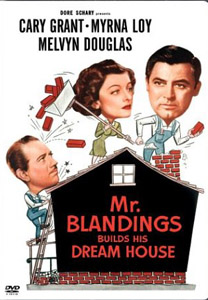
In Defense Of Urban Flight-Cary Grant and Myra Loy’s “Mr. Blanding Builds His Dream House” (1948)-A Film Review


DVD Review
   
By Sandy Salmon

Mr. Blanding Builds His Dream House, starring Cary Grant, Myrna Loy,  


[As of December 1, 2017 under the new regime of Greg Green, formerly of the on-line American Film Gazette website, brought in to shake things up a bit after a vote of no confidence in the previous site administrator Peter Markin was taken among all the writers at the request of some of the younger writers abetted by one key older writer, Sam Lowell, the habit of assigning writers to specific topics like film, books, political commentary, and culture is over. Also over is the designation of writers in this space, young or old, by job title like senior or associate. After a short-lived experiment designating everybody as “writer” seemingly in emulation of the French Revolution’s “citizen” or the Bolshevik Revolution’s “comrade” all posts will be “signed” with given names only. The Editorial Board]

********
Nowadays the great flight from the big cities started in the immediate post-World War II period with the construction of Levitttown-type suburbs has run its course and there is a creep back to the cities by the non-auto hungry Generation X. Maybe it is the economics of purchase but I have listened in disbelief as father after father of my acquaintance has told me that their young charges do not own, do not lust after their won automobile. In some cases do not have a driver’s license at twenty-something. Heresy, sheer heresy to our generation hitting the road at sixteen and at least pining for an owned automobile around the same time. That strange sociology phenomenon aside back then every even marginally prosperous family was itching to join the exodus. (And maybe from smaller town too when you remember back to the days when places like downtown Mill Valley outside of Trenton, New Jersey where I grew up in the 1950s used to be thriving places where you would spent plenty of time doing this and that before the big malls sucked the life out of basically Mom and Pop Main Street operations.)  That is the working premise of the film under review, Mr. Blanding Builds His Dream House, as Cary Grant and Myra Loy go through their paces trying to make the damn thing come true without bankrupting them and not without seemingly every pitfall known to house-building man (and woman).

Mad man, you know Madison Avenue, New York City upwardly mobile advertising man fresh for the war, World War II, Mr. Blanding, played by versatile Cary Grant who could play for laughs or suspense at the flip of a coin, is sick and tired of his cramped quarters in an apartment in the city and dreams of getting out in the great fresh suburban, or what will be suburban air of Connecticut. Housewife and good mother Mrs. Blanding, played by equally versatile Myra Loy couldn’t agree more, as long as the operation doesn’t set them “underwater” as the more recent expression post-2008 housing bubble burst would have it. The problem, serious problem is that these city slickers don’t know from nothing about such things as old time Victorian houses and farms, allegedly cheap ones to fix up, which is what they have their ignorant little hearts set on to be able to bring up their two precocious young daughters in a non-city environment.  

Naturally not knowing anything about rural real estate markets they grab a nice old place on the cheap. No, not on the cheap when the hi-jinx are through since this place is a “lemon,” a dead-end which has to be torn down and another mighty dwelling put in its place which really does almost bankrupt the pair especially when Mad man Mr. Balnding can’t come up with some hammy slogan to sell, well, hams in order to keep his job and keep from going under water like a million other people before and after them. Not Cary or Myra’s best work which has to do with the limits of the story-line after all how many pratfalls and exasperating experiences can you work out, or get worked up about, over your so-called dream house before you simply don’t care anymore. Or we in that Saturday movie audience or now DVD home watching crowd either.  

   
I Hear Mother Africa Calling-With The Late Odetta In Mind


By Ray Carter   

They say that the blues, you know, the quintessential black musical contribution to the American songbook along with first cousin jazz that breaks you out of your depression about whatever ails you or the world, was formed down in the Mississippi muds, down in some sweat-drenched bayou, down in some woody sunken hollow all near Mister’s plantation, mill, or store. Well they might be right in a way about how it all started in America as a coded response to Mister’s, Master’s, Captain’s wicked perverse ways back in slavery times, later back in Mister James Crow times. 

I do believe however they are off by several maybe more generations and off by a few thousand miles from its origins in hell-bent Africa, hell-bent when Mister’s forbears took what he thought was the measure of some poor grimy “natives” and shipped them in death slave boats, those that survived the Middle Passage of seasick death and disease making one think of once owned by William Ruskin W.B.T. Turner’s Slave Ship painterly masterpiece of the sick and dying thrown overboard for bloody insurance wagers which should have made everyone an abolitionist but didn’t and brought them to the Mississippi muds, bayous and hollows. Took peoples, proud Nubians, builders and artifacters, who had created very sharp civilizations when Mister’s forbears were wondering what the hell a spoon was when placed in their dirty clenched fingers, still wondered later how the heck to use the damn thing, and why and uprooted them whole.          


Uprooted you hear but somehow that beat, that tah, tat, tah, tah, tat, tah played on some stretched string tightened against some cabin post by young black boys kept Africa home alive. Kept it alive while women, mothers, grandmothers and once in a while despite the hard conditions some great-grandmother who nursed and taught the little ones the old home beat, made them keep the thing alive. Kept alive too Mister’s forced on them churched religion strange as it was, kept the low branch spirituals that mixed with blues alive in plain wood churches but kept it alive. So a few generations back black men took all that sweat, anger, angst, humiliation, and among themselves “spoke” blues on juke joint no electricity Saturday nights and sang high white collar blues come Sunday morning plain wood church time.  Son House, Charley Patton, Skip James, Sleepy John Estes, Mississippi John Hurt and a lot of other guys who went to their graves undiscovered in the sweat sultry Delta night carried on, and some sisters too, some younger sisters who heard the beat and heard the high collar Sunday spirituals. 

Kept alive by some sisters like Odetta, did she need another name, a Mister slave name to complete his domination, big-voiced, who made lots of odd duck searching for roots white college students mainly marvel that they had heard some ancient Nubian Queen, some deep-voiced Mother Africa calling them back to the cradle of civilization. Our collective birth home.           
Bernie O's Revenge- With Raymond Chandler’s “The Big Sleep” In Mind  


By Seth Garth 

[Bernie, O., we will avoid his last name since he has recently retired from the force and we will let him enjoy his peace, after twenty-five of decent and honorable service. The “force” for those who are clueless any police department but here the Bay City Police Department a comfortable California seaside town as its name would indicate, although not as sleepy a town as the seaside designation would connote, That last phrase about Bernie, we can skip the “O” now that we can without rancor leave him to his peace was at one time up for grabs. Had been challenged back when he had been on the force maybe five years in the days before the war (World War II) when anything went in the fair city from gambling, dope, un-bonded booze and women, women who would take you around the world or around the block where a male confederate with a handy blackjack waited in earnest for any unsuspecting goof, not Kerouac’s unsuspecting holy saintly beaten down by the grind of modern society and left to rust along the empty roadside goof either but just some drunken wayward tourist who thought he still had that old sex appeal that his Martha used to brag to her friends about.

And that anything goes, the dope to girls action, especially that latter category since he had started out as a hustling jack-roller grabbing marks some whore he was working with was steering his way was strictly the bought and paid for territory of one Eddie Miles, Mister Edward Raymond Miles when they let him into the swanky Bay City Golf Club-or else- but plain run of the mill gangster Eddie now. We can use his last name since he is finishing up the last five years of a twenty-five year gaff at the Q for plenty of stuff-extortion, pandering, armed this and that,  everything except the one the jury couldn’t pin on him-murder one, murder for hire if you want the full kick. They had a raw assistant D.A. assigned to the case since everybody had the case down to a shoo-in for sure and the D.A. had his own set of problems having let a few Eddy non-murder crimes go under the sea (and “sponsoring” Eddie in that swanky club where he was ostracized after the rap sheet on Eddie became public- probably would have been worse except it is always good to have a D.A. sweating and forgetting stuff-criminal or country club).   

Bernie, Bernie O. when you think back about those days was the straightest rightest cop that ever put on shoe leather in Bay City. The problem back those twenty some years ago was that every other freaking cop on the force was “on the take” to Eddie, or knew guys on the take to Eddie which was the same thing. Somebody, without a shred of evidence had fingered Bernie as a bad cop in Eddie Miles hip pocket. Bought and paid for- a tough charge to defend against when everybody was on the take and wanted to cover their asses. Of course in those days a cop, a five year cop anyway, couldn’t pursuit a case on his own where he had been accused of corruption. Against Department policy. A great set-up for a set-up. So he clamped Phil Marlin, a guy who had been on the force with him, had gone through the academy with Bernie but had been fired for insubordination, fired good, when he wouldn’t tumble to looking the other way when one of Eddie’s boy took some underage girl into a backseat out on the back roads of the Pacific Coast Highway for a blow job and whatever else she was offering-or he was taking. Phil had turned private investigator, private dick, keyhole peeper to most cops. Took the case strictly as a favor to Bernie, no charge, you see, that was how tight they had been back when they had each other’s back in the days they were flat-footing beat cops down in the tough Five Points neighborhood.

Bernie had been in on the bust of Eddie Miles, after the Staties had taken over based on what Marlin had dug up from the sewer and they insisted that Bernie be in on the nab so he had some satisfaction that he was cleared by his own actions. The problem for Bernie and for Marlin came later when Marlin decided he wanted to tell the story to the general public-maybe as a cautionary tale, maybe to show how fragile a grip every human has on life, or maybe he just wanted his name up in lights in some fake private dick’s hall of fame. What Marlin did was get this writer, kind of well- known for writing racy pulp fiction crime detection novels, a guy named Raymond Chandler, to “ghost” the story for him. Between Marlin’s vivid imagination and Chandler’s excessive literary license they balled the whole story up, balled it up pretty bad. So Bernie with his own leisure time, his peace time, hired me to “ghost” his true version of the case-the Eddie Miles bust. The only thing that Bernie and Marlin, the late Phillip Marlin who had his check cashed down in sunny Mexico one back alley night when he was looking for a fugitive named Terry Manning, agreed on was that Bernie had handed him a private job for General Guy Sternwood. Yeah, Sternwood the guy who turned the La Brea tar pits into gold-for himself and his. He was having trouble with one of his wild daughters and needed a guy who could handle the fix he had been put in by her posing for raw, today they would say kinky, nude photographs and guys were looking for dough, serious dough for the negatives-or else. Here is how it really played out from that agreed point on.             

****
Marlin had shown up at the General’s mansion one sunny summer afternoon up in the hills of Bay City far from the humidity and dust and far from the sight of those still-producing oil pumps that got him the place on the hill. Before he could be invited into the General’s bedroom (the General would enumerate more health issues than seemed possible for a breathing human being and he had been under doctor’s to keep to his bed, his now bed-office) he was confronted by one of the wild daughters, the younger one Carol. She had asked him, once she had looked him up and down in a way usually reserved for guys and figured him for a tumbler, if once he had finished talking to her father he wanted a good time in her room. She also told him that she did not care what her father wanted she wanted those nude photos circulated, wanted to be a Hollywood starlet just like Eddie Miles had promised. Wanted all the boys to get big in the pants when they snuck a peak at her luscious body doing nasty little things (and it was luscious according to Marlin-Bernie rated her as a good afternoon fuck and then get the hell out of town).

Phil had told Bernie, and more importantly had told Chandler who retailed the story, that he never had gone into her room after speaking with the General with whom he had accepted the assignment to act as go-between to Eddie in order to get the freaking photos and negatives back to be burned. According to Norris, the trusty butler, a guy who had no ax to grind then, was the General’s eyes and ears in those days (and was stealing him blind since he had control of household checking accounts-like manna from heaven if a guy knew how to fudge the books just so and old Norris had the game down pat) told him that he had seen Marlin coming out of Carol’s room disheveled and glassy-eyed like she had taken him around the world.

That is the real reason Marlin never got anywhere trying to get those photographs back. He would always argue that the General was maybe hot to trot to get the pictures after all he could hardly face his social equals when his daughter was front and center in some low-rent “girlie” magazine (where in the end they would wind up courtesy of Carol sending an agent to one of those publications begging them to put them in the magazine). But the real reason he hired Marlin was he was looking to find out what had happened to his trusted confidante, Rex Randall, who had apparently run off with Eddie Miles’ girlfriend to parts unknown. (Phil had dismissed the run away and elope story as so much eyewash but Bernie knew, had reason to know that Eddie was carrying a big torch for the broad and who knows what he might have done with Rex). Rex a guy Phil knew from the days when Rex was managing a guy in Half Moon Bay dope operations and grapping all the ass he could from young things who were ready to do anything to get something for the head-anything. Bernie knew of him but even then knowing about Eddie’s big torch figured that Rex was sleeping out in the bay somewhere with a sack of rocks tied to him.                

So Phil went through the paces, went through the motions of trying to earn his big bonus-attached (not for the Rex part-for the fucking nude pics), and had met Laura the older daughter as he was leaving his sister’s room. He always claimed he never met her then but had been in the General’s bed-side office after having swigged a couple of high-shelf brandies to seal the deal and then left to pursue justice some such bullshit. Although she wasn’t as photograph pretty as her younger sister Carol she was just as wild, her lovely vices gambling and cases of scotched devoured. Needless to say the story gets jumbled up again when Marlin later denied that he tumbled to her bedroom eyes proposition but Norris once again put paid to that lie since early the next morning he had seen Marlin, disheveled, glassy-eyed and looking sexually-sated (how Norris knew that was the case in England where he had learned the butler trade he had had his fill of such meanderings from the nobility that he had been in service  to-said they had the morals of a great white shark-none). The worse part of that tryst with Laura was that he had spilled the beans about the General’s desire to see what had happened to Rex to Eddie Miles whom she was in hock to for gambling debts at his off-shore casino (and as it turned out had been trying to get out from under by fucking Eddie and a couple of his boys to death-yeah, the morals of a shark- a resourceful girl no question).

Marlin after having his fill of the Sternwood young women then “got to work,” hit the library to see about old rare books and their provences since he assumed that the photos of Carol would wind up in some high-end antique bookstore used as a front for select clientele to “borrow” such fare (some of them when the lists became public later friends of the General who must have gloated and a veritable who’s who at the Bay City Golf Club-yeah, the morals of a shark all the way around). (It was only later that Carol got that agent to hustle his photo-ass to the “girlies” once they had been used at Eddie’s trial since they “belonged” to her). Phil did a perfunctory search of all the old-timey bookstores in town, got nowhere and laid low for a few days before telling the General he was hot on the case and told him that he needed some walking around money to go to Eddies’ casino off-shore. Norris set him up with a cool thou-not bad for walking around money-then anyway. 

One night, the first night he ran into one Eddie Miles, he also ran into Laura losing a load at the tables but smiling about it as she gave him a come hither look that would snow (later when they were in closer proximity she offered to take him out to her car for a little off-hand tryst-which after he had finished up with Eddie he gladly took her up on funny how that time appeared on his bill when it came time to close up accounts with Norris. Services rendered. So another glassy-eyed night with a Sternwood sister. He had gotten nowhere asking Eddie Miles where his wife was and about the rumor that she had taken a powder with Rex-the General’s confidante.  Getting nowhere fast on this case. Getting nothing on Eddie either. 

Then the great break-through although it was really only Marlin falling into something after another guy, a guy he could have saved by all the evidence but he had gotten “cold feet” when the deal went down. It seems that one of the clerks, Iris, a comely female clerk that he had taken into the stockroom one rainy afternoon, at Ye Olde Bookstore had had a boyfriend who had been acting as an agent for Eddie Miles in trying to unload Carol’s sulky nude photos. Somehow he had had trouble moving the merchandise and Eddie dumped him-dumped him literally in the bay for some purpose-or np purpose. Oh, not Eddie personally-Edward Miles did not do his own dirty work but had his number one boy, The Camino Kid, a bad-ass no question throw a sack over the boyfriend’s head and put a few stones in the mix and let him sink and sleep with the fishes off the bow of  Eddie’s casino liner. Nice boy. The girlfriend after getting friendly with Phil that afternoon loosened up by a few drinks had spilled the beans about the boyfriend number one after she had got herself another beau. To even the score with Eddie though she was ready to tell Marlin where Eddie’s wife was-for a couple of hundred bucks to blow town with. Marlin agreed and was to meet the new beau, a square little guy who probably was too short for that ravishing clerk.        
                 
That boyfriend number two, Harry, wasn’t any luckier than number one since he was acting as go-between for Iris with Marlin (Iris a girl who had her charms apparently but who always left standing unlike her beaus). They were supposed to meet at Harry’s office but the Camino Kid got there first while Phil was hiding in an anteroom. The Kid’s chore that day to get Harry to clam up about Eddie’s wife’s whereabouts. The little guy held out though-Iris must have had something he had not noticed that afternoon in the stockroom. Yeah, paid with his life for protecting his honey while Marlin stood breathless in the next fucking room. Here is where the wheels turned though. The cops, Bernie and his partner, were tailing the Camino Kid since the Iris’ boyfriend number one washed up on shore tied up in a sack just the way the Camino Kid liked to finish up his handiwork. They were able to follow him to the backroads of Ocean City the next town over where he stopped at an old house set back from the road. Waiting at the door was Eddie Miles’ wife. No sign of Rex though.         

Earlier back at Harry’s office Marlin had gotten out of his deep freeze long enough to follow Bernie’s police vehicle to that lonely country road. That is why Marlin claimed he took the Camino Kid out. That the fire -power that did the Kid in when he resisted arrest and started ban-banging had come from his weapon. Claimed he “saved” Bernie’s partner who was a dead man if he hadn’t shot the Kid first. Since he was using a police special (he had never turned in his gun when he was fired from the cops figuring he would need a weapon as a private dick) who the hell would have known. Bernie knew for a fact that he had winged the Kid and then doubled-down on him. He had heard no additional shots. Chalk one bad guy gone up for Bernie if you are keeping score. That action is what got him in on the deal when the Staties went after Eddie Miles and his henchmen.


As for Rex, well, here is where things get weird, where what the rich or do not do gets sealed with seven seals. Carol, and Marlin should have seen this coming given his own experiences with the girls, had killed Rex one afternoon when he would not give her a tumble. Carol did not like not being obeyed when she had her wanting habits on. That is why Marlin got taken around the world that day he went into the General’s hire. Laura had covered up for her sister-also why he gotten taken around the world by her. They had him figured as a sex-addled guy and they knew their mark. Marlin out of respect for the old man and his troubles with those wild sisters let it ride. Let the old man fade into his endless sleep not knowing he had sired two monsters. Before he left that hillside mansion though he made sure he got his full rate and expenses. That’s the real “skinny” forget all that other self-serving stuff.          
The Blues Aint Nothing But Lucille On Your Mind- With B.B. King’s Lucille In Mind  


Here is the drill. I started out life listening to singer like Frank Sinatra, Bing Crosby (and his brother Bob), Miss Patti Page, Miss Rosemary Clooney, Miss Peggy Lee, the Andrew, McGuire, Dooley sisters, and all the big swing bands from the 1940s like Harry James, Tommy Dorsey (and his brother Jimmy) as background music on the family radio in the 1950s which my mother had always during the day to get her workaday daytime household world and on Saturday night when my father joined in. Joined in so they could listen to Bill Marlowe on local radio station WJDA and his Memory Lane show from seven to eleven where they could listen to the music that got them (and their generation) through the “from hunger” times of the 1930s Great Depression and then when they slogged through (either in some watery European theater or Pacific one take your pick) or anxiously waited at home for the other shoe to drop during World War II. I am not saying that they should not have had their memory music after all of that but frankly that stuff then (and now although less) made me grind my teeth. But I was a captive audience then and so to this day I can sing off Rum and Coca Cola and Don’t Sit Under The Apple Tree from memory. But that was not my music, okay. 

Then of course since we are speaking about the 1950s came the great musical break-out, the age of classic rock and roll which I “dug” seriously dug to the point of dreaming my own jailbreak dreams about rock futures (and girls) but that Elvis-etched time too was just a bit soon for me to be able unlike my older brother, Prescott, to call that the music that I came of age to. Although the echoes of that time still run through my mind and I can quote chapter and verse One Night With You, Sweet Little Sixteen, Let’s Have A Party, Be-Bop-a-Lula, Bo Diddley, Peggy Sue and a whole bunch more.   

The music that I can really call my own is the stuff from the folk minute of the 1960s which dovetailed with my coming of chronological, political and social age (that last in the sense of recognizing, if not always acting on, the fact that there were others, kindred, out there beside myself filled with angst, alienation and good will to seek solidarity with). You know the mountain tunes of the first generation of the Carter Family, Buell Kazell, Jimmy Rodgers, the old country Child ballads (Northwest Europe old country), the blue grass music , and the protest songs by the likes of Bob Dylan, Joan Baez, Tom Paxton, Dave Von Ronk and Phil Ochs. The latter songs being what drove a lot of my interest once I connected their work with the Harvard Square coffeehouse scene (and the adjacent hanging out at the Hayes-Bickford Cafeteria which I have written plenty about elsewhere on poverty nights, meaning many nights).


A lot of the drive toward folk music was to get out from under the anti-rock and rock musical counter-revolution that I kept hearing on my transistor radio during that early 1960s period with pretty boy singers and vapid young female-driven female singer stuff. Also to seek out roots music that I kept hearing in the coffeehouses and on the radio once I found a station (accidently) which featured such music and got intrigued by the sounds. Part of that search, a big search over the long haul, was to get deeply immersed in the blues, mainly at first country blues and later the city, you know Chicago, blues. Those country guys though intrigued me once they were “discovered” down south in little towns plying away in the fields or some such work and were brought up to Newport to enflame a new generation of aficionados. The likes of Son House, Skip James, Bukka White and of course Mississippi John Hurt. But those guys basically stayed in the South and it took a younger generation like Howlin’ Wolf, Muddy Waters, and the guy whose photograph graces this sketch, B.B. King, to move north, to follow the northern star to the big industrial cities (with a stop at Memphis going up river) to put some electric juice in those old guitars and chase my blues away just by playing like they had made their own pacts with the devil. Praise be.               
When The Blues Was Dues- The Slide Guitar Of Elmore James

By Ray Carter


 [As of December 1, 2017 under the new regime of Greg Green, formerly of the on-line American Film Gazette website, brought in to shake things up a bit after a vote of no confidence in the previous site administrator Peter Markin was taken among all the writers at the request of some of the younger writers abetted by one key older writer, Sam Lowell, the habit of assigning writers solely to specific topics like film, books, political commentary, and culture is over. Also over is the designation of writers in this space, young or old, by job title like senior or associate. After a short-lived experiment by Green designating everybody as “writer” seemingly in emulation of the French Revolution’s “citizen” or the Bolshevik Revolution’s “comrade” all posts will be “signed” with given names only. The Editorial Board]


I, Kenny Evans, will get to a CD review of Elmore James’ work in a second. Now I want to tell, no retell, the tale that had me and a few of my corner boys who hung out in front of, or in if we had dough for food or more likely the jukebox, Jimmy Jack’s Diner in Carver where I came of age in the early 1960s going for a while. On one lonesome Friday night, lonesome meaning, no dough, no wheels, no girls, or any combination of the three, with time of our hands Billy Bradley, Jack Dawson and I went round and round about what song by what artist each of us thought was the decisive song that launched rock and roll. Yeah, I know, I know now, that the world then, like now, was going to hell in a hand-basket, what with the Russkies breathing hard on us in the deep freeze Cold War red scare night, with crazy wars going on for no apparent reason, and the struggle for black civil rights down in the police state Mister James Crow South (that “police state" picked up later after I got wise to what was happening there, that it was not some ill-thought out aberration by a few raggedly rednecks by a deeply conscious social policy formulated at the highest local levels, and carried out from the top down in a crazy quill iron front which almost took a second civil to unravel) but what were three corner boys to do to while away the time.  

Here is the break-down though. We knew, knew without anybody telling us that while Elvis gave rock and roll a big lift in his time before he went on to silly movies (after Jail House Rock where the jail house rock scene was worth the price of admission alone) that debased his talent he was not the “max daddy,” not the guy who rolled the dice. For one thing and this was Billy’s position he only covered Big Joe Turner’s classic R&B classic Shake, Rattle, and Roll and when we heard Joe’s finger-snapping version we flipped out. So Billy had his choice made, no question. Jack had heard on some late Sunday night radio station out in Chicago on his transistor radio a thing called Be-Bop Benny’s Blues Hour where he first heard this guy wailing on the piano a be-bop tune. It turned out to be Ike Turner (without Tina then and using another name like Johnny and the Dee Drops, something like that, due to onerous and one-sided contractual problems) blasting Rocket 88. So Jack had his position firm, and a good choice. Me, well I caught this obscure folk music station (obscure then but not a few years later though) which played not just folk but what would be later called “roots music.” And the blues is nothing but roots music in America. One night I heard Elmore James slide guitar his way through Look On Yonder Wall. That is the song I defended that night. Did any of us change each other’s mind that night. Be serious this was teenage boys turf war and the last I heard it was about 1926 the last time a teenage boy succumbed to reason. I later, several years later well out of teenage boy angst and alienation so easier to un-clutch wrong opinions, saw the wisdom of Jack’s choice and switched but old Elmore still was a close second. Enough said.       

CD REVIEW

The History of Elmore James: The Sky Is Crying, Elmore James, Rhino Records, 1993

When one thinks of the classic blues tune “Dust My Broom” one tends to think of the legendary Robert Johnson who along with his “Sweet Home, Chicago” created two of the signature blues songs of the pre-World War II period. However, my first hearing of “Dust My Broom” was on a hot LP vinyl record (the old days, right?) version covered and made his own by the artist under review, Elmore James. I have heard many cover versions since then, including from the likes of George Thoroughgood and Chris Smither, and they all reflect on the influence of Elmore’s amazing slide guitar virtuosity to provide the "heat" necessary to do the song justice. Moreover, this is only the tip of the iceberg as such blues masters and aficionados as B.B. King and The Rolling Stones have covered other parts of James’ catalog.
Perhaps because Elmore died relativity young at a time when blues were just being revived in the early 1960’s as part of the general trend toward “discovering” roots music by the likes of this reviewer he has been a less well-known member of the blues pantheon. However, for those who know the value of a good slide guitar to add sexiness and sauciness to a blues number James is a hero. Hell, Thoroughgood built a whole career out of Elmore covers (and also, to be sure, of the late legendary Bo Diddly). I never get tired of hearing these great songs. Moreover, it did not hurt to have the famous Broom-dusters backing him up throughout the years. As one would expect of material done in the pre-digital age the sound quality is very dependent on the quality of the studio. But that, to my mind just makes it more authentic.

Well, what did you NEED to listen to here? Obviously,” Dust My Broom". On this CD though you MUST listen to Elmore on "Standing At The Crossroads". Wow, it jumps right out at you. "Look On Yonder Wall" (a song that I used to believe was a key to early rock 'n' rock before I gravitated to Ike Turner's "Rocket 88" as my candidate for that role), "It Hurts Me Too" and the classic "The Sky is Crying" round out the minimum program here. Listen on.

Lyrics To "Dust My Broom"

I'm gonna get up in the mornin',

I believe I'll dust my broom (2x)

Girlfriend, the black man you been lovin',

girlfriend, can get my room

I'm gon' write a letter,

Telephone every town I know (2x)

If I can't find her in West Helena,

She must be in East Monroe, I know

I don't want no woman,

Wants every downtown man she meet (2x)

She's a no good doney,

They shouldn't 'low her on the street

I believe, I believe I'll go back home (2x)

You can mistreat me here, babe,

But you can't when I go home

And I'm gettin' up in the morning,

I believe I'll dust my broom (2x)

Girlfriend, the black man that you been lovin',

Girlfriend, can get my room

I'm gon' call up Chiney,

She is my good girl over there (2x)

If I can't find her on Philippine's Island,

She must be in Ethiopia somewhere


Robert Johnson