Friday, February 23, 2018

The Roots Is The Toots: The Music That Got The Generation Of ’68 Through The 1950s Red Scare Cold War Night-Johnny Prescott’s Itch- With Kudos To Mister Gene Vincent 's "Be-Bop-A-Lula"


Click on the headline to link to a YouTube film clip of Gene Vincent performing his rock classic, Be-Bop-A-Lula.

He had the itch. John Prescott had the itch and he had it bad, especially since his eyes flamed up consumed with hell-bend flames when he saw Elvis performing live on the Ed Sullivan Show one Sunday night. And he had it so bad that he had missed, unbeknownst to his parents who would have been crestfallen and, perhaps, enraged, his last few piano lessons. Sure, he covered his butt by having saxophonist Sid Stein, drummer Eddie Shore, and bass player Kenny Jackson from his improvisational school jazz combo, The G-Clefs (ya, a well-thought out name for a musical group) come by his house to pick him up. While standing at the Prescott door parents and sidemen went through the “well aren’t things looking up for you boys,” and “they seem to be” scene without missing a beat. But as soon as Kenny’s 1954 Nash Rambler turned the corner of Walnut Street Johnny was a long-gone daddy, real long-gone. And where he was long-gone but not forlorn to was Sally Ann’s Music Shop over on the far end of West Main Street. Now the beauty of Sally Ann’s was that it was, well, Sally Ann’s, a small shop that was well off the main drag, and therefore no a likely place where any snooping eyes, ears or voices that would report to said staid Prescott parents when Johnny went in or out of the place. Everyone, moreover, knew Sally Ann’s was nothing but a run-down, past its prime place and if you really wanted all the best 45s, and musical instrument stuff then every self-respecting teenager hit the tracks for Benny’s Music Emporium right downtown and only about a quick five-minute walk from North Clintondale High where Johnny and the combo served their high school time, impatiently served their high school time.

Now while everybody respected old Sally Ann’s musical instincts (she was the queen of the jitterbug night in the 1940s, had been on top of the be-bop jazz scene with Charley, Dizzy and the guys early on, guys whom the G-Clefs covered, covered like crazy, and nixed, nixed big time that whole Patti Page, Teresa Brewer weepy, sad song thing in the early 1950s) she was passé, old hat when it came to the cool blues coming out of Chicago, and the be-bop doo wop that kids, white kids, because there were no known blacks, or spanish, chinese, armenians, or whatever, in dear old Clintondale were crazy for ever since Frankie Lyman and his back-up guys tore up the scene with Why Do Fools Fall In Love?

But her greatest sin, although up until a few weeks ago Johnny would have been agnostic on that sin part, was that she was behind, way behind the curve, on the rock ‘n’ rock good night wave coming though and splashing over everybody, including deep jazz man, Johnny Prescott. But Sally Ann had, aside from that secluded locale and a tell-no-tales-attitude, something Johnny could use. She had a primo Les Paul Fender-bender guitar in stock just like the one Gene Vincent used that she was willing to let clandestine Johnny play when he came by. And she had something else Johnny could use, or maybe better Sally Ann could use. She had an A-Number One ear for guys who knew how to make music, any kind of music and had the bead on Johnny, no question. See Sally Ann was looking for one more glory flame, one more Clintondale shine moment, and who knows maybe she believed she could work some Colonel Parker magic and so Johnny Prescott was king of the Sally Ann day.

King, that is, until James and Martha Prescott spotted the other G-Clefs (Kenny, Sid, Eddie) coming out of the Dean Music School minus Johnny, minus a “don’t know where he is, sir,” Johnny. And Mr. Dean, Johnny’s piano instructor, was clueless as well, believing Johnny’s telephone story about having to work for the past few weeks and so lessons were to be held in abeyance. Something was definitely wrong if Mr. Dean, the man more who than anyone else who recognized Johnny’s raw musical talent in about the third grade had lost Johnny's confidence. But the Prescotts got wise in a hurry because flutist Mary Jane Galvin, also coming out the school just, then and overhearing the commotion about Johnny’s whereabouts decided to get even with one John Prescott by, let’s call a thing by its right name, snitch on him and disclosed that she had seen him earlier in the day when she walked into Sally Ann’s looking for an old Benny Goodman record that featured Peggy Lee and which Benny’s Emporium, crazed rock ‘n’ rock hub Benny’s would not dream of carrying, or even have space for.

The details of the actual physical confrontation with Johnny by his parents (with Mr. Dean in tow) are not very relevant to our little story. What is necessary to detail is the shock and chagrin that James and Martha exhibited on hearing of Johnny’s itch, his itch to be the be-bop, long-gone daddy of the rock ‘n’ roll night. Christ, Mr. Dean almost had a heart attack on the spot when he heard that Johnny had, and we will quote here, “lowered himself to play such nonsense,” and gone over to the enemy of music. As mentioned earlier Mr. Dean, before he opened his music school, had been the roving music teacher for the Clintondale elementary school sand had spotted Johnny’s natural feel for music early on. He also knew, knew somewhere is his sacred musical bones, that Johnny’s talents, his care-free piano talents in particular, could not be harnessed to classical programs, the Bachs, Beethoven, and Brahms stuff, so that he encouraged Johnny to work his magic through be-bop jazz then in high fashion, and with a long pedigree in American musical life. When he approached the Prescotts about coordinating efforts to drive Johnny’s talents by lessons his big pitch had been that his jazz ear would assure him of steady work when he came of age, came of age in the mid-1950s.

This last point should not be underestimated in winning the Prescotts over. James worked, when there was work, as welder, over at the shipyards in Adamsville, and Martha previously solely a housewife, in order to pay for those lessons (and be a good and caring mother to boot) had taken on a job filling jelly donuts (and other donut stuff) at one of the first of the Dandy Donuts shops that were spreading over the greater Clintondale area.
Christ, filling donuts. No wonder they were chagrined, or worst.
Previously both parents were proud, proud as peacocks, when Johnny really did show that promise that Mr. Dean saw early on. Especially when Johnny would inevitably be called to lead any musical assemblage at school, and later when, at Mr. Dean’s urging, he formed the G-Clef and began to make small amounts of money at parties and other functions. Rock ‘n’ rock did not fit in, fit in at all in that Prescott world. Then damn Elvis came into view and corrupted Johnny’s morals, or something like that. Shouldn’t the authorities do something about it?

Johnny and his parents worked out a truce, well kind of a truce,kind of a truce for a while. And that kind of a truce for a while is where old Sally Ann enters again. See, Johnny had so much raw rock talent that she persuaded him to have his boys (yes, Kenny, Sid and Eddy in case you forgot) come by and accompany him on some rock stuff. And because Johnny (not Sally Ann, old Aunt Sally by then) was loved, loved in the musical sense if not in the human affection sense by the other boys they followed along. Truth to tell they were getting the itch too, a little. And that little itch turned into a very big itch indeed when at that very same dime-dropper, Mary Jane Galvin’s sweet sixteen party concert (yes, Mary Jane was that kind of girl), the G-Clefs finished one of their covers, Dizzy’s Salt Peanuts with some rock riffs. The kids started to get up, started dancing in front of their seats to the shock of the parents and Mary Jane(yes, Mary Jane was that kind of girl), including the senior Prescotts, were crazy for the music. And Johnny’s fellow G-Clefs noticed, noticed very quickly that all kinds of foxy frails (girls, okay), girls who had previously spent much time ignoring their existences, came up all dream-eyed and asked them, well, asked them stuff, boy-girl stuff.

Oh, the Sally Ann part, the real Sally Ann part not just the idea of putting the rock band together. Well, she talked her talk to the headmaster over at North Clintondale High (an old classmate, Clintondale Class of 1925, and flame from what the boys later heard) and got the boys a paying gig at the up coming school Spring Frolics. And the money was more than the G-Clefs, the avant guarde G-Clefs made in a month of jazz club appearances, to speak nothing of girls attached. So now the senior Prescotts are happy, well as happy as parents can be over rock ‘n’ roll. And from what I hear Johnny and the Rocking Ramrods are going, courtesy of Aunt Sally, naturally, to be playing at the Gloversville Fair this summer. Be-bop-a-Lula indeed.

Thursday, February 22, 2018

The Roots Is The Toots: The Music That Got The Generation Of ’68 Through The 1950s Red Scare Cold War Night-In The Time Of The Be-Bop Baby Boom Jail Break-Out-The Cats Are Still Rocking 


A YouTube film clip of the Falcons performing You're So Fine.
From The Pen Of Frank Jackman

Everybody knew, everybody who got within fifty feet of him, distance enough for him to bellow out some 1950s song, knew that Jimmy Jenkins had been on some kind of childhood nostalgia kick back in 2012 when he went wild or as he said more soberly at the time, “I have recently been on a tear in reviewing individual CDs in an extensive commercial Rock ‘n’ Roll series and have kicked out the jams doing that deed.” Done so for a purpose to be described now. Well, hell, you already know if you knew Jimmy back in the day, back when that rock and roll music was just coming off the presses as fast a discretionary spending teenagers could get their hands on the latest be all and end all number, or like I did when I met him about twenty years ago when he was married to my sister Jenny, his third and hers to so there was no crying about what to expect, or not expect out of that institution, that it had to be about some woman.

A lot of the nostalgia gag, given that Jimmy had just turned seventy at the time, and frankly should have been past such childish things had been a result of running into Melinda Loring, an old classmate and one time dream flame in high school, Hampton Falls High up in New Hampshire, although nothing had come of it then. Nothing had come of it after he, having been properly warned off after inquiring of some guys at school about whether she had a boyfriend or not, important information to avoid the fatal faux pas of making a “move” on somebody who was “taken” that she was “unapproachable,” had moved on. There are books that could be written, and maybe they have already, about the subtle and not so subtle codes in that old time mating ritual but I think Jimmy had it about right to move on rather than test the waters and become the tittle at some Monday morning before school girls’ locker room talkfest where such an indiscretion would have been the kiss of death for him for the rest of his high school time. See too Melinda confirmed that information when he ran into her at some class reunion thing or I think he said it was the class celebrating all those who had survived three score and ten having gained some wisdom from two broken marriages. Get this though and you may not find it in any code book but maybe just the book of getting on in life she said that she was not “unapproachable” to Jimmy now.

And so they had had a short affair, a few month thing not exactly fling but not exactly forever, an affair that just didn’t have the will power to survive on both parts, her with her incessant need to plan in detail their every move for the next three years and he by an incessant need after his own three failed marriages to keep running away from the serious commitment that she craved. However during the high life of the affair Jimmy felt that he needed to go back and retrace their musical times, felt as was his wont that he had to trace every blessed song (and bellow them out as well) from their youth in order to impress her with his sincerity. See that was his style, his way to work the woman scene back then and it worked, worked on girls who were as nerdy as him but not genuine foxes like Melinda (and looking at an old high school yearbook photograph, no, not the silly class picture where everybody looked like they had just done five to ten for armed robbery at the state pen, even the girls, but one of her as an officer some club, the Glee Club I think, confirms that “fox” designation).

And so the affair, or whatever it was in each of their minds, might not have lasted but his CD review work has a certain lasting quality that he insisted that I read. See I knew guys like Jimmy in high school, nerdy guys who had to know every blessed thing about some subject or they felt stupid or incomplete but you had better as your shrink about that, and being the same age roughly knew the music (unlike my sister Jenny who was ten years younger and so knew “acid rock” and later stuff) and so I became something of a sounding board as he “discovered” each new selection. Oh yeah, and in case you don’t remember I would have been a guy who warned Jimmy off of Melinda back in the day, and that little affair they had as well except I was in California then, and so he said I “owed” him. In the interest of full disclosure, and Jimmy knows this opinion of mine so I am not telling tales out of school. See I too was a guy who was interested in a girl, Diana Nelson, and another classmate had warned me off her as “unapproachable” except I did not move on and faced a few Monday morning before school girls’ locker room bashings (again showing how important intelligence is to have before making some fatal blushing move).       

Jimmy told me a lot of his reviews had been driven by the artwork which graced the covers of each CD, both to stir ancient memories and reflect that precise moment in time, the youth time of the now very, very mature (nice sliding over the age issue, right?) baby-boomer generation who lived and died by the music. And who fit in, or did not fit in as the case may, to the themes of those artwork scenes. The series basically went from about 1955 to 1965 the time now called the age of classic rock and roll. One year, the year I want to hone in on, 1959, Jimmy found the artwork a case of the latter, of the not fitting in.

He said (actually he showed me the cover after he described the thing since I just had to see it) on this cover, a summer scene (always a nice touch since that was the time when we had least at the feel of our generational breakout), two blondish surfer guys, surf boards in tow, were checking out the scene. A term back then, maybe now too, meaning only one thing in summer, hell, in any season, meaning checking out the frails (a localism that got started as far as Jimmy knew by his corner boy, Frankie Kelly, who had about twenty different names for girls, so many that he and the other corner boys could not keep up).

The two blonde surfers, although not all male surfers were blonde even though I think all their girlfriends were out there in sunny California, were just the front. Just the frosting, okay. The important scene although not pictured (except a little background fluff to inform you that you are at the beach, the summer youth beach and no other, the place where oldsters, even old hipsters in the black night le tout for a day of sun are not welcome here, and certainly not the tortuous family beach scene with its lotions, luggage, lawn chairs, and tacky hot dogs and tepid hamburgers, longings, longings to be elsewhere in early teen brains), can only mean checking out the babes, girls, chicks, or whatever you called them in that primitive time before we called them sister, and woman. No question that this whole scene is nothing but a California come hinter scene. One thinks ahead to warm night breezes and souped-up cars traveling the boulevard (also not pictured) looking, and looking hard like we all did, and not just in cool breeze California for the heart of Saturday night.

No way that it has the look of Eastern pale-face beaches, family or youth. This is nothing but early days California dreamin’ cool hot days and cooler hot nights with those dreamed bikini girls. These surfers, if that is what they are calling themselves are, no question “beach bums,” inventing themselves in classic Hollywood-driven California  style, little did we know in the frigid East unless we had relatives or friends there that whole sub-cultures, or what would be called sub-cultures by the hoary academics who wanted to explain everything, of surfers, hot-rodders, outlaw bikers valley boys, and later girls, out there waiting for the winds to blow eastward. No way that they are serious surfer guys, certainly not Tom Wolfe’s Pump House LaJolla gang where those surfers lived for the perfect wave, and nothing else better get in the way. For such activity though for avoiding becoming a prune waiting on those perfect waves needed rubberized surf suits complete with all necessary gear. In short these guys are “faux” surfers. Whether that was enough to draw the attention of those shes they are checking out Jimmy said he would leave to the reader’s imagination.

And what caused Jimmy not to fit into that scene other that the fact that he was not blonde, had not known until he actually when out there in the mid-1960s that surfers as a culture even existed, and as we know had been rebuffed before he started by a fetching girl who probably, no definitely, in summer was one of those bikini-clad frails. Eastern version. Believe it or not Jimmy was afraid, or at least half afraid, of the ocean even though he had grown up (as had I) a stone’s throw from the ocean all his growing up times. I had actually gone many times to the beach with him when he was married to Jenny (and we were talking not always coterminous) and had forgotten that I had never seen him go in the water. There was a reason for him not going into the water, although he said that he would go in when the spirit moved him or he was hot, just not over his head.

Reason: when Jimmy was about eight or nine he had almost drowned when he lived on the other side of town, down at the treacherous Snug Harbor Beach. That summer shortly after school got out he had been out swimming on a decent day, not a threatening day at all, and had lazily drifted out with the tide. While there he grabbed on to a floating log, a telephone pole, and drifted some more until he realized that he was pretty far out for a kid who was not a good swimmer. Typical kid’s move though as he started back for shore he let go of the log as he swan back. Swimming for a while and getting tired he knew he could not make it back and started to go down. Somehow his older brother, Sam, saw what was happening and called for help to the swimming instructor who was stationed at the beach that day. She went out and saved him before he went down for the third time. When she got him ashore and revived him he thanked her an scurried off totally embarrassed. And also made his brother swear not to tell their mother. So that was why he was cold to that 1959 cover art. Why he could not relate to the surfers, beach bums or whatever they were trying to pull off. 

Oh yeah, get this, the woman who saved him was Melinda Loring’s mother and Melinda had been on the beach that day sitting with her mother since she was too young to be left at home. She had watched the whole episode, and vividly remembered that her mother was both shaken and elated. Shaken since Jimmy was very close to drowning and elated because she had acted coolly and saved a life, her first save. The way Jimmy found out about that connection was when he mentioned that he had gone to Snug Harbor Elementary School and Melinda thought back th the times when she would accompany her mother to the beach which was near the school.  Melinda had mentioned in an e-mail about her mother saving an eight or nine year old boy at the beach and that was that. One of the things Jimmy said to Melinda before they started dating, while they were still feeling each other out about getting together, was that they might as well get together since they had already “met.” Melinda laughed and agreed. During their short time together both thought for a while that the “meeting” at the beach when they were eight or nine meant that their thing was “written in the stars.” It was not but Jimmy said don’t blame the sea for that.             

As for the music that Jimmy was crazy for Melinda to know about, the 1959 music that backs up this cover art that didn’t quite fit well that didn’t fit either, really. As Jimmy said we were clearly in a trough as anybody who had heard the shift in musical tone on the transistor radio that provide the source of most of our music and formed our tastes knew. The golden age of rock with the likes of Jerry Lee Lewis, Elvis, and Chuck Berry was fading, fading fast into what Jimmy said when he described the music scene back then could only be called “bubble gum” music. (Strangely or maybe not, Melinda told Jimmy she liked the Fabian -Bobby Vee – Bobby Darin-Everly Brothers stuff that dominated that year and a few years after which may have been an omen but maybe Jimmy was just exhibiting sour grapes about the affair and not a fair evaluation of what these guys were doing except they were “pretty” to the girls who grabbed their fan magazines).
Jimmy said sure he listened to it (and so did I), listened to it hard on his old transistor radio (as did I), mainly because that was all that was presented to us. It would be a while until the folk, folk rock, British invasion, and free expression rock (aka “acid” rock) engulfed us. Jimmy said the bulk of this CDs contents attested to our marking time. There were, however, some stick-outs there that have withstood the test of time. They include: La Bamba, Ritchie Valens; Dance With Me, The Drifters; You’re So Fine (great harmony),The Falcons; Tallahassee Lassie (a favorite then at the local school dances by a New England boy  who made good), Freddy Cannon; Mr. Blue (another great harmony song and the one, or one of the ones, anyway that you hoped, hoped to distraction that they would play for the last dance), The Fleetwoods; and, Lonely Teardrops, Jackie Wilson (a much underrated singer, then and now, including by this writer after not hearing that voice for a while). So that was Jimmy take on the music year 1959.

Oh yeah I would be remiss if I didn’t mention this. After a recent trip to the Southern California coast I can inform you that those two faux surfer guys are still out there and still checking out the scene. Although that scene for them now is solely the eternal search for the perfect wave complete with full rubberized suit and gear. Forget the girls part.  Moreover their days as cover art material have taken a turn for the worst, No artist would now, or at least I hope no artist would, care to rush up and draw them. For now these brothers have lost a step, or seven, lost a fair amount of that beautiful bongo blonde hair, and have added, added believe me, very definite paunches to bulge out those surfer suits all out of shape. Ah, such are the travails of the baby-boomer generation. Good luck though, brothers.

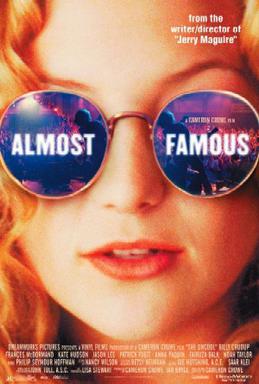
Fighting For The Brass Ring- Kate Hudson’s “Almost Famous” (2000)- A Film Review


DVD Review

By Alden Riley

[As of December 1, 2017 under the new regime of Greg Green, formerly of the on-line American Film Gazette website, brought in to shake things up here a bit after a vote of no confidence in the previous site administrator Allan Jackman (using the moniker Peter Paul Markin in honor of fallen comrade from high school days) some organizational norms have changed. That vote was taken among all the writers at the request of some of the younger writers abetted by one key older writer, Sam Lowell, and in the aftermath the habit of previous site manager of assigning writers to specific topics like film,  books, political commentary, and culture is over. Also over is the designation of writers in this space, young or old, by job title like senior or associate. After a short-lived experiment designating everybody as “writer” seemingly in emulation of the French Revolution’s “citizen” or the Bolshevik Revolution’s “comrade” all posts will be “signed” with given names only. The Editorial Board]


Almost Famous, starring Kate Hudson, Billy Crudup, Patrick Fugit some of the story is based on real events in the young life of director Cameron Crowe, 2000  

[If any reader has read the announcement from the Editorial Board below my name above or has been following the developing situation around the change in leadership at this site they know that there has been a certain amount of fall-out around the question of whether the old site administrator, Peter Paul Markin (not his real name but a moniker he has used for the past decade of more of his leadership I will get to a bit later in this introduction) had retired or been purged. The “official” stance is that he has retired to parts unknown making that “purge” rumor only stick faster especially among the older writers, Markin’s contemporaries from the 1960s, their growing up and coming of age days which was, is, one of the issues which caused Markin’s tumble from grace. This “disappearance” a stinging remind to those guys who graphically remember the Cold War Stalinist habit of sending deposed opponents out to Siberia some place for “rest” or from their own personal experiences in the latter part of the 1960s, toward the ebb part, when among radicals the “politically incorrect” of that time were banished never to be heard from again although that was more shunning that sending them to outer Utah or someplace like that.

In an attempt to clear the air and give the readership a better understanding about what has happened over the past several months to cause the shake-up the new site administrator, Greg Green, who held a similar position at the American Film Gazette and who I knew there from the time I worked as a stringer, has allowed us free reign to tell our take on what has happened and why after Markin was deposed when he lost a vote of no confidence among the collection of writers who write for this site. In the interest of transparency I was among the “Young Turks” who led the revolt and was also a key person in bringing Greg into the fold. 

Others like my former “boss” Sandy Salmon whom I also knew at the Gazette and who brought me in to be his associate film critic after he replaced the now retired Sam Lowell another key “coup” member have given their take so I will not burden the reader with too much detail about the actual events which led up to Markin’s ouster except to broadly outline what triggered everything. (That “former boss” reference reflects as noted above the new policy of only using surnames to identify writers in an effort by Greg to break down the barriers between younger and older writers.) 

A few years ago Markin, in what at the time seemed like a good move to “pass the torch” according to the older writers who had been with him for a long time (and some whom he had known from his hometown growing up days or from his wild and wooly 1960s hippie days) and widen what was increasingly a nostalgia trip tied to the turbulent 1960s experiences which formed most of their worldviews brought in some younger writers. (Don’t make as much out of the “younger writers” designation since most of us are pushing fifty very gingerly and the only really younger writers, twenty somethings, were free-lance stringers.) That perspective was honored more in the breech that the observance as increasing the younger writers were assigned projects relating to that same period, that turbulent 1960s era,  which for the most part were not events that we were that familiar with or gave a fuck about. So some of this stuff had been simmering for a while, for a couple of years anyway.

This summer, the summer of 2017, everything came to a head when Markin after being coaxed by his old growing up neighborhood friends and a couple of the older writers whom I will not name since they have survived the tumult just as they had survived every regime change when they were younger and into radical politics he “force marched” everybody into writing about the Summer of Love, 1967 after an old friend Alex, Zack James’ brother, told him about how San Francisco was commemorating the 50th anniversary of that experience. That started the mad rush. Someone called those older turncoat writers who should be handled in the same manner as deadly snakes as ready to change their principles with the new wind blowing as their shirts and that seems about right. They had no trouble leaving Markin in the lurch wherever he is and moving on without a ripple. Whatever they thought of the project everybody was forced to reference some aspect of the 1960s fun and foolishness whatever they were writing about even if it was not germane to their subject or whether they gave a damn about it.

I will give my personal “awakening” which led me to join the “Young Turks,” join with a vengeance if you must know. Sandy to appease Markin had taken it upon himself to write a film review of the well-known documentary by D.A. Pennebaker on the first Monterey Pops Festival also held in fateful 1967 which is where the big belting blues singer from Texas Janis Joplin made her big breakthrough to stardom. As was his wont during the few years I have known him (he worked at American Film Gazette when I was a stringer there but I did not know him since I was a stringer and would submit my articles via FedEx or later e-mail attachments) he mentioned how well the documentary had held up unlike many others from that time and how Janis “stole the show.” That is when I made what would be my fatal error and told him that I did not know who Janis Joplin was. He laughed and let it pass.

Somehow though Markin got wind of the fact of my ignorance and “ordered” over Sandy’s head and without his knowledge me to “do penance” (Markin’s words) by reviewing a bio/pic on Janis entitled Little Girl Blues. If that sleigh-of-hand was not enough Markin almost went apoplectic when I mentioned in some detail that after my viewing of the Pennebaker documentary for my article that I thought that Otis Redding equally “stole the show” that year. Since this year is also the 50th anniversary of his death and of his signature song Sitting On The Dock Of The Bay released shortly before his death I gave that perspective amble space in the piece. Markin red-pencilled most of it and in a rage told me (in front) of several senior writers that while he appreciated Redding’s contribution to soulful music the piece was supposed to be a homage to Joplin’s effect on he and his growing up hometown friends who went West partially to see the “acid” rock scene emerging in the Bay Area during that decisive year.

I nursed my “wounds” over that slight and frankly Markn’s misjudgment about not putting Redding in the picture as part of the turbulent and fateful 1960s mix from the perspective of a guy who was looking at the times from the outside, a guy who didn’t go weak-kneed any time the number 60 came up. Then Sandy, who was, is, roughly Markin’s, wherever he is, contemporary and who knew his close growing up hometown friend Sam Lowell from their Gazette days and who brought Sandy in when he, Sam, decided to retire, in early September assigned me the review below, Almost Famous. Like others have said the original intent of this site was to cover all aspects of the American political, social and cultural history through commentary about events, movements, books, films, music and the like.

But when Sandy went to check with Markin on assignment and told him I was expected to do this review he again went apoplectic not against me personally, I don’t think, but about the idea that a review of music and the trials and tribulations of bands getting a leg up not from the 1960s, the subject of the film, was being covered. That heavy-handed maneuver along with other smoldering grievances led to the “Young Turks” uprising. Led me to join in if for no other reason that while I appreciated what Markin and the others had done in the 1960s I didn’t want to be trapped in a time machine stuck in that era.  So until Markin was “deposed,” sent to Siberia, or whatever happened to him after that vote of no confidence this review was put on hold. Now it can see the light of day.

********
I assume that director Cameron Crowe had a field day directing this little gem of a film Almost Famous about the coming of age of a teenage rock journalist based on his own rock journal experiences and the trials and tribulations of a band, a set of personalities and varying degrees of musical showmanship, trying to break out of the garage or wherever they hung out and practiced. This film had a special appeal to me since it featured an up and coming rock group that was situated in the thick of the 1970s and 1980s a time when I came of musical age, the Peter Frampton, Heart, David Bowie, Led Zeppelin, Black Sabbath and the “heavy metal” rock scene.

Young musical beat writer whiz kid William Miller (the character based in part on director Crowe’s youthful experiences), played by Patrick Fugit, is adrift in the world, a world where he doesn’t fit in except he has an ear for music and a big steady hand to write with (in the days when a pencil and notebook of not blessed memory were the tools of the writing trade). He works his way, despite his over-bearing mother’s attempts to thwart him at every turn from beginning to end it seemed, into the scene, the 1970s music scene of blessed memory by getting a free-lance assignment to review a Black Sabbath concert for Rolling Stone magazine despite his tender age of fifteen. Although that famous rock group does not play into the story the fictional front group band, the Stillwaters, led by William Hammond, played by Bill Crudup, does as he latches onto the idea of promoting them as the next big thing in heavy metal rock.

Two things aid him in getting on the inside of this group’s network. First Hammond liked him, likes the young kid although that relationship would have its fair share of ups and downs when the mercurial Hammond questions William’s motives and what he expected to get out of the whole thing. Then William along the way meets what is inevitable in rock circles, maybe all musical circles, the lead “groupie” Penny Lane, played by Kate Hudson, who befriends him and gets him the inside track on the group. Gets him a seat on the touring bus with Stillwater as they claw their way to what they hope will be the brass ring-that coveted cover on Rolling Stone which in those days if not now signified that you had arrived. William was there at the creation to chronicle all of that. Naturally along the way he has all the coming of age experiences of friendship, betrayal, misunderstandings, fun and frolic, and losing that virginity his mother fretted about when he went on the road. Not the best story line on the emergence of a rock group but very well done, very well done indeed. (And now I can say not about a rock group emerging from the pack in the 1950s and early 1960s age of what is name classical rock, praise be.)                                                    


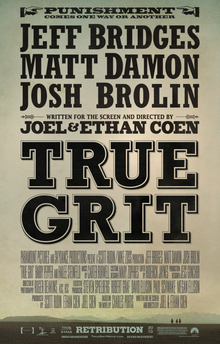
How The West Was Won-The Coen Brothers Remake Of “True Grit” (2010)-A Film Review


DVD Review

By Sandy Salmon

[As of December 1, 2017 under the new regime of Greg Green, formerly of the on-line American Film Gazette website, brought in to shake things up here a bit after a vote of no confidence in the previous site administrator Allan Jackman (using the moniker Peter Paul Markin in honor of fallen comrade from high school days) some organizational norms have changed. That vote was taken among all the writers at the request of some of the younger writers abetted by one key older writer, Sam Lowell, and in the aftermath the habit of previous site manager of assigning writers to specific topics like film,  books, political commentary, and culture is over. Also over is the designation of writers in this space, young or old, by job title like senior or associate. After a short-lived experiment designating everybody as “writer” seemingly in emulation of the French Revolution’s “citizen” or the Bolshevik Revolution’s “comrade” all posts will be “signed” with given names only. The Editorial Board]

True Grit, starring Jeff Bridges as Rooster Cogburn, Haillee Steinfeld as Mattie, Matt Damon as Texas Ranger LeBoeuf, from the novel by Charles Portis, directed and produced by the Coen Brothers as a remake of the 1969 version of the film which starred John Wayne, 2010

[Apparently the fall-out from the change of leadership of this site from the now seemingly disgraced and exiled Allan Jackson out  to the wilds of Utah where he is reportedly by rumor said to be hustling copy for the Mormons although that sounds improbable on its face since he went out of his way to skewer the most well-known Mormon Mitt Romney for disowning his great grandfather’s astounding feat of juggling five wives at one time back in the day Allan Jackson to Greg Green brought in from a similar position that he held at American Film Gazette is not over. The basic issue which the reader should know about was Jackson’s heavy-handed manner of assigning projects tilted heavily toward the turbulent times of the 1960s when he and a number of the older writers including a few he had known since high school had come of age. That emphasis despite the well-known proposition stated in the masthead that the whole of American history (albeit from a decidedly leftist perspective), culture, society, mores and all were within its purview. He had brought in a slew of younger writers, not kids out of journalism school or English dissertations but younger.

They, according to younger writer and “Young Turks” leader Lance Lawrence, were to broaden the outlook, widen the time frame and range of subjects. Instead Allan used them as “cannon fodder” (Eliot Francis’ term) for a continued expansion of that 1960s perspective. The whole thing came to a head this past summer when he unilaterally decided that everything of importance was to be thrown through the prism of the Summer of Love, 1967 which was being commemorated mainly in the Bay Area on its 50th anniversary. The younger writers balked sensing that this was merely the first shot in another total immersion in various 50th anniversary commemorations to come over the next few years. In a heated debate and contentious procedure in early fall the younger writers aided by the decisive vote of Sam Lowell one of Allan’s old high school friends who saw the writing on the wall he received a vote of no confidence.

Subsequently Jackson announced his retirement through a third party to the assembled audience. That so-called retirement versus what has been whispered about that he had been “purged” never to be heard from again like in the time of Stalin in Russia or among New Left fanatics in late 1960s radical circles seeking purity is what the fall-out is all about. Nobody quite has the whole story, or at least I have not heard anything that sounds like the whole story but younger writer Brad Fox in a recent review of Goya’s Ghosts went way out of his way to inform the reading public that something closer to being purged had been the previously missing Jackson’s fate. And Brad would know since he owes his job to his father’s friendship with Allan going back to their high school days.           

Here is some of what Brad mentioned with a little comment by me in places as we try to consolidate the new regime and provide a wider perspective for the reader to imbibe.

Brad thought it ironic, and I do too, that one of the first assignments that our new site administrator Greg Green has handed out, handed out to him especially knowing his father relationship with Allan, Goya’s Ghosts, dealt with the turmoil of the French Revolution through the prism of the Spanish occupation in Napoleon’s time by French troops aided by a bureaucracy of both imported French bureaucrats and Spaniards looking for the main chance. What Brad called guys who change their allegiances as easily as their shirts. 
Sometimes apparently, and this may have been Greg Green’s point in assigning the review life mirrors art. The staff at American Left History were, are as ardent as any Bolshevik was in his or her time to draw whatever lessons they can from the experiences of the French Revolution. Including many a hot “debate” over whiskeys at Jimmy Jake’s Tavern near the Seaport in Boston.     

Seemingly, at least to Brad and I buy some of his argument since I do believe that Green was trying to promote a literary cautionary tale in the guises of a harmless hapless film review a parallel example existed between rabid Inquisitor turned French Revolution devotee Lorenzo’s topsy-turvy career and fate and that of Jackson. I have already mentioned the main reason given but it bears repeating was Allan’s obsessive tilting of the coverage of subjects in this space toward events from the turbulent 1960s when most of the older writers came of age exemplified by the over-the-top coverage of the Summer of Love, 1967 he ordered the writers, young and old, familiar with the period or not to cover. There has been, and here the parallel with Francisco who would go to his execution under the Inquisition once the French were defeated and swept out of Spain by the British with the aid of Spanish guerillas, a persistent rumor that Allan was purged and that the retirement ploy was just that a cover for the more aggressive removal mainly through the efforts of the younger writers. On the heels of what Brad has said I will try to track this down as I get more information. Information that I believe will implicate Allan’s his old friend Sam Lowell who may have been used by the younger writers as a stalking horse once they knew he was anxious to show his old time “revolutionary turn the world upside down” credentials or maybe the mastermind behind a plan to ease Allan out for other reasons. For now if you heard that one Allan Jackson has fallen under the wheels of a modern day Inquisition don’t be surprised. Don’t be surprised at all.]
*********
Here is the real deal though:

For those more interested in old time Old West, Old Revisionist West than the internal struggle for a new direction at this site you are now home. Old Revisionist West meaning not the stuff that guys and gals like many of the older writers and me who grew in the 1950s had to swallow on television where the guys in white hats were pure good and fast on the trigger if they needed to be and black hats signifying pure evil and somehow very bad trigger action which makes one wonder today how they survived to be bad boys, but the dirt under the fingernails, didn’t wash for a week, put that trigger quick and ask questions later. For that desire here is a film, a remake of a classic Old West western, True Grit which won John Wayne an Oscar for his performance as lead character Rooster Cogburn by the bloody thirsty Coen Brothers last seen in this space as the producers of the remake of the bloody 1955 British film The Lady Killers where an old widowed woman held off a horde of ruffians ready to do her in praise the Lord.

Recently Sam Lowell who use to do the film reviews here all by his lonesome before he retired and persuaded me to take over before I retire made some commentary about the 1961 film The Misfits, the film adaptation of playwright Arthur Miller’s story. He mentioned that the characters in that film, male and female alike, born in the West, born in the saddle really, or transported from other parts, were just then at the crossroads where the Old West and its individualistic values was fast fading in the modern industrial skyline. That the strip malls, suburban ranches, golf courses, and tourist traps were heading west. That is not the case in True Grit. Here we have all the bloodshed, the fast triggers, the fatal triggers the lawlessness needing to be tamed, the lost boys, the losers in the Civil War, the raw emotions and rawer whisky that made up a big part of the lifeblood of the Old West, the West that those who could not for one reason or another make it in the East headed for to start anew-or keep on doing the same thing in new quarters.

In a funny way, just like the plotlines from Zane Grey on, this one is simplicity itself “the age of vengeance is mine saith the Lord. Young Mattie, all of 14, played by Hailee Steinfeld, feisty as hell even if only 14, is out to avenge the death of her father by a no account bastard who just shot him down in cold blood named Tom Clancy. Little did he know his days were numbered with Mattie on the case no matter that he headed out to desolate Indian country (Native American or indigenous peoples now).

But even a feisty precocious 14 year old needs some help against a bad man desperado and so she hires for a bounty a U.S. Marshall to bring old Tom in to face justice, to face the big step-off which Mattie makes very plain is her goal-no anti-death penalty advocate she. So she hires the toughest of them all, the one with, hey, true grit, Reuben “Rooster” Cogburn played by Jeff Bridges like he was born for the role, and maybe he was. Mattie had a choice, could have and maybe should have picked Texas Ranger LaBouef, played by Matt Damon, who had been after bandito Clancy for crimes in Texas which would also require a hangman’s noose. But she took Rooster instead. 

Eventually after much banter they, all three, head out to that Indian country (remember think Native American) and before long all kind of calumny, false leads, a few confrontations and the like impede their progress. Also some internal bickering which would lead that LaBoeuf to head out on his own periodically. Not to worry though after a few rounds of rooty-toot-toot that Tom Clancy is gone to the great beyond-no one to mourn him. Along the way though Mattie and the Rooster bond, bond enough that when that Rooster went to his own great beyond he was buried in Mattie’s family plot. Yeah, wasn’t that a time boys, wasn’t that a time.

Wednesday, February 21, 2018

"Good Morning, Vietnam"-Indeed-The Trials And Tribulations Of One Adrian Cronauer


By Si Lannon     


I knew from the minute I picked up this guy Adrian Cronauer from the airport that no way was he going to last in our outfit. You can take it from me Eddie Garlick that he had a “misfit” target written all over him. Our outfit if you could call it that was producing, well, hell, producing propaganda and glad tidings to the increasing number of troops coming in-country and in need of some easy listening on the Armed Forces Radio Station-Vietnam edition. First of all Cronauer, nobody called him Adrian (and he told me once we got to know each other that nobody but his mother called him that and he would usually not answer to the name even from her. I wouldn’t answer to Edward either except to my own mother after she twisted my ear a few times when I faked not hearing her) came over from some good awful place, Crete, or some place like that and was Air Force whereas the rest of us were strictly Army, Regular Army. Second of all from minute one he had me both splitting a gut laughing and looking at him sideways like he was some guy from outer space.

But see the General, General Timothy Taylor, a tough guy street general as we would call a guy like him in the old neighborhood, back in Philly, back in the Acre housing project where I grew up and where we had our own General Baker and General Pratt although not with any stars on their shoulders, didn’t need them, had heard of him when he was in Europe. He was old school, bless his soul, who won his star going through the European Theater in World War II. He, the general, must have ruffled some feathers though, annoyed some General Staff guy because he had seen Cronhuaer as he was leaving some cushy job there and transfer to hellish Vietnam as the American troops on the ground expanded like crazy in 1965 once the shit hit the fan. The general though landed on his feet though since instead of throwing him out in the boonies with the 7th Air Calvary they put him in charge of propaganda work, the radio station being one of his projects to supervise.    

The real reason though, and I proved right in the end even although I did everything in my power to try to save him including getting the grunts, you know the guys who were going in and out of the boonies looking for Mister Charlie to send fan mail to get him back on the air was Sergeant Major Dickerson, the “Dick” as we called him behind his back. (I didn’t do any fighting although I did face gun fire and bomb explosions in my tour of Vietnam like a lot of guys not on the line, it was that kind of war, but I had nothing but respect for the enemy and would not call him the derogatory Charlie but always prefaced it with the honorific Mister to show my respects). He was all spit and polish, all rules and regulations, all-lifer, the bad kind of lifer who lived to count the days until retirement but in the meantime raise seven kinds of hell, the only good commie is dead commie so you knew, I knew the minute I saw Cronauer half out of uniform, hair too long and with a laugh a minute that he wasn’t going to go the distance, would fuck up somehow and made hash out of everything. (Then I didn’t know I would wind-up being a lifer too but that was after I left the Army after my enlistment was up, seeing nothing around the Acre that I could do without winding up in stir so I re-upped. I just hope some of the guys that were under me don’t call be lifer the way I just did about the “Dick.”)

While he was riding high one Airman Cronauer was beautiful was like a breath of fresh air in the Black Hole of Calcutta. Would make a lot of guys who are making a good living doing comedy routines take up another profession, maybe lawyering or something, maybe learn to crochet. Yes, Cronauer was the avenging angel and the worst nightmare for guys like the Dick, a loose cannon. The only thing I didn’t like in the few months that Cronauer was around was that he would always kid me about my turning the key to start the engine of the jeep that I used to transport him around to his various doings when it was already running. Being around him made me nervous and forgetful. I admit I was trying to protect my stripes, maybe grab another one if I could control this force of nature. See General Taylor had personally assigned me to “look after” Cronauer since even the General knew he was loosely put together. I guess the general didn’t know in the end how big a can of worms Cronauer would be after the Dick got through with him. 

You have to know something about Armed Forces Radio back in ’65, maybe any time but mostly the thing was about presenting “happy” news, maybe cover a press conference of some important figure who was in-country to see what was really going on (and never taking the blinders off to find out, never leaving MAC-V headquarters and definitely never asking the soldiers, the grunts, what the hell was going on while they were doing their whirlwind tours) and play music like Ray Conniff, Percy Faith, I don’t know Guy Lombardo stuff our parents would dig, would find appealing. And the guys, good guys really, who took their shifts, usually four hours unless they were covering for somebody, and gave what the Dick and Army regulations dictated to him to read and play. They even had two donkeys, two brothers who must have been orphans because no mother could love them (or have carried them in her womb) who red-penciled everything especially the number of KIAs, and the lack of progress against Mister Charlie that was apparent to anybody except those idiot VIPs who had come in-country for more than five minutes. The worst lie though was the body count. The number of VC killed. The numbers just didn’t add up. Some guy during my second tour of Vietnam figured it out one time in 1968 I think that if you added all the numbers together from the body counts then to you would have more dead than were in the whole freaking country.

From day one, no, minute one, Cronauer blew all of that away. Started off at six o’clock in the morning with his signature call-“Good Morning, Vietnam” but he would stretch those three words out for what seemed like an hour. Guys would imitate him, guys on in the boonies too. Then he would do “mock” news reports, total bullshit of total bullshit, and then play something like James Brown, can you believe it, Brother James Brown. Needless to say the Dick blew his top, complained to General Taylor who told him to “fuck off” then because the men liked hearing Cronauer, and he did have a big breath of fresh air following. Like I said the General was what you would call a soldiers’ General if you know what I mean (unlike those General Staff guys who never came out of the bunker over at MAC-V).          

What did Cronauer in, what did a lot of guys stuck in Vietnam then before there were too many guys hanging around in Saigon and everything got to be a whorish merry-go-round was a girl, a beautiful Vietnamese girl who I told him was off-limits, was a no go. But Cronauer wouldn’t listen, spent every waking hour trying to figure out how to get next to this beauty, this Trinh. Including getting close to her brother Tran something I forget his full name, and it doesn’t matter since that was not his real name, his real Mister Charlie name as it turned out. Although Cronauer didn’t see it that way he was basically asking this Tran to pimp for his sister. Nothing good could come of that, and nothing did despite the extensive wooing that Cronauer did.

When push came to shove though nothing could save Cronauer. He had been too friendly with the natives as they say and the natives had bitten him, had used his as a cover to blow up a famous Saigon gin mill where GIs hung out. Not good, not good at all. Got me mixed up in it and almost ruined my career except the General had the Dick’s number and it was him that was hung out to dry not me. Cronauer, well, bad boy Cronauer got kicked out of the service for the good of the service as they say. Never did get too far with that Trinh before he became persona non grata in-country. Sent his young ass back to the States quick as a jack rabbit. End of story.   
Not quite. Some nights I still wake up thinking about some antic that mad clown did on the air or out in the streets of Saigon. Always think even though I am a Sergeant Major myself here at Fort Meade about that last gift he left me. His farewell tape to the troops which I delivered. Got to do my own version of Good Morning, Vietnam, and got to feel for just one moment what it was like to have the world in your hands. Yeah, Cronauer was one hell of a guy, was a piece of work no question.

Tuesday, February 20, 2018

“Shoot Pools ‘Fast Eddie,’ Shoot Pools”-With Paul Newman’s “The Hustler” In Mind


By Lance Lawrence

“Fast Eddie” Felson was the greatest pool player to ever chalk up a stick and you had better believe that because I know from where I speak because in most quarters, among the serious followers of the game, I, Jackie “Big Man” Gleason think that title belongs to me. Maybe you never heard of “Fast Eddie,” never knew the story behind the story of how for a couple of years anyhow, maybe three he ruled the roost, he was the king of the hill. All I know is from the first moment Eddie entered Sharkey’s Pool Hall, the place where my manager, Bart, and I hustled all comers at the sport of kings, down on 12th Avenue in the teeming city of New York I was afraid to play him. Afraid he would damage my reputation as the king of the hill. I had never played game one against him but still I sensed something in his swagger, in his bravado that made my hands shake. Shaking hands the kiss of death in our profession.               

In case you don’t know, and maybe some readers might not having decided to read my homage to “Fast Eddie” based on the “hook” that this was about Paul Newman the movie actor shooting big-time pool, hustling pool in the old days before Vegas, Atlantic City, Carson City started putting up money to have high dollar championships was about more that learning technique, having a vision of where the fucking balls would enter the pockets like your mother’s womb. A lot more. It was about having heart, about something that they would call Zen today but which we called “from hunger” in my day. Eddie’s too. That’s what Eddie had, that is what I sensed, what brought me to cold sweats when that swaggering son of a bitch came looking for me like I was somebody’s crippled up grandfather. It took a while, Eddie took his beatings before he understood what drove his art but he got it, got it so good that I left the game for a couple of years and went out West to hustler wealthy Hollywood moguls who loved the idea of “beating” “Big Man” Gleason at ten thousand a showing.             

But forget about me and my troubles once Fast Eddie came through that long ago door after all this is about how the best man who ever handled a stick got to earn that title in my book. Like a lot of guys after the war, after World War II, after seeing the world in one way Eddie was ready to ditch his old life, was ready to take some chances and say “fuck you” to the nine to five world that would be death to a free spirit like him (that “free spirit” would put a few daggers in his heart before he was done but that is for later). Eddie, against my doughty frame, my big man languid frame, was a rangy kid, kind of tall, wiry, good built and Hollywood bedroom eyes like, well, like Paul Newman when he was a matinee idol making all the women, girls too, wet. Strictly “from hunger” just like in my time, the Great Depression, I had been the same before I left Minnesota for the great big lights of the city and “action.” Like I said raw and untamed but I could tell that very first time he put the stick to the green clothe he had the magic, had that something that cannot be learned but only come to the saints and those headed for the sky.           

So Eddie came in with a few thousand ready to take on the “Big Man.” While I feared this young pup I sensed that I could teach him a lesson, maybe a lesson that would hold him in good stead, maybe not, but which would at least give me enough breathing room to figure out what I would do when Eddie claimed his crown. His first mistake, a rookie error that I myself had committed was not having a partner, a manager to rein him in, to hold him back in tough times. He had some old rum dum, Charley, Billy, something like that, who cares except this rum dum was a timid bastard who couldn’t hold up his end. His end being strictly to estimate his opponent and rein the kid in when he was off his game like we all get sometimes. Me, like I said after I wised up, teamed up with Bart, Bart who knew exactly who and who was not a “loser” and who didn’t lose my money by making bad matches or bad side bets (those side bets were the cushion money that got us through hard times and many times were more than whatever we won at straight up games).      

All I am saying is that this kid’s manager did Fast Eddie wrong, let him go wild that first night when he was all gassed up to beat the Big Man. You already know that I whipped his ass or you haven’t been paying close enough attention. But that was all a ruse like I said, all kid bravado and swagger added in so it was like taking candy from a baby that first night. But I knew I was beat, beat bad in a straight up contest. What saved me that night was two things, no three. First, Fast Eddie like lots of kids figured that he could beat an old man with his hands tied behind his back and so he started his “victory lap” drinking, drinking hard high-end scotch even before the match had started. Second, he was cocky enough to declare that the only way to determine the winner was who cried “uncle” first (Bart smiled and whispered “loser” in my ear at hearing that). Third and last he had picked up this broad, some boozer and maybe a hooker named, Sandy, Susie, no, Sarah whom he was trying to impress somehow. She looked like a lost kitten but I didn’t give a damn about that just that Fast Eddie’s mind would be half on getting her down under the sheets, maybe had dreams of getting a blow job for his efforts she looked the type who was into some kinky stuff just for kicks. At least that was the way it looked at the time. As I will tell you later it was very different and I was totally wrong about the dame.          

It took almost twenty-eight hours in that dark dank smelly booze-strewn Sharkey pool hall which looked like something out of the movies’ idea of what a low rent pool hall should look like complete with low-lifes but eventually between the booze, the bravado, and the broad I took Eddie down, left him about two hundred bucks “walking around” money. Left him to cry “uncle.” Cry it for the last time. Between grabbing Fast Eddie’s money and the side bets Bart made I, we were able to lay off for a couple of months (usually after a big score that was standard practice since the one-time suckers who want to brag to the hometown folks that they played hard and fast with the Big Man and almost won scatter to the winds for a while before they inevitably come back for their well-deserved beatings). Bart said, no crowed, that he had had Fast Eddie’s number, a “loser.” Was another gone guy, forget him.  But I had seen some moves, some moves especially before the booze got the better of the kid that I could only dream of trying without looking like a rube.         

This part of the story coming up I pieced together from what Bart told me, what Sharkey had heard, and what little Fast Eddie let on when he came back at me in earnest, in that Zen state or whatever the fuck you want to call it when a guy is “walking with the king.” Eddie went into “hiding,” went licking his wounds, which in the pool world meant that he was trying to put a stake together hustling at pool halls in bowling alleys, places like that where the rubes are dying to lose a fin or double sawbuck and not cry about it. A player at the kid’s level though would have a hard time of making much scratch with the carnival-wheelers so unbeknownst to me Eddie got in touch with Bart who staked him to some dough for a big cut of the proceedings. They made money, a fair amount, but Bart, at least this is what he told me later after I pistol-whipped him before I left for Hollywood and the big beautiful suckers there figured that would just come back to me in the end because Bart still had the kid down as a loser, a big bad loser.         

This part is murkier still. Along the way on this trip that Bart and Fast Eddie took to fleece the rubes this Sarah started to get religion, started wanted to settle down with Eddie, make Eddie settle down. After I had beaten him when he was laying low he moved in with her, they got along okay until Eddie connected with Bart whom Sarah definitely did not like, I guess she was off the bottle for a while but started in again once she saw that Eddie wouldn’t give up his dream, his dream of beating the Big Man. This part is even murkier but one night Eddie was hustling some Bourbon king and Bart and Sarah were left behind to drink the night away. Somehow Bart, who except when negotiating bets and matches was a pretty smooth talker, conned Sarah who was miffed at Eddie like I said into bed. Got her to either take him around the world or let him take her anally (or he forced the issue figuring she was just a bent whore anyway he had odd sexual desires from what I was able to figure out after a few years with him). The boozy haze, the rough sex, being unfaithful to Eddie, maybe her whole fucking life marching before her left her with who knows what angry feelings. In any case that night before Eddie got home she had slit her wrists.     

This last part is not murky, not murky at all. After beating the hell out of Bart he took the bus back to New York and one night he came through Sharkey’s door and I knew I was roasted (Bart had telegrammed about what had happened and told me that he would put up fifty thousand dollars against Fast Eddie’s luck). I had no choice but to play the play out. After Fast Eddie took that fifty thousand and another twenty-five that I had put up I cried “uncle.” Cried uncle and left for Hollywood and the bright lights. Left Fast Eddie to play out his string, left Eddie to “shoot pools, ‘Fast Eddie’, shoot pools.”     

The Roots Is The Toots: The Music That Got The Generation Of ’68 Through The 1950s Red Scare Cold War Night-Out In The Be-Bop 1960s Night- Ain’t Got No Time For Corner Boys-Harry's Variety


A YouTube film clip of Tom Waits performing the song Jersey Girl that formed part of the inspiration for this post.

From The Pen Of Frank Jackman

Riding down the old neighborhood streets a while back, the old North Adamsville working class streets, streets dotted with triple-deckers housing multiple families along with close-quarter, small cottage-sized single family houses like the one of Tim Murphy’s own growing to manhood time in the early 1970s. He reflected as he drove on how little the basic structure of things had changed with the changing of the ethnic composition of those streets. Sure many of the houses had been worked on, new roofs, new siding, maybe a deck add-on for the ritualistic family barbecue (barbecues that his family on the infrequent occasions that they actually had one were taken at Treasure Island a picnic area that provided pits for the grill-less like his from hunger family on the site), maybe an add-on of a room if that home equity loan came through (or the refinance worked out). The lawns, manicured or landscaped like some miniature English garden, reflected some extra cash and care that in his time was prohibited by the needs to fix up the insides first or save money for emergencies like the furnace blowing out in mind-winter. In all the tradition of keeping up appearances as best you could had been successfully transferred to the new inhabitants (keeping up appearances being a big reason work was done back then in those old judgmental Irish streets, maybe now to for all he knew).

Whatever condition the houses were in, and a few as to be expected when there are so many houses in such a small area were getting that run-down feel that he saw more frequently back in the day by those not worried by the “keeping up appearances” ethos, the houses reflected, no, exclaimed right to their tiny rooftops, that seemingly eternal overweening desire to have, small or not, worth the trouble or not, something of one’s own against the otherwise endless servitude of days. Suddenly, coming to an intersection, Tim was startled, no, more than that he was forced into a double-take, by the sight of some guys, some teenage guys hanging, hanging hard, one foot on the ground the other bent holding up the infernal brick wall that spoke of practice and marking one’s territory, against the oncoming night in front of an old time variety store, a mom and pop variety from some extinct times before the 7/11 chain store, fast shop, no room for corner boys, police take notice, dark night.

Memory called it Kelly’s (as almost every local institution was called from that small dream of ownership and out of hard manual labor variety store to the Dublin Grille bar that transfixed many a neighborhood father, including his father Michael Murphy to the shanty born, or else had an Italian surname reflecting the other major ethnic group, and at times mortal enemies). Today the name is Chiang’s. From the look of them, baggy-panted, latest fashion footwear name sneakered, baseball cap-headed, all items marked, marked with the insignia (secretly, and with no hope of outside decoding) signifying their "homeboy" associations (he would say gang, meaning of course corner boy gang, but that word is charged these days and this is not exactly what it looked like, at least to the public eye, his public eye) they could be the grandsons, probably not biological because these kids were almost all Asians speckled with a couple of Irish-lookers, shanty Irish-lookers, of the ghost be-bop night guys that held Tim in thrall in those misty early 1970s times.

Yeah, that tableau, that time-etched scene, got Tim to thinking of some long lost comrades of the schoolboy night like the hang-around guys in front of Harry’s Variety several blocks away (Harry O’Toole, the most “connected” guy in the neighborhood after Jimmy Mulvey who ran the Dublin Grille, since he ran the local “book”), although comrades might not be the right word because he had been just some punk young kid trying to be a wannabe, or half-wannabe, corner boy and they had no time for punk kids and later when he came of age he had no time for corner boys being unlike his older brothers, Red and Digger, a serious student and not a hell-raiser like them giving Martha Murphy nothing but the miseries. (He gave Ma Murphy his own miseries later but that was when all of society, all youth nation society, was going through a sea-change and he just travelled in that stream to her angers and dismays, especially his wardrobe and physical appearance.)

Yeah, that scene got Tim to thinking of the old time corner boys who ruled the whole wide North Adamsville night (and day for those who didn’t work or go to school, which was quite a few on certain days, because most of these guys were between sixteen and their early twenties with very jittery school and work histories better left unspoken then, or else if you wanted to make something of it they would oblige you with some fists). Yeah, got Tim thinking about where the white tee-shirted, blue-jeaned, engineer-booted, cigarette-smoking, unfiltered of course (Luckies the “coffin nails” of choice, sneering (learned from watching, closely watching and repeatedly Marlon Brando in The Wild One and James Dean in Rebel Without A Cause at the retro- Strand Theater up on Main Street), soda-swilling, Coke, naturally, pinball wizards held forth daily and nightly, and let him cadge a few odd games when they had more important business, more important girl business, to attend to. Either a date with some hot “fox” sitting in some souped up car looking like the queen of the Nile or putting their girls to “work,” pimping them in other words. Tim had been clueless about that whole scene until much later, that pimping scene, he had just assumed that they were “easy” and left it at that. Hell he had his own sex problems, or really no sex problems although if he had known what he found out from Red and Digger he might have paid more attention to those “loose women.”

Yeah, Tim got to thinking too about Harry’s, old Harry’s Variety over there near his grandmother’s house (on his mother’s side, nee Riley) over there in that block on Sagamore Street where the Irish workingman’s whiskey-drinking (with a beer chaser), fist-fighting, sports-betting after a hard day’s work Dublin Grille was located. Harry’s was on the corner of that block. Now if you have some image, some quirky, sentimental image, of Harry’s as being run by an up-and-coming just arrived immigrant guy, maybe with a big family, trying to make this neighborhood store thing work so he can take in, take in vicariously anyway, the American dream like you see running such places now forget it. Harry’s was nothing, like he had said before, but a “front.” Old Harry, Harry O’Toole, now long gone, was nothing but the neighborhood “bookie” known far and wide to one and all as such. Even the cops would pull up in their squad cars to place their bets, laughingly, with Harry in the days before state became the bookie-of-choice for most bettors. And he had his “book”, his precious penciled-notation book right out on the counter. But see punk kid Tim, even then just a little too book-unworldly didn’t pick up on that fact until, old grandmother, Jesus, Grandmother Riley who knew nothing of the world and was called a saint by almost everybody, everybody but husband Daniel Riley when he was in his cups “hipped” him to the fact.

Until then Tim didn’t think anything of the fact that Harry had about three dust-laden cans of soup, two dust-laden cans of beans, a couple of loaves of bread (Wonder Bread, if you want to know) on his dust-laden shelves, a few old quarts of milk and an ice chest full of tonic (now called soda, even by New Englanders) and a few other odds and ends that did not, under any theory of economics, capitalist or Marxist, add up to a thriving business ethos. Unless, of course, something else was going on. But what drew Tim to Harry’s was not that stuff anyway. What drew him to Harry’s was, one, his pin ball machine complete with corner boy players and their corner boy ways, and, two, his huge Coca Cola ice chest (now sold as antique curiosities for much money at big-time flea markets and other venues) filled with ice cold, cold tonics (see above), especially the local Robb’s Root Beer that Tim was practically addicted to in those days (and that Harry, kind-hearted Harry, stocked for him).

Many an afternoon, a summer’s afternoon for sure, or an occasional early night, Tim would sip, sip hard on his Robb’s and watch the corner boys play, no sway, sway just right, with that sweet pinball machine, that pin ball machine with the bosomy, lusty-looking, cleavage-showing women pictured on the top glass frame of the machine practically inviting you, and only you the player, on to some secret place if you just put in enough coins. Of course, like many dream-things what those lusty dames really gave you, only you the player, was maybe a few free games. Teasers, right. But Tim had to just watch at first because he was too young (you had to be sixteen to play), however, every once in a while, one of the corner boys who didn’t want to just gouge out his eyes for not being a corner boy, or for no reason at all, would let him cadge a game while Harry was not looking. When he thought about it though, now anyway, Harry was so “connected” (and you know what he meant by that) what the hell did he care if some underage kid, punk kid, cadged a few games and looked at those bosomy babes in the frame.

Yeah, and thinking about Harry’s automatically got Tim thinking about Daniel (nobody ever called him that, ever) “Red” Hickey, the boss king of his schoolboy night at Harry’s. Red, the guy who set the rules, set the style, hell, set the breathing, allowed or not and when, of the place. He didn’t know if Red went to some corner boy school to learn his trade but he was the be-bop daddy (at least all the girls, all the hanging all over him girls, called him that) because he, except for one incident that Tim will mention below, ruled unchallenged with an iron fist. At least Tim never saw his regular corner boys Spike, Lenny, Shawn, Ward, Goof (yes, that was his name the only name Tim knew him by, and he liked it, that is Goof like his moniker), Bop (real name William) or the Clipper (real name Kenny, the arch-petty Woolworth’s thief of the group hence the name) challenge him, or want to.

Yeah, Red, old red-headed Red was tough alright, and has a pretty good-sized built but that was not what kept the others in line. It was a certain look he had, a certain look that if Tim went to the trouble of describing it now would go way overboard  describing it as some stone-cold killer look, some psycho-killer look but that would be wrong because it didn’t show that way. But that was what it was. Tim thought he had better put it this way. Tommy Thunder, older brother of his junior high and high school best friend and a corner boy king in his own right, Frankie, Francis Xavier Riley, a big bruiser of a legendary North Adamsville football player and human wrecking machine who lived a few doors up from Harry’s went out of his way not to go near the place. See, Red was that tough.
Red was like some general, or colonel or something, an officer at least, and besides being tough, he would “inspect” his troops to see that all and sundry had their “uniform” right. White tee-shirt, full-necked, no vee-neck sissy stuff, no muscle shirt half-naked stuff, straight 100% cotton, American-cottoned, American-textiled, American-produced, ironed, mother-ironed Tim was sure, crisp. One time Goof (sorry that’s all he knew him by, really) had a wrinkled shirt on and Red marched him up the street to his triple-decker cold-water walk-up flat and berated, berated out loud for all to hear, Goof’s mother for letting him out of the house like that. And Red, old Red like all Irish guys sanctified mothers, at least in public, so you can see he meant business on the keeping the uniform right question.

And like some James Dean or Marlon Brando tough guy photo, some motorcycle disdainful, sneering guy photo, each white tee-shirt, or the right sleeve of each white tee-shirt anyway, was rolled up to provide a place, a safe haven, for the ubiquitous package of cigarettes, matches inserted inside its cellophane outer wrapping, Luckies, Chesterfields, Camels, Pall Malls, all unfiltered in defiance of the then beginning incessant cancer drumbeat warnings, for the day’s show of manliness smoking pleasures.

And blue jeans, tight fit, no this scrub-washed, fake-worn stuff, but worn and then discarded worn. No chinos, no punk kid, maybe faux "beatnik," black chinos, un-cuffed, or cuffed like Tim wore, and Frankie, Francis Xavier Riley, king of the faux beatnik junior high school night, including among his devotees Tim, a little too bookish Tim, who was as tough a general, colonel, or some officer anyway, as corner boy Red was with his guys. Frankie example: no cuffs on those black chinos, stay home, or go elsewhere, if you are cuffed. Same kingly manner, right? Corner boys blue-jeaned and wide black-belted, black always, black-belt used as a handy weapon for that off-hand street fight that might erupt out of nowhere, for no reason, or many. Maybe a heavy-duty watch chain, also war-worthy, dangly down from those jeans. Boots, engineer boots, black and buckled, worn summer or winter, heavy, heavy-heeled, spit-shined, another piece of the modern armor for street fight nights. Inspection completed the night’s work lies ahead.

And most nights work, seemingly glamorous to Tim’s little too bookish eyes at the time, was holding up some corner of the brick wall in front or on the side of Harry’s Variety with those engineer boots, one firmly on the ground the other bent against the wall, small talk, small low-tone talk between comrades waiting, waiting for… Or just waiting for their turn at that Harry luscious ladies pictured pinball machine. Protocol, strictly observed, required “General Red” to have first coin in the machine. But see old Red was the master swayer with that damn machine and would rack up free games galore so, usually, he was on that thing for a while.
Hey, Red was so good, although this is not strictly part of the story, that he could have one of his several honeys right in front of him on the machine pressing some buttons and he behind pressing some other buttons Red swaying and his Capri-panted honey, usually some blond, real or imagined, blonde that is depending on the bottle, swaying, and eyes glazing, but he thought he had better let off with that description right now, as he was getting a little glassy-eyed himself at the thought, and because like he said it was strictly speaking not part of the story.

What is part of the story is that Red, when he was in the mood or just bored, or had some business, some girl business, maybe that blond, real or imagined, just mentioned business would after Tim had been hanging around a while, and Red  thought he was okay, give him his leftover free games.

Now that was the “innocent” part of Red, the swaying pinball wizard, girl-swaying, inspector general part. But see if you want to be king of the corner boy night you have to show your metal once in a while, if for no other reason than the corner boys, the old time North Adamsville corner boys might be just a little forgetful of who the king hell corner boy was, or as Tim will describe, some other corner boy king of some other variety store night might show up to see what was what.

Tim must have watched the Harry’s corner boy scene for a couple of years, maybe three, the last part just off and on, but he  only remembered once when he saw Red show “his colors.” Some guy from Adamsville, some tough-looking guy who, no question, was a corner boy just stopped at Harry’s after tipping a couple, or twenty, at the Dublin Grille. He must have said something to Red, or maybe Red just knew instinctively that he had to show his colors, but all of a sudden these two were chain-whipping each other. No, that’s not quite right, Red was wailing, flailing, nailing, chain-whipping this other guy mercilessly, worst, if that is possible. The guy, after a few minutes, was left in a pool of blood on the street, ambulance ready. And Red just walked way, just kind of sauntering away.

Of course that is not the end of the Red story. Needless to say, no work, no wanna work Red had to have coin, dough, not just for the pinball machine, cigarettes, and soda, hell, that was nothing. But for the up-keep on his Chevy (Chevy then being the “boss” car, and not just among corner boys either), and that stream of ever-loving blond honeys, real or imagined blonde depending on the bottle, he escorted into the seashore night. So said corner boys did their midnight creep around the area grabbing this and that to bring in a little dough. Eventually Red “graduated” to armed robberies when the overhead grew too much for little midnight creeps, and graduated to one of the branches of the state pen, more than once. Strangely, his end came, although Tim only heard about this second hand, after a shoot-out with the cops down South after he tried to rob some White Hen convenience store. There is some kind of moral there, although Tim thought he would be damned if he could figure it out. Red, thanks for those free games though.