Showing posts with label May Day. Show all posts

Wednesday, May 1, 2013

Karl Liebknecht's Anti-War May Day Manifesto (1916)--Down With The American Afghan War (2013)


Markin comment:
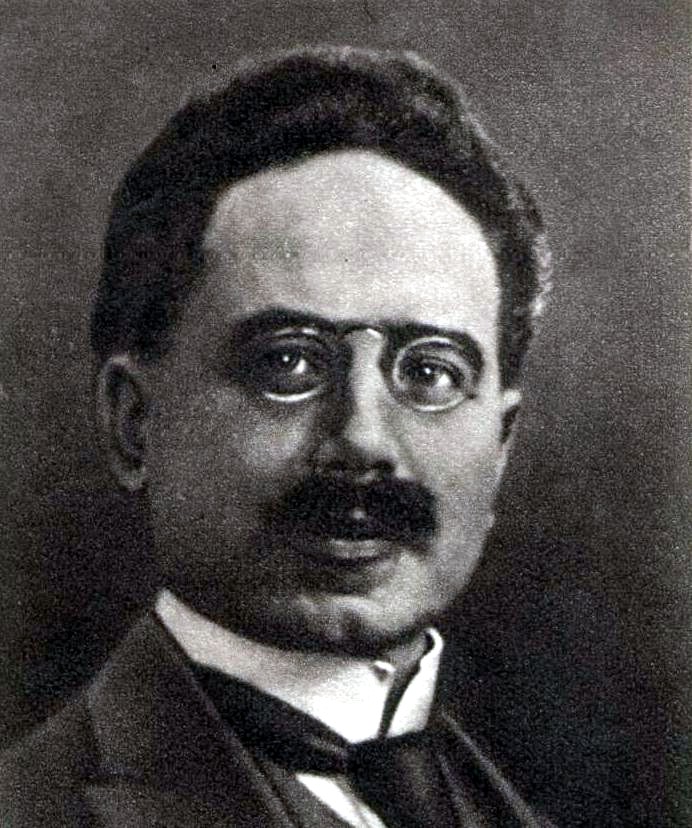
Every time you and I, we, get weary of rolling that big old rock up the hill, Prometheus –style, in fighting against the American imperium’s endless wars, now centrally focused on getting U.S/Allied (whatever is left in that dwindling pack) troops out of Afghanistan and its environs think about revolutionary German Social-Democrat leader (and later Spartacist leader and Communist Party founder) Karl Liebknecht and his trials and tribulations fighting against German imperialism in the heat of World War I at a time in Germany, and not just in Germany but on all sides, when opposition to war could get you shot, or thrown in the bastinado for good. Very few of us today in the anti-war struggle of the past dozen years (with the exception of Private Bradley Manning and precious few others) have faced that kind of decision to make a life or death statement. So every time you are standing alone, or in a small crowd, with your handmade hand-held poster, being ignored or worst laughed at remember that name, Karl Liebknecht. Oh yah, and remember we still have a fight on our hands right now- President Obama- Immediate Unconditional Withdrawal Of All American Troops From Afghanistan .


Karl Liebknecht-The Future Belongs to the People

Liebknecht's May Day Manifesto


THIS May Day Manifesto called the people of Berlin to the May Day Demonstration of 1916. He was sentenced to jail for expressions in this May Day Speech.

"Poverty and misery, need and starvation, are ruling in Germany, Belgium, Poland and Servia, whose blood the vampire of imperialism is sucking and which resemble vast cemeteries. The entire world, the much-praised European civilization, is falling into ruins through the anarchy which has been let loose by the world war.

"Those who profit from the war want war with the United States. To-morrow, perhaps, they may order us to aim lethal weapons against new groups of brethren, against our fellow-workers in the United States, and fight America, too. Consider well this fact: As long as the German people does not arise and use force directed by its own will, the assassination of the people will continue. Let thousands of voices shout 'Down with the shameless extermination of nations! Down with those responsible for these crimes!' Our enemy is not the English, French, nor Russian people, but the great German landed proprietors, the German capitalists and their executive committee.

"Forward, let us fight the government; let us fight these mortal enemies of all freedom. Let us fight for everything which means the future triumph of the working-classes, the future of humanity and civilization.

"Workers, comrades, and you, women of the people, let not this festival of May, the second during the war, pass without protest against the Imperialist Slaughter. On the first of May let millions of voices cry, 'Down with the shameful crime of the extermination of peoples! Down with those responsible for the War!' "

***********

Karl Liebknecht
The Future Belongs to the People

Liebknecht's May Day, 1916, Speech


Delivered at the Potsdamerplatz, Berlin, May 1, 1916

(Report by one present at the demonstration)

BERLIN, May 1. Very early in the morning, with three other comrades, I reached Hortensienstrasse, where Comrade Liebknecht lives. We enter No. 14, climb up the stairs, ring his bell. Comrade Liebknecht opens the door himself. He is thin, his hair looks unusually black and his face is deathly pale. He walks like a dead man, walking with grim steps. He leaves us and soon returns with his wife; she is a Russian. She nods welcome to us all. Suddenly a terrible fear comes to me. No one has spoken a word, yet we all feel that we are in the presence of a supreme moment. From Comrade Liebknecht's grim silence we judge that he is about to hurl prudence to the four winds and defy the Government.

He hands out, one to each of us, a copy of the speech which he will deliver. So far not one word has been spoken. While we are hurriedly reading his speech, which is to be delivered within a few hours, he remarks, "I have several thousand of these printed."

We have finished reading the prospectus which will make history and send him to prison. Then we go into conference. We have been with him just an hour. We leave him.

Shortly after 2 P.M. of the same May day, I have taken a hasty lunch at the Central Hotel. As I near the door I hear the footsteps of the great multitudes. As far as I can see, all the streets and side streets are full of surging, silently moving human beings; all moving in the direction where the May Day demonstration is to take place. These are men and women, mostly women. The men among them are mostly over fifty. Suddenly it becomes apparent to me that there are more children in the crowds than men and women together. As they march I notice that I cannot see one in the crowd who has a smile on her or his face. Along the route no one is cheering them. I had never seen such immense crowds in the streets of Berlin. Not even during the Agadir crisis had the streets of Berlin held such multitudes. The crowds move as though they are part of a funeral procession. They are all sad, very sad. I recognize a group of comrades in the crowd. I rush in and join them. Mund halten (keep your mouth shut) is the unwritten rule, and every one seems to observe it strictly.

Some one has turned the head of the procession into Unter den Linden. We do not know why; very few of us have noticed it, anyhow. We suddenly see a platoon of mounted guards dashing through the crowd, but they are riding on the sidewalk. The part of the procession that had been marching on the sidewalk rushes to the middle of the street in order to escape being trampled upon by the mounted guards. Another group of mounted guards rides past hurriedly, and still another follows. The people in the procession all about me do not seem to notice them. Not even a whisper one hears. On reaching the palace grounds I see in the distance five persons. From their elbows up they tower over the heads of the multitude surrounding them. I leave my friends and elbow my way through the thick crowd. I explain my impolite advance on the ground that I am a reporter on a party (Socialist) paper. I finally reach the spot where Comrade Liebknecht and other comrades are standing. The crowds are close where they are standing, and I cannot make out whether they are standing on a raised platform or in a motor car. I am about twenty or twenty-five feet from the doctor.

Suddenly one of the comrades near Dr. Liebknecht raises his hand and at once proceeds to speak. The multitude is anxious to hear him. Every one is sounding "Hush" in order to obtain silence and thus making more noise. Dr. Liebknecht uncovers his head; some one near by offers to relieve him of his hat. Deathly silence reigns all about the grounds. The interior of a cathedral cannot be more silent. The doctor begins: "Comrades and friends." They start to cheer him. He holds up his hand forbiddingly, then he resumes: "Some years ago a witty Socialist observed that in Prussia we Germans have three cardinal rights, which are: we can be soldiers, we can pay taxes and we can keep our tongues between our teeth. The Socialist who made this observation made it with a grim humor, but to-day the humor of it must be disconnected from it – it is all too grim. Especially in these days this observation is too true. To-day we are sharing these three great Prussian State privileges in full. Every German citizen is given the full privilege to carry a rifle in any manner. Even the Boy Scout has been incited to play the ridiculous role of a soldier. They have thus planted the spirit of hate deep in his youthful soul. Meanwhile the old Landsturmer is forced to perform forced labor in invaded countries, in spite of the fact that under the laws of the Imperial Constitution he cannot be called out for any other purpose than for the defense of the Fatherland.

"As for his second privilege – his right to pay taxes – in this respect the German citizen is, up to the present time, far ahead of his brothers in foreign lands whom he is engaged in exterminating. And yet more privileges of this kind are awaiting him in the days to come – after the end of the war. The high taxes which the German people have so far paid are insignificant compared to the great burdens which they must carry after the war, and for which their masters are daily preparing them with such touching delicacy of patriotic sentiment through the medium of the official press.

"The new Germany has the unquestionable right to hold its tongue between its teeth. Recently our official press has been flooded by authoritative and pharisaic exhortations to soldiers' wives that they must, for God's sake, not complain so much about the scarcity of food. Keep your mouth shut tight when hungry. Keep your mouth shut tight when your children are hungry, keep your mouth shut when your children want milk, keep your mouth shut when your children cry for bread, keep your mouth shut and write no letters to the front."

Outside of Germany these phrases might sound like the stock phrases of a professional agitator, but not so in Germany, at least not in those days. I carefully watched for the effect of these remarks all about me, and I saw no dry eyes.

Amid tense silence the doctor continued: "In a recent issue the mouthpiece of the Pharisees, the "Muenchener Neueste Nachrichten," complains thus (reading from a clipping)

" 'Our soldiers do not always receive from their dear ones at home the best encouragement to hold on. A soldier on furlough who, before obtaining leave, had performed for his Fatherland unflinchingly, went through many hardships with good humor, but after a visit home returned to the front with a sad face, worrying day and night about his dear ones and the pretended scarcity at home.'

" 'Pretended' scarcity certainly is palatable, especially when one is reminded of the fact that our police is weighing the bread, that butter is out of the market, that fat, meat and margarine have reached a price that is beyond the probable reach of the workingman!

"Another well-nourished Pharisee exhorts in the columns of the Norddeutsche Allgemeine Zeitung by asking, 'Where is scarcity to be found?' and no doubt after having partaken of a good dinner he preaches with these words: 'We must teach ourselves at home how to manage to get along in our homes with as little as possible. But of course in large families with children the small earnings of the breadwinner being now totally absent, this sum must be replaced by the creation of a relief fund so that there may not be any serious want.' Exactly, but under no circumstances must the people complain of hunger. It annoys the soldier terribly and cripples his fighting power. Therefore do not write complaining letters to the front. In other words, you wives of soldiers, hide the truth from your husbands; in fact, lie to them. "The old proverb says, `The mouth speaketh out of the fullness of the heart,' and if her children's stomach is empty it is hard for the wife not to mention to her far-away soldier husband that it is hard to provide for his children with food while he is offering his life for his country. But if it is not found possible for your masters to prevail upon you to 'keep your tongue between your teeth,' then they resort to a more practical means. They have a very simple means of stopping these annoying complaints. The Prussian censor is now supervising these letters of wives at home to their husbands at the front. They simply do not allow this objectionable correspondence to go through. Poor and unfortunate German soldier! He deserves pity! At the command of the militarist Government he has gone into the enemy country, and at the command of the Government he must steal from other nations. He is required to perform difficult services. The sufferings that he endures are past description. About him everywhere shells and bombs sow death and destruction. His wife and children at home are suffering want and hardship; she looks about her and finds her children crying for bread. She is desperate, but she must not appeal or complain to any one. She must hold her tongue and suffer inwardly. But how can she silence her children? She must not even share the sympathy of her husband at the front, because that cripples her soldier husband's fighting powers. Her soldier husband must `hold on' and 'steal' in the land of her neighbors. He must hold on and 'suffer' because the capitalists, the hurrah patriots and the armor-plate kings have willed it so. Every one must keep his or her tongue between the teeth, for the war profiteers must make money out of the want and misery of the wives and their husband soldiers at the front.

"By a lie the German workingman was forced into the war, and by like lies they expect to induce him to go on with war!" A mighty shout went up from a thousand throats – "Hurrah for Liebknecht."

Liebknecht raised his hand for silence. Then steadily, though knowing the cost, he said: "Do not shout for me, shout rather 'We will have no more war. We will have peace – now!' "
Scarcely had he finished speaking when, as if by magic, a tremendous tumult arose. Near the spot where the doctor and his friends had been standing the crowds surged back and forth. The great multitudes in the palace grounds had the appearance of an immense sea whose surface was every inch covered with human heads, those of men and women. The children became terrified. The shouts of the grown-ups and the terrified shrieks of the children added vehemence to the scene. The next moment I see Comrade Liebknecht pulled down from the stand. His friends also follow. Then I see fists raised. I suddenly discover that the jostling of the crowds about me has carried me further away from the spot where a riot is in progress. I again elbow my way toward where the doctor and his companions have been pulled down from the stand. I had made some progress when suddenly I find myself being swept backward by a huge human wave.

In spite of my wish to see what is going on behind me I am being carried away further and further. Several hundred thousand panic-stricken souls are rushing towards the streets and avenues that lead to the grounds. The scene is frightful. Every one is shouting. I steal a glimpse of the spot which is now the center of the sudden panic. I gasp with fright. I see numberless mounted soldiers with large black whips in their hands lashing the crowds. Their mounts are so close to the struggling and frightened men and women, yea, even children, that it is a miracle that thousands are not pinned to the ground. I cannot tell whether they are killed or whether they fainted. But there are many of them. I myself was forced to step over several persons. I tried to lift up a body, but in the next moment I was carried away. . . .

May Day evening. Twenty-five or thirty meet secretly at the home of a comrade in ---------- street. We all know what the report is. Herr Doctor is arrested. We are all sad, very sad. We have met to exchange views as to what step to take next. Every one is laboring with heavy thoughts within himself. The silence is sickening. With the exception of four the men who come together to exchange views are all soldiers in the active army. Not all of them are privates. We have spent the entire night, sometimes in heavy silence and again in deliberation. It is decided that we ---------- ---------- ----------.
Are the German workingmen thinking? Their present thoughts are tragic. They hurt.

Sunday, March 25, 2012

***From The Archives- May Day 2012: A Day Of International Working Class Solidarity Actions- General Strike Occupy Boston (GSOB)

Click on the headline to link to the Occupy May 1-Boston Facebook event page.


In late December 2011 the General Assembly (GA) of Occupy Los Angeles, in the aftermath of the stirring and successful November 2nd Oakland General Strike and December 12th West Coast Port Shutdown, issued a call for a national and international general strike centered on immigrant rights, environmental sustainability, a moratorium on foreclosures, an end to the wars, and jobs for all. These and other political issues that have become associated with the Occupy movement are to be featured in a whole range of actions set for May Day 2012.

May Day is the historic international working class holiday that has been celebrated each year in many parts of the world since the time of the Haymarket Martyrs in Chicago in 1886 and the struggle for the eight-hour work day. More recently it has, additionally, been a time for the hard-pressed immigrant communities here in America to join together in the fight against deportations and other discriminatory aspects of governmental immigration policy.

Some political activists here in Boston, mainly connected with Occupy Boston (OB), decided just after the new year to support that general strike call and formed the General Strike Occupy Boston working group (GSOB). GSOB has met, more or less weekly, since then to plan local May Day actions. The first step in that process was to bring a resolution incorporating the Occupy Los Angeles issues before the GA of Occupy Boston for approval. That resolution was approved by GA OB on January 8, 2012.
********
OB Endorses Call for General Strike

January 8th, 2012 • mhacker •

Passed Resolutions No comments The following proposal was passed by the General Assembly on Jan 7, 2012:

Occupy Boston supports the call for an international General Strike on May 1, 2012, for immigrant rights, environmental sustainability, a moratorium on foreclosures, an end to the wars, and jobs for all. We recognize housing, education, health care, LGBT rights and racial equality as human rights; and thus call for the building of a broad coalition that will ensure and promote a democratic standard of living for all peoples.
********
Early discussions within the GSOB centered on drawing the lessons of the West Coast actions last fall. Above all what is and what isn’t a general strike. Traditionally a general strike, as witness the recent actions in Greece and other countries, is called by workers’ organizations and/or parties for a specified period of time in order to shut down substantial parts of the capitalist economy over some set of immediate demands. A close analysis of the West Coast actions showed a slightly different model one based on community pickets of specified industrial targets, downtown mass street actions, and scattered individual and collective acts of solidarity like student support strikes and sick outs. Additionally, small businesses and other allies were asked to close and closed in solidarity.

That latter model seemed more appropriate to the tasks at hand in Boston given its sparse recent militant labor history and that it is a regional financial, technological and educational hub rather than an industrial center. Thus successful actions in Boston on May Day 2012 would not necessarily exactly follow the long established radical and labor traditions of the West Coast. GSOB discussions have since reflected that understanding. The focus will be on action actions and activities that respond to and reflect the Boston political situation as attempts are made to create, re-create really, an on-going May Day tradition beyond the observance of the day by labor radicals and the immigrant communities.

Over the past several years, starting with the nation-wide actions in 2006, the Hispanic and other immigrant communities in and around Boston have been celebrating May Day as a day of action on the very pressing problem of immigration status as well as the traditional working-class solidarity holiday. It was no accident that Los Angeles, scene of massive immigration actions in the past and currently one of the areas facing the brunt of the deportation drives by the Obama administration, would be in the lead to call for national and international actions this year. One of the first steps GSOB took was to try to reach out to the already existing Boston May Day Coalition (BMDC), which has spearheaded the annual marches and rallies in the immigrant communities, in order to learn of their experiences and to coordinate actions. After making such efforts GSOB has joined forces with BMDC in order to coordinate the over-all May Day actions.

Taking a cue from the developing Occupy May Day movement, especially the broader and more inclusive messages coming out of Occupy Wall Street, GSOB has centered its slogans on the theme of “Occupy May First - A Day Without the 99%” in order to highlight the fact that in the capitalist system labor, of one kind or another, has created all the wealth but has not shared in the accumulated profits. Highlighting the increasing economic gap, political voiceless-ness, and social issues related to race, class, sexual inequality, gender and the myriad other oppressions the vast majority face under capitalist is in keeping with the efforts initiated by Occupy Boston last fall.

On May Day GSOB is calling on the 99% to strike, skip work, walk out of school, and refrain from shopping, banking and business in order to implement that general slogan. Working people are encouraged to request the day off, or to call in sick. Small businesses are encouraged to close for the day and join the rest of the 99% in the streets.

For students at all levels GSOB is calling for a walk-out of classes. Further for college students to occupy the universities. With a huge student population of over 250,000 in the Boston area no-one-size-fits- all strategy seems appropriate. Each kindergarten, elementary school, middle school, high school, college, graduate school and wayward think tank should plan its own strike actions and, at some point in the day, all meet at a central location in downtown Boston.

In the early hours on May 1st members of the 99% will converge on the Boston Financial District for a day of direct action to demand an end to corporate rule and a shift of power to the people. The Financial District Block Party will start at 7:00 AM on the corner of Federal Street & Franklin Street in downtown Boston. Banks and corporations are strongly encouraged to close down for the day.

At noon there will be a May Day rally at Boston City Hall Plaza jointly sponsored by BMDC and GSOB followed at approximately 2:00 PM by solidarity marches centered on the immigrant communities that will start in East Boston, Chelsea, and Revere and will culminate in Everett for a rally at 4:00 PM. Other activities that afternoon for those who chose not to go to East Boston will be scheduled in and around the downtown area.

That evening, for those who cannot for whatever reasons participate in the daytime actions, there will be a “Funeral March” for the banks forming at 7:00 PM at Copley Square that will march throughout the downtown area.

Whatever your own personal circumstances may be GSOB calls upon one and all to do one, or more, of the following- No work. No school. No chores. No shopping. No banking. Let’s show the 1% that we have the power. Let’s show the world what a day without the 99% really means. And let’s return to the old traditions of May Day as a day of international solidarity with our working and oppressed sisters and brothers around the world. GCOB urges -All Out For May Day 2012!

Check out GSOB on Facebook and the Facebook event page- http://www.facebook.com/#!/Occupy.May1.Boston

Wednesday, December 21, 2011

***A Very Different Look at May Day On A Non-May Day- A Personal View

Click on the headline to link to a May Day website that links to the various May Day traditions in history.

Peter Paul Markin, North Adamsville Class Of 1964, comment:


For those of a certain age, who came of age during the now ancient history Cold War, the images of May Day evokes pictures of the latest display of Soviet weaponry and of elite Red Army military units marching in step in Red Square in Moscow before some glowering delegation from the Communist Party Politburo and other invited dignities. Such pictures gave the usually information-starved and speculation-crazy Western Sovietologists plenty of ammunition for figuring out who was “in” and who was “out” in the internal party regime. At least until the next public display on the November 7th anniversary of the Bolshevik Revolution when the search for the elusive “musical chairs” would start all over again.

For others, more historically-oriented, perhaps, May Day evokes the struggle for the eight hour work day, the class struggle, and the heroic Chicago Haymarket martyrs. Those with a more recent interest in the day may evoke the continuing struggle for the recognition of immigrant rights, for full citizenship rights for those who have made it here, here more recently. Now all of these are worthy, if highly political, views of May Day and I certainly have no quarrel with those evocations. However, just for the few minutes that it takes to write this entry I wish to evoke another, more ancient, more pagan, vision of May Day that, strangely, may dovetail with the motives behind those more political expressions put forth on this day.

I, of course, refer to the ancient roots of the holiday or rather the pre-Christian religious significance of the day as a day of renewal and of homage to the virtues of spring. Especially for those hoary masses whose heritage stems from the British Isles. Under normal circumstances I would not necessarily be in a mood to reflect on this aspect of the day but a couple of things have set me to thinking about it. The first, as a result of having recently read a number of 19th century American writer Nathaniel Hawthorne’s Puritan-etched short stories, including “The May Pole Of Merry Mount,” got me thinking about that May Day pagan scenario and also about how deeply, even now, the formal Puritan ethic that frowned on such celebrations is embedded in our common cultural experiences. The second had to do with childhood reflections of our kid's version of May basket, May Day.

As to the first, whatever the “official” line is on Puritan history here in America and in England as laid down by the likes of Professors Perry Miller and Hugh Trevor-Roper, to name a couple that come mind, I am privy to a “secret” history of the doings of the old Puritan stock. While Hawthorne’s Puritans, as he sternly portrayed them, are no friends to the fun-loving that is rather more his hang up and his way to make a quick dollar on that saga from punishment fetishists who hide his works in some back bureau drawer and only take out on special occasions. The real “skinny” on the Puritans here and back in the old country is that they were not adverse to a little “good times,” just not in excess.

How is one to otherwise make sense of that little ménage of Pricilla and John Alden and Myles Standish down at Plymouth Plantation in the old days? Or the real story about Tommy Wollaston’s wood fetish over at the rolling hills of Merrymount. Or how about Governor’ Winthrop’s private dope stash that he tried to pass off as tobacco (and which he claimed, like some future bourgeois leaders who will remained unmentioned, he in any case did not inhale). And to complete the story on the other side of the ocean, in old Mother England, how about arch-Puritan poet and revolutionary John Milton’s open endorsement of concubinage, including, and I “reveal” this here for the first time, his own bevy of "ladies." “A Paradise within Thee, Happier Far,” indeed. For a long time the poem "Paradise Lost" was a book with seven seals. Now it all fits. And I should not fail to mention the other well-known arch-Puritan Oliver Cromwell whose well-hidden drinking problem (he called it his "tea," high tea, wink-wink) goes a long way to explaining those rash outbursts when Parliament was in session. Rump, indeed.

Okay, I am sure that the reader has had enough of my 'insight' into the rough stuff of the seamy edges of history. I will reprieve you with a final few thoughts about my own childhood relationship to this other May Day. Of course, I am something of a “homer” on this one, at least on the pre and post-Puritan English traditions since I grew up frequently passing the site of the Merry Mount May Pole (now on land used as a cemetery) at Mount Wollaston, which is a part of Adamsville, the town where I grew up. I knew this story as part of Adamsville town history from very early on. I am not sure whether it was through a teacher or by the local city historian, Edward Rowe Snow, but I knew all about old Tommy Wollaston and his crowd of "wild boys and girls". Sounded like fun, and it was.

On kid time May Day, as I recall, we were given little May crepe paper-lined baskets with a chocolate treat in it from one or another source, and in at least one year we danced around the Puritan-forbidden May Pole. I guess, even then, I had a secret desire that old Tommy should have won. Call me a pagan but that is the truth. But also note this, to kind of put this little “fluff” piece in perspective. Isn’t, in the final analysis, either the old pagan ritual or the newer May Pole festivity emblematic of the kind of thing that those of us who are trying to create “a newer world” aiming for. To make the world and its pleasures in common, for everyone. I think that I am on to something here. May Day greetings in advance from this space.

Tuesday, July 5, 2011

***When Did The 1960s End?- Doctor Hunter S. Thompson's Take (Doctor Gonzo)- From "Fear and And Loathing In Las Vegas-" High-Water Mark"


Click on the headline to link to a Wikipedia entry for background on the anti-Vietnam War actions of May Day 1971.

The late Hunter Thompson's take on the headline question:

HIGH-WATER MARK

STRANGE MEMORIES ON this nervous night in Las Vegas. Five years later? Six? It seems like a lifetime, or at least a Main Era—the kind of peak that never comes again. San Francisco in the middle sixties was a very special time and place to be a part of. Maybe it meant something. Maybe not, in the long run . . . but no explanation, no mix of words or music or memories can touch that sense of knowing that you were there and alive in that corner of time and the world. Whatever it meant. . . .

History is hard to know, because of all the hired bullshit, but even without being sure of "history" it seems entirely reasonable to think that every now and then the energy of a whole generation comes to a head in a long fine flash, for reasons that nobody really understands at the time—and which never explain, in retrospect, what actually happened.

My central memory of that time seems to hang on one or five or maybe forty nights—or very early mornings—when I left the Fillmore half crazy and, instead of going home, aimed the big 650 Lightning across the Bay Bridge at a hundred miles an hour wearing L. L. Bean shorts and a Butte sheepherder's jacket . . . booming through the Treasure Island tunnel at the lights of Oakland and Berkeley and Richmond, not quite sure which turn-off to take when I got to the other end (always stalling at the tollgate, too twisted to find neutral while I fumbled for change) . . . but being absolutely certain that no matter which way I went I would come to a place where people were just as high and wild as I was: no doubt at all about that. . . .

There was madness in any direction, at any hour. If not across the Bay, then up the Golden Gate or down 101 to Los Altos or La Honda. . . . You could strike sparks anywhere. There was a fantastic universal sense that whatever we were doing was right, that we were winning. . . .

And that, I think, was the handle—that sense of inevitable victory over the forces of Old and Evil. Not in any mean or military sense; we didn't need that. Our energy would simply prevail. There was no point in fighting—on our side or theirs. We had all the momentum; we were riding the crest of a high and beautiful wave. . . .

So now, less than five years later, you can go up on a steep hill in Las Vegas and look west, and with the right kind of eyes you can almost see the high-water mark—that place where the wave finally broke and rolled back.

The whole concept of decades is wrong. That is why people have trouble with it. A decade is ten years, which some people will tell you is about as long as a dime. The only people who still talk in terms of decades are Australians and possibly some New Zealanders, but the Aussies will tell you that the New Zealanders think more in terms of twenty years, like us. In politics, a "generation" is twenty years: ten is not enough. Time flies when you do most of your real work after midnight—five months can go by and it feels like one sleepless night.

Las Vegas, 1976
*********
...and Markin's

Wednesday, July 04, 2007, American Left History:

*WHEN DID THE 1960'S END?-The Anti-Vietnam War Events Of May Day 1971
Markin comment:

I have recently been reviewing books and documentaries about radical developments in the 1960’s. They included reviews of the Weather Underground, Students for a Democratic Society (SDS) and the memoirs of Bill Ayers, a central figure in that movement. Throughout this work one thing that I noticed was that the various interviewees had different takes on when that period ended. Although in the end the periodization of history is a convenient journalistic or academic convention in the case of the 1960’s it may produce a useful political guide line.

It is almost universally the case that there is agreement on when the 1960’s started. That is with the inauguration of Democratic President John F. Kennedy and his call to social activism. While there is no agreement on what that course of action might entail political figures as diverse as liberals Bill Clinton and John Kerry on to radicals like Mark Rudd, Bill Ayers and this writer agree that this event and its immediate aftermath figured in their politicization.

What is not clear is when it ended. For those committed to parliamentary action it seems to have been the assassination of Robert Kennedy and the events around the Democratic Convention in 1968 that led to the election of one Richard Milhous Nixon as President of the United States. For mainstream black activists its seems to have been the assassination of Martin Luther King that same year ending the dream that pacifist resistance could eradicate racial injustice. For mainstream SDSers apparently it was the split up of that student organization in 1969. For the Black Panthers, the deaths of Fred Hampton and Mark Clark proving for all to see who wanted to see that the American government was really out to get militant blacks off the streets. For those who thought that the counterculture might be the revolution the bloody Rolling Stone’s concert at Altamont in California in 1969 seems to have signaled the end. For the Weather Underground the 1970 New York townhouse explosion and death of their comrades was the signpost. Since everyone can play this game here is my take.

I can name the day and event exactly when my 1960’s ended. The day- May Day 1971 in Washington D.C. The event- a massive attempt by thousands, including myself, to shut down the government over the Vietnam War. We proceeded under the slogan- IF THE GOVERNMENT WILL NOT SHUT DOWN THE WAR-WE WILL SHUT DOWN THE GOVERNMENT. At that time I was a radical but hardly a communist. However, the endless mass marches and small local individual acts of resistance seemed to me to be leading to a dead end. But the war nevertheless continued on its savagely endless way. In any case, that day we formed up in collectives with appropriate gear to take over the streets of Washington and try to get to various government buildings. While none of us believed that this would be an easy task we definitely believed that it was doable. Needless to say the Nixon government and its agents were infinitely better prepared and determined to sweep us from the streets-by any means necessary. The long and short of it was that we were swept off the streets in fairly short order, taking many, many arrests.

I walked away from that event with my eyes finally opened about what it would take to made fundamental societal changes. On reflection, on that day we were somewhat like those naïve marchers in St. Petersburg, Russia that were bloodily suppressed by the Czarist forces at the start of the revolution there in January 1905. Nevertheless, in my case, from that point on I vowed that a lot more than a few thousand convinced radicals and revolutionaries working in an ad hoc manner were going to have to come together if we were to succeed against a determined and ruthless enemy. Not a pretty thought but hard reality nevertheless. Enough said.

Saturday, May 1, 2010

***A Very Different Look At May Day On May Day- A Personal View, For Carol, Class Of 1964

Click on the headline to link to a May Day website that links to the various May Day traditions in history.

Al Johnson, Class Of 1964, comment:


For those of a certain age, who came of age during the Cold War, the images of May Day evokes pictures of the latest display of Soviet weaponry and of elite military units marching in step in Red Square in Moscow before some glowering delegation from the Communist Party Politburo. Such pictures gave the usually information-starved and speculation-crazy Western Sovietologists plenty of ammunition for figuring out who was “in” and who was “out” in the internal party regime. At least until the next public display on the November 7th anniversary of the Bolshevik Revolution when the search for the elusive “musical chairs” would start all over again. For others, more historically- oriented, perhaps, May Day evokes the struggle for the eight hour work day and the Chicago Haymarket martyrs. Those with a more recent interest may evoke the continuing struggle for the recognition of immigrant rights. Now all of these are worthy, if highly political, views of May Day and I certainly have no quarrel with those evocations. However, just for the few minutes that it takes to write this entry I wish to evoke another, more ancient, more pagan, vision of May Day that, strangely, may dovetail with the motives behind those more political expressions put forth on this day.

I, of course, refer to the ancient roots of the holiday or rather the pre-Christian religious significance of the day as a day of renewal and of homage to the virtues of spring. Especially for those whose heritage stems from the British Isles. Under normal circumstances I would not necessarily be in a mood to reflect on this aspect of the day but a couple of things have set me to thinking about it. The first, as a result of having recently read a number of 19th century American writer Nathaniel Hawthorne’s Puritan-etched short stories, including “The May Pole Of Merry Mount” got me thinking about that May Day pagan scenario and also about how deeply, even now, the formal Puritan ethic that frowned on such celebrations is embedded in our common cultural experiences. The second had to do with childhood reflections of our kid's version of May basket, May Day.

As to the first, whatever the “official” line is on the Puritan history here in America and in England as laid down by the likes of Professors Perry Miller and Hugh Trevor-Roper, to name a couple that come mind, I am privy to a “secret” history of the doings of the old Puritan stock. While Hawthorne’s Puritans, as he sternly portrayed them, are no friends to the fun-loving that is rather more his hang up and his way to make a quick dollar on that saga from punishment fetishists. The real “skinny” on the Puritans here and back in the old country is that they were not adverse to a little “good times”, just not in excess.

How is one to otherwise make sense of that little ménage of Pricilla and John Alden and Myles Standish? Or the real story about Tommy Wollaston’s wood fetish? Or Governor’ Winthrop’s private dope stash that he tried to pass off as tobacco (and which in any case he did not inhale). And to complete the story on the other side of the ocean, how about arch-Puritan poet and revolutionary John Milton’s open endorsement of concubinage, including, and I “reveal” this here for the first time, his own bevy of "ladies". “A Paradise within Thee, Happier Far”, indeed. For a long time the poem "Paradise Lost" was a book with seven seals. Now it all fits. And I should not fail to mention the other well-known arch-Puritan Oliver Cromwell whose well-hidden drinking problem ( he called his "tea", wink-wink) goes a long way to explaining those rash outbursts when Parliament was in session. Rump, indeed.

Okay, I am sure that the reader has had enough of my 'insight' into the rough stuff of the seamy edges of history. I will reprieve you with a final few thoughts about my own childhood relationship to this other May Day. Of course, I am something of a “homer” on this one, at least on the pre and post-Puritan English traditions since I grew up frequently passing the site of the Merry Mount May Pole (now on land used as a cemetery) at Mount Wollaston, which is a part of Quincy the town where I grew up. I knew this story as part of the Quincy town history from very early on. I am not sure whether it was through a teacher or by the local city historian, Edward Rowe Snow, but I knew all about old Tommy Wollaston and his crowd of "wild boys and girls". Sounded like fun, and it was.

On kid time May Day , as I recall, we were given little May crepe paper-lined baskets with a chocolate treat in it from one or another source, and in at least one year we danced around the Puritan-forbidden May Pole. I guess, even then, I had a secret desire that old Tommy should have won. Call me a pagan but that is the truth. But also note this, to kind of put this little “fluff” piece in perspective. Isn’t, in the final analysis, either the old pagan ritual or the newer May Pole festivity emblematic of the kind of thing that those of us who are trying to create “a newer world” aiming for. To make the world and its pleasures a common thing, for everyone. I think that I am on to something here. May Day greetings from this space.