Showing posts with label film noir. Show all posts

Monday, November 12, 2012

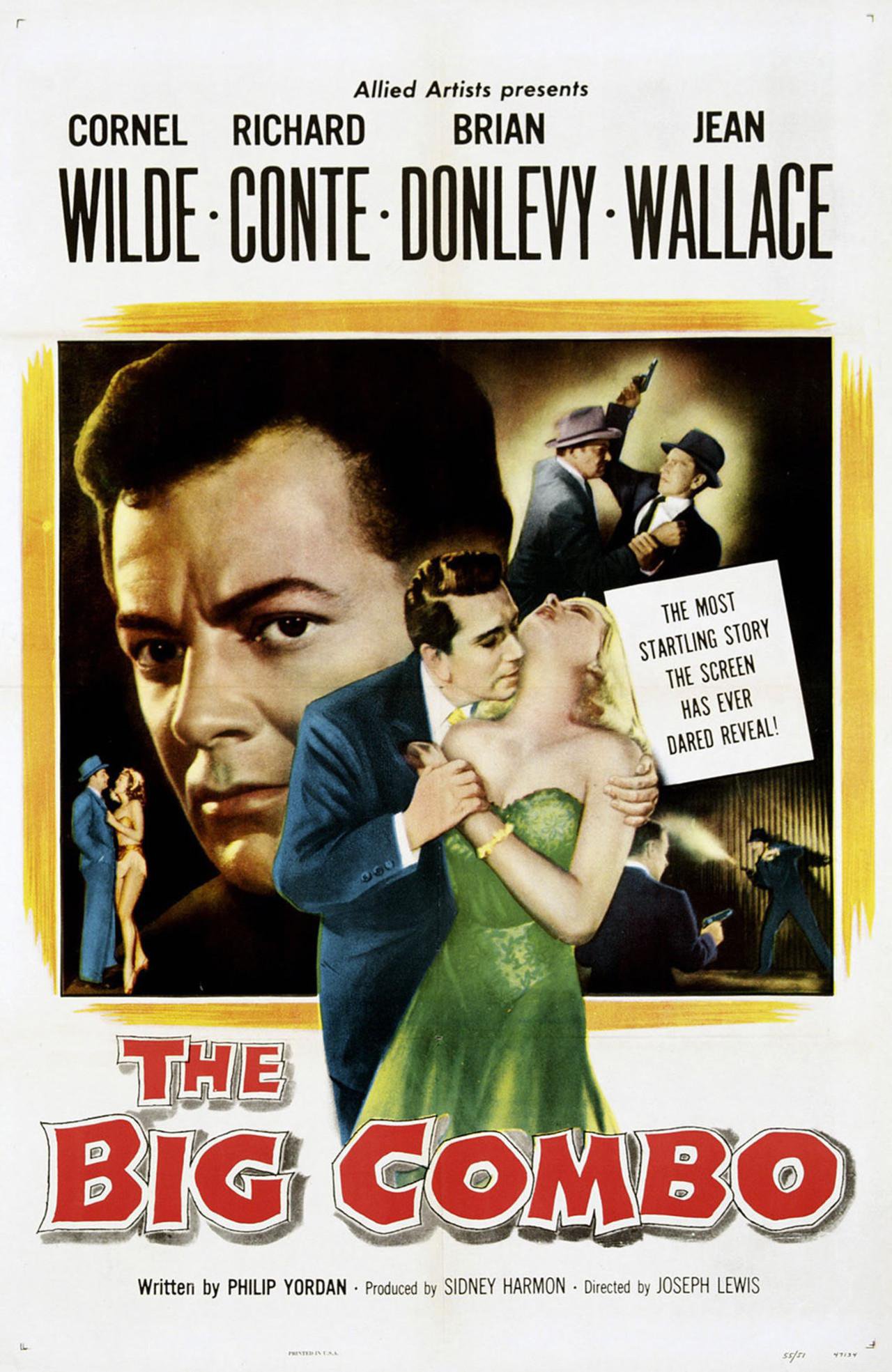
From The Pen Of Joshua Lawrence Breslin-Getting The Bad Guys 1950s Noir Style


Let’s say a clean-cut, some would say righteous, detective, a public employee detective, a cop, working for cheap dough but with some kind of white knight thing about honest work, honest cop work, and getting rid of crumb bum criminals fouling up the city streets, in any case not the usual private dick, like Phillip Marlowe, tilting at windmills for cheap dough too but maybe a roll in the hay with some femme, who is not subject to the vagaries of fearing for his pension or loss of revenue from his cut of the kickbacks, that people most film noirs takes on the big city, hell maybe the Naked City, bad guys, the connected guys, the big combo guys, and gets much grief for his efforts.

Let say that this guy, again going against type, the cynical seen it all, done it all, third degree shining lights, knuckle rapper boy with big fists and an off-hand truncheon types down at the precinct nervous about shaking down Aunt Millie for coffee and cakes just in case she is c-o-n-n-e-c-t-e-d that people the real cop houses of this world, was ready to stick his neck out, stick it way out, for not enough dough just, just because, maybe he has been working the case for years, was within an inch, maybe less, of putting the jigsaw puzzle together and making a big name for himself knocking off that big bad combo , and just because maybe the bad guys need taking care of so people in that big city could breathe a little, maybe not have to watch their backs every time they went out that big city door to that big city street and face that big city grift. Let’s say, oh let’s say the guy’s tough fisted do-gooder, knows how to take a punch, a rabbit punch too, still stand up to the dips, and move on. Yah, let’s do that.      

Let’s say the bad guys, the big city bad guys were led by a guy named Brown, although everybody knows, everybody who counts knows, that the bad guys, the street bad guys are not some waspy-sounding named guys, some been here since sixteen hundred and something, some uptown swells pinching nickels and dimes down in the gutters, but ethnic types, Kellys, Ricos, Slezaks, and the like, cheap street, maybe down from that just mentioned gutter, growing up types who, well, who scratched and clawed their ways to the top, and who had certain habits, certain, well, unfriendly habits like torture, intimidations, and occasional murder in their resumes to keep the cops, the other low-life, and the average citizen tied- up, tied- up bad. Let say this Brown guy , really Larry La Rosa to give him a real street ethnic name, from big city lower east side, starting out as nothing but a hustler first pool for walking around money, then running numbers for Big Lou (the late Big Lou and you know, or you should know, how he became RIP) to buy his first suits and white shirts, then the girls (taking a little choice piece off the side just to keep them in line, walking daddy in line just to show them who was boss, who they belonged to) and that first big Cadillac, then dope, never touching the stuff himself, alright had the rackets tied-up tight, tight as a man could have a thing tightened up with no loose ends (or just a couple, nothing substantial) because his technique, his beautiful technique, for keeping low-life power, was to  break a man (or woman) to his will, one way or another, and if that didn’t work, well, have one of his boys (you know damn well he had his scrambled egged soldiers working cheap looking for their first suits and white shirts) take matters into his own hands. Let say this Brown’s operation was strictly cash, strictly no heavy ledgers, and no traceable bank accounts, and no fingerprints either. Let say this guy is king of the hill and move on.   

Let’s say that good cop and that bad guy wind up in a life and death struggle to see who, or what, is going to control the Naked City. Let’s say that a beautiful blonde, an upscale blonde, tired of well-mannered, predictable Mayfair swell guys, looked for some unnamed thrills, some bad guy kicks, although it is not always blondes looking for such thrills, before returning to marry that next door neighbor stockbroker and some adulterous affairs, entered into the picture and that the cop and the bad guy are both staking claims to this beauty. Let’s say this beauty actually likes a little rough stuff from a man, doesn’t mind a few slaps as long as it doesn’t show, and maybe has some other fugitive desires that those Mayfair swells wouldn’t dream of fulfilling but are right up old Brown’s street thug alley. Let’s say fugitive bad guy kicks can only take a girl, a beautiful blonde girl made for symphonies and sonatas, so far and move on  

Let’s say that this bad guy is really bad, ready to move might and main to keep his place at the top of the heap, and not afraid to waste half the known world to keep his little secrets secret, including using those previously mentioned little trifecta tricks, torture, intimidation, murder that he has perfected . Let’s suppose that that ethereal blonde, that blonde made for easy castles and downy billows got fed-up with bad guys, with guys who weren’t  afraid to slap her around a little once too often just to keep her in line, and cried copper, good copper, or  wanted to. Let’s suppose that the source of the bad guy’s secret, an inconvenient ex-wife who got in the way on his way up,  turned up after some smooth good cop detective work, not without its own set of false leads. And let’s suppose the bad guy’s world kept getting smaller and smaller, made smaller and smaller by that relentless cop (and some perfume scent he couldn’t get out of his system once that blonde stirred his emotions), small enough for even him to holler uncle.

Then you would have a classic 1950s film noir, grainy black and white in true B-flick glory, like The Big Combo complete with suitable 1950s noir be-bop, slightly beat down, beat around music, by some sainted high white note blower, blowing Gabriel’s horn, suitable gritty feel (wash your hands after watching), and superb framing shots to remember this one. And that blonde, a blonde to disturb your dreams, a blond to disturb a good cop’s and a bad guy’s dreams, walking in some be-fogged night back to Main Street, not alone.             


Monday, October 29, 2012

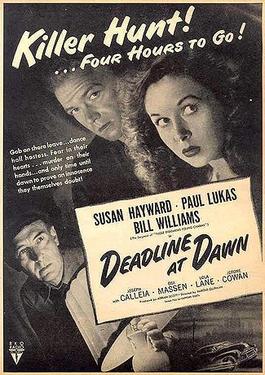
From The Pen Of Joshua Lawrence Breslin- A New York City Saga- Deadline At Dawn- A Film Review


Click on the headline to link to a Wikipedia entry for the film noir Deadline at Dawn. 

DVD Review

Deadline at Dawn, starring Susan Hayward, Bill Williams, Paul Lukas, Warner Brothers, 1948,
Sure, everybody knows there are eight million, more or less, stories in the Naked City. Yah, the Big Apple, New Jack City, hell, you know New York City. At least everybody should know since we are beaten over the head with that hard fact every day, every day somebody wants to discuss crime, welfare fraud, the immigration problem, the national debt or whatever else they think they can fob off on a big city that can’t defend itself, or at least has to plead guilty as charged. Now not all the stories going to back when the place first changed hands for a couple of beads from some crafty Dutchmen or now are worthy of note. Mostly the people behind those eight million, more or less, stories are just struggling to stay above water, just trying to get to and fro without getting mugged on the IRT, or worst just trying to hail a cab at rush hour or the early hours. Hey, most of them are leading, what was it called, yah, lives of quiet desperation just like the rest of us. Here’s a story though, a story with a murder in it, maybe uncommon in you burg but not so uncommon in the big city, ever, and a story about how ordinary guys and dolls, ordinary guys and dolls though who had gotten themselves through World War II, take care of their own business when the deal goes down.          

Some guys are born fall guys, some guys grow into the role and our sailor boy Alex (played by Bill Williams a good choice with that angelic mom’s boy and apple pie face) is one of them. Alex, who saw more than enough of service during the war, is a prime example of that golly-gee American manhood who nevertheless helped put paid to the likes of Hitler, Tojo and Il Duce when they needed stopping. But still naïve, big city golly gee naïve, and in the Naked City that spells only one thing-patsy, fall guy, mark, or whatever you call it out your way. So our lonely guy on furlong gets taken for a ride, or is set up for it. Naturally it involves a woman, Lisa, a woman of the night to be kind, just in case there are some gentle souls in the audience.  A woman who as her protective nefarious “connected” brother said, thinks like a man. And thinking like a man for a woman, a New York City woman of the night (and not just New York City either), is the oldest gag in book. Get guys, especially married guys, to tumble, get them to tumble hard, get them asking for more and then, boom, a threat of quick call or note to wifey and then just wait for the pay off. Nice.  A nice racket if you don’t get too greedy, or get a wrong gee working against you.

 So Alex gets himself a little drunk, well, maybe a lot drunk  and finds that he has taken by mistake (remember Alex is nothing but a chump) a wad of dough from Lisa’s place as he is heading out the door to return to his naval base down in Norfolk, Virginia. And as an honest guy he, by hook or by crook, has got to get the dough back to Lisa (see what I mean about naïve) before the deadline. The deadline here being 6:00 AM that next morning so he can take that dreary old Greyhound bus (with the  inevitable too large, too breathe smelly, too loud snoring companion in the next seat). But New York is full of diversions, planned and unplanned, and along the way he finds himself in a dance hall, a dime-a-dance hall, if you get what I mean.

And there, as is the case with any film not just film noir, or most any film, even those centered in the Naked City, that involves boy meets girl he finds her. Her being one tired dime-a-dance girl June (played by a. how can I put it, oh, fetching, very fetching, Susan Hayward) who has been in the big city for long enough to know that dreaming about the bright lights of the great white way ain’t all it’s cracked up to be back down in Podunk (which by coincidence just happens to be Norfolk). Maybe she had dreams of being a dancer, a chorine, or some big theater actress, maybe working a few songs in some intimate café society bistro. Or, maybe, she was just looking for a sugar daddy and the line filled with fetching girls looking for sugar daddies was long that season in the city but there she was, jaded or half-jaded, wearing out her toes with any guy who had a fistful of tickets. And our boy Alex did.           

So boy meets girl, ho hum, we have seen that theme worked about five million ways in about six million books and about seven million films. But wait a minute Alex has to get the dough back to Lisa, June is about to get off work off, and well, maybe there is a  little, little spark between the two.  Alex somehow persuades June to go with him to take back the dough. See, rube that he is his scared. So they hail a cab (good luck in real New York at that hour, right) and are off to do the right thing.  Oh, I mentioned murder before and there is one that has been committed, murder most foul, since Alex last left Lisa’s place.  And guess who is set to take the fall for that dastardly deed, to step off for it up in Sing Sing. Yah, that ‘s right. 

Now here is where the ordinary citizen (ordinary citizens who had trudged through the war remember) taking care of business part comes in courtesy of the screenplay-writing Clifford Odets (of Waiting For Lefty fame and red scare cold war fink infamy) known for such common touch efforts. In film noir, and in life, solving big time crimes like murder can’t be left to the cops, no way.  They, the cops, are good for writing up traffic tickets and telling drivers to move on, maybe collaring you for some tickets to some police charity, cadging some coffee and crullers, and, maybe coming in at the end to brace the bad guys but to solve a murder when your neck is on the line, no, no. Even Podunk Alex knows that and so the pair decided not to tell the police about Lisa’s untimely demise and furthermore they decide that if Alex is to keep on the square that they had better solve this crime themselves. And do it by that deadline mentioned before.     

And they do. They do solve it as any self-respecting film noir fan knows because, in the end, the motif of noir is that crime does not pay. For those who actually commit a crime. Now how they solve this thing, which has more false leads and red herrings (oops, I better not use that color where Brother Odets is concerned), herrings, than you can shake a stick at I will leave to your viewing. But along the way you will get plenty of cabbie street philosophy of life, plenty of common stuff about how the lower half lives and about the glass being half full not half empty. Yes, there are eight million stories, more or less, in the Naked City and this is one of the quirkiest ones  


Monday, October 15, 2012

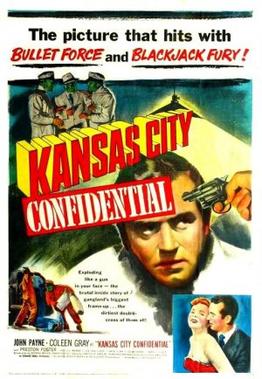
Out Of The Be-Bop Film Noir Night- The Crime Noir “Kansas City Confidential”


Click on the headline to link to a Wikipedia entry for the crime film noir, Kansas City Confidential.

DVD Review

Kansas City Confidential, John Payne, Preston Foster, Coleen Gray, Jack Elam, directed by Phillip Karlson, United Artists, 1952

I have said this many times. Sure I am an aficionado of film noir, especially those 1940s detective epics like the film adaptations of Dashiell Hammett’s Sam Spade in The Maltese Falcon and Raymond Chandler’s Phillip Marlowe in The Big Sleep. Nothing like that gritty black and white film, ominous musical background, and shadowy moments to stir the imagination. Others in the genre like Gilda, The Lady From Shang-hai, and Out Of The Past rate a nod because in addition to those attributes mentioned above they have classic femme fatales to add a little off-hand spice to the plot line, and, oh yah, they look nice too. Beyond those classics this period (say, roughly from the mid-1940s to mid-1950s produced many black and white film noir set pieces, some good, some not so good. For plot line, and plot interest, the film under review, Kansas City Confidential, is in the former category.

And why shouldn’t it be. One fall guy Joe (fall guys seem always to be named Joe, regular Joes I guess to make the cut in regular guy America aborning in the late 1940s), played here in a understated way by John Payne, a little the worst for wear in post-World War II America, having had a few legal problems of his own, gets caught up in the dragnet after a major heist (over a million dollars, a lot of money then but just pocket change today) of a bank, in of all places Kansas City (Missouri, of course, not the staid, square Kansas one). Now all of this fall guy action, aside from the criminal intent and cash reward, has been set-up by a disgruntled, vengeful ex-cop (played by Preston Foster) who masterminds the whole thing.

Of course such a major heist then (as now) requires several, um, “associates,” to pull the damn thing off in this case masked associates (for their own and Foster's self-protection against the dreaded “stoolie’ syndrome. That old chestnut about honor among thieves being honored, if honored at all, more in the breach than the observance. Just ask about ten thousand guys serving time, hard time if you get a chance) Said associates are not anyone you or I would want to hang around with, even if you were strictly a hang around corner boy because you would have to watch your wallet, to speak nothing of your back from minute one. These guys are strictly losers, especially one grafter extraordinaire, Pete Harris, played to manic perfection by Jack Elam. (The others are perennial bad guys Lee Van Cleef and Neville Brand).

Now Joe, as one might expect, takes umbrage, yes, umbrage at having taken a beating from the cops, and also for being set up as the fall guy. So, naturally, as any crime noir hero worth his salt would do, he in good private citizen outraged fashion is going to get to the bottom of this thing come hell or high water. And the rest of the plot line centers of following the clues, and following the sun to sunny Mexico (low film budget fauxMexico in some Hollywood back lot, to be sure) to undo the bad guys, and maybe catch a reward. Or at least a stray gringa or senorita. Naturally he does, the gringa part anyway, although she turns out to be mastermind ex-cop’s daughter (a law student daughter, not exactly a femme fatale hiding out in sunny Mexico until some guy who knows how to do some heavy lifting comes along and falls for her like Jane Greer did to Robert Mitchum in the classic “Out Of The Past,”played by Coleen Gray).

Other than the inevitable tacky ending ( I won’t spoil your fun by telling what it is) this one moves along nicely, is filled with some nice twists, and is, as usual with black and white noir films great on those shadowy takes which reveal evil in the making. Especially those loser, grifter, chain-smoking Jack Elam takes. Some noirs you watch for the magic camera work, some for the femme fatales that drive the story line, some for the tough guys and their gaff. This one you get for the plot line.


Friday, October 12, 2012

Out Of The Be-Bop Film Noir Night- The Crime Noir “The Kiss of Death”-


Click on the headline to link to a Wikipedia entry for the film noir classic, Kiss of Death.

DVD Review

Kiss of Death, Victor Mature, Coleen Gray, Richard Widmark, directed by Henry Hathaway, 20th Century Fox, 1947


Sure I am an aficionado of film noir, especially those 1940s detective epics like the film adaptations of Dashiell Hammett’s Sam Spade in The Maltese Falcon and Raymond Chandler’s Phillip Marlowe in The Big Sleep. Nothing like that gritty black and white film, ominous musical background and shadowy moments to stir the imagination. Others in the genre like Gilda, The Lady From Shang-hai, and Out Of The Past rate a nod because, in addition to those attributes mentioned above, they have classic femme fatales to add a little off-hand spice to the plot line, and, oh yah, they look nice too. Beyond those classics this period (say, roughly from the mid-1940s to mid-1950s) produced many black and white film noir set pieces, some good, some not so good. For plot line, and plot interest, the film under review, Kiss of Death, is under that latter category.

But hold on though. Although the plot line is thin, mainly about a middle level career con gone wrong once again who, to save his kids from a fatherless and motherless future (mother having committed suicide), decides to play ball with the law. Thus, chump Nick Bianco (played pretty well by Victor Mature, given what he had to work with) turned stoolie, rat, fink, turncoat and the other ten thousand names for such a wrong gee and the rest of the plot hangs on that idea. Say idea being that it is not good business (and for all I know, maybe, unethical, unethical in the criminal code of conduct, although my own very small youthful experience is that it is "every man for himself") to turn stoolie, especially if the price of “freedom” is to tangle, tango, or whatever with one Tommy Udo. No way, no how, not for anything.

And that is what saves this thing as a crime noir classic, the performance of Richard Widmark as psycho-killer for hire Tommy Udo. Everything about him from minute one says wrong gee, don’t mess. I knew such hard boys, maybe not as hard as Tommy but as a pale reflection corner boy who watched as “Red” Riley chain-whipped a guy near to death just for passing by his corner where he was not welcome in my growing up working class neighborhood I knew, second hand at least, their “style.” Although, needless to say, Nick will mess (Tommy has threatened his kids and his new honey after all) just like eventually the serious outlaw motorcycle boy Pretty James Preston (Vincent Black Lightning no less from Britain no less not some Harley hog or Indian chopper) put even Red Riley out of commission when he just looked, looked longingly, maybe just a second too long at his sweet long-legged red-haired baby, Mimi Murphy.

Yes, although I was only a babe then I will give a retroactive vote to Richard Widmark for that 1947 Oscar he won for best supporting actor. There have been a lot of scary psycho-killers that have come down the pike since then but I would not, and would not advise others, to tangle with this guy. Or Pretty James Preston, who eventually got waylaid by the coppers trying to pull a bank heist single-handedly, if you see his ghost around.  And you would too. Kudos.


Tuesday, June 19, 2012

Hold ‘Em Or Fold ‘Em –Steve McQueen’s “The Cincinnati Kid – A Film Review

Click on the headline to link to a Wikipedia entry for the film “The Cincinnati Kid.”

DVD Review

The Cincinnati Kid, starring Steve McQueen, Edward G. Robinson, Karl Malden, M-G-M, 1965

Okay, okay five card stud a game that reality television has gone ga-ga over(not Lady Ga-Ga I don’t think) is not my game, not even close, but the film under review, The Cincinnati Kid, made me realize that at least in a dramatic presentation it has possibilities. Especially when everybody’s 1960s cool hand, cool man Steve McQueen decides to take the table stakes. And one cannot discount, if there is any truth to the story line here, that the very appealing (1960s appealing anyway) eye-candy that drifts around where there is easy money to be found like Melba (played by Ann-Margaret) and Christian (played by Tuesday Weld) makes me think that maybe I should take up the game.

Oops, that is mistake number one brother. See what a man (or woman) needs to play poker, or any game of chance, is undivided concentration, some dough, some serious dough, and some more serious dough for the rough spots, and nerves of steel. Some fluff with come hither looks (Melba) and talk of white picket fences (Christian) is strictly off the books. Well, kind of, remember even “The Kid” has to have something to shoot for beside the dough. Someone to help him spend it, although the dough ain’t nothing, nothing except acknowledgement that he is king of the five card stud hill.

And that grail, that holy, holy grail is what drives The Kid. That and the Great Depression gnawing hunger that drove many kids, and oldsters too, to grab for the brass ring anyway they could. See old Lance (played by Edward G. Robinson last seen in this space slapping dames and old geezers around, although not for long, as old- time “Chi” town mobster on the lam Johnny Rico in Humphrey Bogart’s Key Largo) has been king of the hill since Hector was a pup, if not before. The Kid has been working his way up the ladder, cooling his heels, waiting for just the right time with just the right amount of dough to stake his claim. Of course left by itself one great pie-in the-sky winner take all poker game could not sustain a full-length film. So some sidebar stuff with those come hither and white picket fence dames, some lesser games as warm-up, and some attempts by Shooter (played by Karl Malden), his mentor, to “fix” things his way and some this and that keep the thing moving until the big finale-winner take all game (and maybe an extra prize with the dames). So is The Kid strictly from hunger or is he getting ready to be fitted for a new walking cane? Well, see the movie.

Sunday, May 13, 2012

***When The Frame Won’t Fit- Won’t Fit Big Time- Jimmy Stewart’s “Call Northside 777- A Film Review

Click on the headline to link to a Wikipedia entry for Call Northside 777.

DVD Review

Call Northside 777, starring Jimmy Stewart, Lee J. Cobb, Richard Conte, directed by Henry Hathaway, 20th Century Fox, 1948.

Hey, I ‘m just like the next guy I don’t want to see a right gee step off, step off big time, on a murder one rap and maybe a quick jolt, although in this case he caught 99 years (99 years of hell by the way) but these crime noir film noir police procedurals leave me cold. No guy wronged by some wicked femme fatale or some wrong gee getting his just desserts for being a blight on the community leaves me decidedly chilled.

Worst is a story where the right gee wronged is championed by the fourth estate (ya, the press for the clueless) in order to see that some rough justice (and an increased circulation) is done in that aforementioned wicked old world. And then to have mild-mannered, intrepid, if off-handedly seen-it-all (at first anyway), Jimmy Stewart come out of left field to save the day, save the gee, save motherhood, save apple pies and save the American way of life, well, like I say give me a wrong gee or a wicked femme to chew on anything.

Here is the skinny on this one though for those who like this kind of crime noir plot line (and there must be plenty given the large number of film and television police procedurals far more sophisticated that this slightly soapy one). Frank nobody from nowhere 1932 high-wire “wet” Chicago steps into a frame, a frame set just for him, when a copper is killed in the “line of duty.” He gets that quick 99 and that is the end of it, right? No, Ma has to see that her boy, her innocent boy, is set free after she has scrubbed floor for eleven years to buy a little piece of mind. So she ponies up some dough for information about the murder, the press (in the person of Stewart and Editor Lee J. Cobb) takes an interest and bing bang bing (added no little by modern photo enhancement technology) an hour or so later Frank nobody from nowhere Chicago 1944 is free, free as a bird, And likes it, likes on the outside just fine. Yawn, I wonder what femme fatale Gilda is up to these days.

Saturday, March 24, 2012

***Out In The Low-End Be-Bop 1950s Crime Noir Night- “The Killer That Stalked New York”- A Review

Click on the headline to link to a Wikipedia for the low-rent crime noir, The Killer Who Stalked New York.

DVD Review

The Killer Who Stalked New York, starring Evelyn Keynes, Charles Korvin, Columbia Pictures, 1950

I want my money back. And I want it now. Sure I know that this film had to have been the crumb-bum first feature, the B-film, on a Saturday afternoon double-feature but I still want my money back or at least the dough I spent on popcorn. I have reviewed many crime noir/film noir efforts in this space over the last couple of years but this one under review, The Killer Who Stalked New York, really hits the bottom. Poor acting overall, poor dialogue, poor plot line and, well, just poor. The only socially redeeming feature about this one is the black and white cinematography but that is hardly enough to float this one.

So what has my dander up? Well, for starters, just look at the movie title. Wouldn’t it make you think that some serious desperado was on the loose, some one of a half dozen 1950s bad guys who the likes of Robert Mitchum or Humphrey Bogart would have to set straight (or maybe somebody else has to straighten out). No the killer here is none other than a small pox epidemic, or threatened one anyway. Ya, I thought that would get your attention. There is a crime here but just a garden variety “hot jewels” scheme that would be a yawner on most days. But see one Sheila Bennet (played by Evelyn Keynes) is not only acting as a “mule” for some New York City low-life, her two-timing husband (played by Charles Korvin), but has contacted small pox down in pre-revolution Cuba. And it goes downhill from there

Naturally Sheila as a carrier is going to infect everybody that she comes in close contact with and so this one turns from a nickel and dime low-rent crime flick to a national (or at least big city) emergency thing with everybody getting vaccinated while the medical and police authorities are frantically hunting her down. But here is the coup de grace Sheila has been two-timed by her two-timing husband by her ever-loving younger sister so to add “spice” to this one and to drag it out for more than its five minutes of real energy she is the woman scorned who seeks “justice” by hunting down her hide-and-seek getaway husband (and thereby potentially spreading her disease all over the Big Apple). Hey, let’s call this a medical noir. And you can see now, see as clear as day, why I want my money back. At least my popcorn money and not in 1950 coin either.

Tuesday, March 20, 2012

***Out In The 1950s Technicolor Crime Noir Night- Van Heflin’s “Black Widow”-A Review

Click on the headline to link to a Wikipedia entry for the 1950s film noir Black Widow

DVD Review

Black Widow, starring Gene Tierney, Van Heflin, Ginger Rodgers, George Raft, 1954

No question the draw of crime noir for this reviewer is the great black and white photography and the shadowy effects that medium has on heightening the drama of a film, especially films set in big grimy, hard-boiled cities like New York where the seamy side is hard to draw in unless you use such technique. And in the end that is what kind of does in this Technicolor film under review, Black Widow. Many of the actors, Gene Tierney, Van Heflin and George Raft in particular, cut their teeth on noir but here much of that skill goes to waste along with some soapy and indifferent dialogue that is calculated to make true aficionados of the genre weep.

That said, the plot line here and the mis-directions away from the real killer are actually not too bad. Writer Van Heflin unwittingly takes a budding Podunk girl, a budding Podunk writer gal, just freshly arrived in the big city under his wing. She is no fading violet though when it comes to moving her own career along. Unfortunately she has an affair and becomes, oh no, pregnant with an older man, an older married man whose actor wife (played by Ginger Rodgers) is, well, to be kind a bitch on wheels. Especially to those who try to take her “kept” husband away. Needless to say old Brother Heflin has to move heaven and earth to get out from under the “frame” someone has gone to great lengths to place around his poor writers head. Including sowing doubts in the head of his actor wife (played in kind of a syrupy way by Gene Tierney. She is no Laura here.). The plot line however cannot make up for that 1950s “color” that makes this one a wash.

Monday, March 19, 2012

***Out Of The 1940s Crime Noir Night- American Psycho 101- “Born To Kill”- A Review

Click on the headline to link to a Wikipedia entry for the 1940s crime noir Born To Kill.

DVD Review

Born To Kill, starring Claire Trevor, Lawrence Tierney, Warner Brothers 1948

No question the possible combinations of criminal conspiracies and conspirators in any crime noir are almost infinite. Here stone-cold killer meets stone-cold femme fatale (well mostly stone cold that is) in one of those crime noir efforts that you can’t really root for anybody to break out of the trap- the crime doesn’t pay trap that is a signature message of these vehicles. That is the plight of the ”inmates” of the film under review, Born To Kill, that despite its title is not a relentless slice and dice at every clip crime noir out of the 1940s. But neither is it one that will have you bursting out crying at the end.

Here’s why. One very stone-cold killer (played frankly, a little woodenly given later pyscho killers that the movies have produced, by Lawrence Tierney) with a very short, make that a very,very short fuse, gets offended by some guy in Reno trying to “make time” with some frail that he is interested in and in a fit of pique beats him senseless, and dead. A familiar crime theme although not usually is Reno. The frail comes in and observes the foul deed and she too must fall. On advice of a friend, who should have fled from this guy on day one and counted himself lucky, our American pyscho is told to scram until things cool down. So he beat it to the coast, ‘Frisco, of course. And through that set of circumstances he meets our stone-cold femme fatale (played more convincingly by Claire Trevor). Nothing good can come of this combination and nothing does.

Why? Well our pyscho has post –World War II American-sized dreams of riches and power and he expects to gather it in through his association with our dear femme fatale’s sister who controls a media empire (newspapers back in the day, okay). Except, well, of course, an except Ms. Femme Fatale has gotten under his skin and he under hers. Remember now our boy has a short fuse so you know that nothing but murder and mayhem are going to come out of all this if he gets a little bit miffed. And he does by of all people the guy who was trying to help him scram back in Reno (played by perennial bad boy Elisha Cook,Jr.) Go figure. As for the rest, see the film and learn yet again that even pyschos get their just desserts-if only in the movies.

Sunday, March 11, 2012

***The Girl With The Bette Davis Eyes- Somerset Maugham’s “The Letter”-A Film Review

Click on the headline to link to a Wikipedia entry for the Bette Davis film The Letter.

DVD Review

The Letter, starring Bette Davis, Herbert Marshall, directed by William Wyler, based on a play by Somerset Maugham, Warner Brothers, 1940

Not every black and white film is a noir and not every crime noir has a femme fatale although in both cases many are. Nor are all films based on the work of world literature figures like Somerset Maugham (although his reputation has been eclipsed somewhat since his 1920s-1930s heyday when he produced classics like The Razor’s Edge and Of Human Bondage). But the film under review, The Letter, is all of them, kind of. Sure the black and white crime noir is present although with a more than usual amount of melodramatic moments, and as noted so is the world literature authorship.

The real question is the femme fatale aspect. Now Bette Davis was an extremely fine actress during her 1940s and 1950s heyday (and earlier as well in such beauties as The Petrified Forest) but she never struck me as a femme fatale like Lana Turner, Lauren Bacall and Rita Hayworth. You know leaving the guys gasping for breath, and asking for more. No question in this role as the put-upon and isolated wife of a owner of a rubber plantation in pre-war (pre-World War II war to be precise) in colonial British Malaysia scorned by a wayward lover she matches any femme fatale with a quick, too quick, trigger finger when things don’t go her way. She certainly could use her wiles, feminine or otherwise, to get out from under the law, British colonial style. And she was just psycho enough to stand one’s hair on edge. But a lot of her actions (and frankly Davis’ performance) are just too mawkish to root for.

Maybe a little sketch of the plot will illustrate the point. As the film opens Ms. Davis is firing away with that old root-a-toot-toot like crazy at that scornful lover (Hammond by name) mentioned above. No question she is a classic murder one case, and let’s just wrap it up and ship her off to some English prison. Right. But she has a story; a fantastic story on its face about a known intruder making sexual advances to her while her husband is away. Moreover this is the 1930s colonial outback of the Empire and Bette is the proper wife of a stand-up rubber plantation owner (played by Herbert Marshall).

Needless to say, outback or not, murder is murder and the wheels of justice must grind along. A mere formality if her story holds up, a quick trial and she will be free. Except a certain letter, and hence the title of the piece, shows up in mid-plot from her to the intruder. Seems they were lovers, that she had been scorned, and that moreover he had picked up an inconvenient wife, a Eurasian wife to boot. Said letter was in possession of the wife who had her own ax to grind after Bette put six in her husband. A deal between Bette’s compromised lawyer and the wife suppressed this piece of key evidence that would convict Bette.

Bette thereafter was acquitted. Legally acquitted. But you know how those Eurasian women are. That was not to be the end of it. Naturally between a woman scorned and a woman bereft of her companion-lover something has to give. And instead of getting the hell out of town on the first boat, canoe or raft like any real femme fatale our Bette just steps into her fatal fate. See what I mean.

Sunday, February 26, 2012

***Where Is Perry Mason When You Need Him-Raymond Burr’s “Blue Gardenia”

Click on the headline to link to a Wikipedia entry for the film noir Blue Gardenia.

Blue Gardenia, starring Anne Baxter, Raymond Burr, Richard Conte, title song sung by Nat King Cole, directed by Fritz Lang, Warner brothers, 1953

Yes, where is Perry Mason when you need him. And not just because one of the lead actors in this film noir is Raymond Burr, who made Perry famous on 1950s black and white television (hey, look it upon Wikipedia if you don’t believe me there really was a time when that is what TV. viewing looked like. Ya, I know, the dark ages.), but because there is a murder to be solved. His. Or rather the ne’er do well, roué, lady’s man, whatever, character he plays here, Harry Preeble, an artist with a very roving eye.

If there is a murder, then there must be a murderer, right, or in this case a murderess, and here hard-working, get ahead, and just jilted Norah (played by Anne Baxter) is picture perfect for the frame, and the big house, women’s side. See, she was old boy Harry’s last known date, last know drunken date taken up to his apartment, from the wilds of the Blue Gardenia club, Chinese food, blue gardenias for the ladies, and serious rum drinks a specialty, to see that old chestnut, his etchings. Yes, silly girl, especially with Harry’s reputation. But birthday, jilted, and blue, flowers for your hair or not, would make any girl, hell, any human, a little out of sorts.

Out of sorts or not, Anne Baxter, who is reduced to sharing an apartment with two other fellow female workers (including one incredibly fierce chain-smoking Ann Sothern), is not going to take any fall for one little off night. And here is where hard-hitting reporter Casey at the press (played by Richard Conte) comes in to wrap things up, wrap them up so tight that even the police have to cry “uncle,” let her go, and go off in some corner and pout. That leaves only one thing. If Ann Baxter didn’t do it, then who did? I am not telling. But think back a minute, old Harry had that roving eye and so the number of female suspects could have stretched around the block. It’s too late for Mr. Harry, but remember that old saw about a woman scorned. Well don’t say you were not warned.

Thursday, February 23, 2012

***Out Of the Be-Bop 1940s Film Noir Night-Publish Or Perish- “The Big Clock”- A Review

Click on the headline to link to a Wikipedia entry for the film noir The Big Clock

DVD Review

The Big Clock, starring Ray Milland, Charles Laughton, Elsa Lancaster, Paramount Pictures, 1948

Yes, after over a score of film reviews of noir efforts I can truthfully say they come in all sizes, some that stretch the limits of “proper” noir dimensions like the noir under review, The Big Clock. After all plenty of glib lines, some faded femme fatale, a few screwball scenes and an off-hand maniacal press baron as the bad guy could have fit as well as in the 1930s social comedy beat. The thing that saves this actually nice ninety minute film is the flashback aspect of the plot line as it unfolds and the comeuppance of one Rupert Murdoch, oops, Earl Janoth (played a little too woodenly, and perhaps archly, by great actor Charles Laughton).

As to the plot line here is the skinny. Press baron Janoth will stop at nothing, nothing at all (sound familiar?), to keep up the circulation of his various world-wide journalistic enterprises, in the days before social media clicked our cares away, when such items were massively bought and read by the large reading public, Needless to say in order to keep producing plenty of grist for the mill, and keep people employed, it is necessary to have a staff that is little short of workaholic (to say nothing of alcoholic). And here is where hard working journal editor George Stroud (playing in dapper, and perhaps a little too arch as well, manner by Ray Milland) trying to balance work and home life comes in. Because if anybody is going to get to the bottom of anything, anything, at all, it will be George Shroud. Just ask his hard-pressed wife.

And George has plenty to get to the bottom of. It seems that among his oddball, off-hand interests (besides big clocks, keeping a very tight ship, and firing people at a patrician whim) Mr. Janoth doesn’t like the idea of being the “fall guy” for murder. Oh, yes and he also is jealous of other men “courting” his wayward, conniving mistress. Which leads to said murder (maybe murder two, but murder nevertheless) when he confronts his dear after seemingly seeing some shadowy guy coming out of their little love nest. That is why he needs a fall guy.

What he doesn’t know is that George, innocently (at least from what we are shown on camera and what figures given the unfolding plot line), is the spotted guy. Naturally Mr. Janoth, given his aversion, wants to cover his tracks and find that fall guy. As is also inevitable he puts someone on the case that will leave no stone unturned. Yes, George. So you know, know even before the final confrontation of good and bad that drives noir that Mr. Murdoch, oops again, Janoth is going to take “the fall.” And that, my friends, is what passed for high drama, high journalistic-themed drama, in the days before social networking eliminated the guesswork.

Sunday, February 12, 2012

***Out In The Be-Bop 1940s Crime Noir Night- Otto Preminger’s “Laura”- A Film Review

Click on the headline to link to a Wikipedia entry for the film noir Laura.

DVD Review

Laura, starring Dana Andrews, Gene Tierney, Clifton Webb, directed by Otto Preminger, 20th Century Fox, 1944

I guess if you get into a crime noir crazed mode as I have been over the past several months then nothing should surprise you as far as plot line, photography (black and white of course), or actors are concerned. Recently I reviewed a film noir , Where The Sidewalk Ends, that no way, no way in hell, when I started out this jail break-out reviewing process of the old time films from the mid-1940s to the mid-1950s did I figure to be reviewing. Except that film with its line-up, as here, of Dana Andrews, Gene Tierney and director Otto Preminger got me thinking about Laura. From the plot line it appears that I was not alone in thinking of her and I will just have to stand in line until she tires of whoever is next in line to get tired of.

Additionally, there is no way, no way in hell, I would have believed that I would be, seemingly endlessly now, on a Dana Andrews run. Bogie, no question, Robert Mitchum sure, even Dick Powell in a pinch but Dana Andrews? Oh well, at least he has classic good girl (no femme fatale here she is a hard-working career women in advertising) Gene Tierney to keep his eyes on once he gets control of his emotions (and lays off the bottle).

But enough of that. This is a story with great arch dialogue ( if somewhat dated for today’s audiences) although I am sure some would argue that it is not really a noir but more a little Thin Man series mystery comedy fluff whatever. In any case every guy in New York, every guy with eyes anyway and maybe even guys who don’t see so well, has a bee-line straight for Laura (played of course by Gene Tierney). Even a guy, a police detective (played by seemingly perennial cop Dana Andrews) who has never met her and is only “interested” in her because she has been murdered (a little anyway, if there is such a thing) and as a good methodical, if somewhat blasé, cop he has to put the pieces together and see if they fit. In short, who done it.

Wait in line, brothers and sisters. It could have been half the women in New York, well, upper-side New York anyway jealous of Laura’ charms (and tired of their companions’ head-turns). It could have been half the guys in New York who never had a chance at her. But let’s narrow the field a little. Narrow it to her cash-strapped gigolo fiancé Shelby (played by a very young Vincent Price) and Laura’s older gentleman friend (I am being polite as they were then) Waldo (played by Clifton Webb), the great society newspaper writer, who introduced Laura to upper-crust New York society. Of course Waldo has this little problem, this little homicidal problem about his affections for Laura and that’s what drives the twist and turns of the film. As for our good guy detective well for his efforts, in the end, he gets the girl. Natch.

***Out In The Be-Bop 1940s Crime Noir Night- Otto Preminger’s “Laura”- A Film Review

Click on the headline to link to a Wikipedia entry for the film noir Laura.

DVD Review

Laura, starring Dana Andrews, Gene Tierney, Clifton Webb, directed by Otto Preminger, 20th Century Fox, 1944

I guess if you get into a crime noir crazed mode as I have been over the past several months then nothing should surprise you as far as plot line, photography (black and white of course), or actors are concerned. Recently I reviewed a film noir , Where The Sidewalk Ends, that no way, no way in hell, when I started out this jail break-out reviewing process of the old time films from the mid-1940s to the mid-1950s did I figure to be reviewing. Except that film with its line-up, as here, of Dana Andrews, Gene Tierney and director Otto Preminger got me thinking about Laura. From the plot line it appears that I was not alone in thinking of her and I will just have to stand in line until she tires of whoever is next in line to get tired of.

Additionally, there is no way, no way in hell, I would have believed that I would be, seemingly endlessly now, on a Dana Andrews run. Bogie, no question, Robert Mitchum sure, even Dick Powell in a pinch but Dana Andrews? Oh well, at least he has classic good girl (no femme fatale here she is a hard-working career women in advertising) Gene Tierney to keep his eyes on once he gets control of his emotions (and lays off the bottle).

But enough of that. This is a story with great arch dialogue ( if somewhat dated for today’s audiences) although I am sure some would argue that it is not really a noir but more a little Thin Man series mystery comedy fluff whatever. In any case every guy in New York, every guy with eyes anyway and maybe even guys who don’t see so well, has a bee-line straight for Laura (played of course by Gene Tierney). Even a guy, a police detective (played by seemingly perennial cop Dana Andrews) who has never met her and is only “interested” in her because she has been murdered (a little anyway, if there is such a thing) and as a good methodical, if somewhat blasé, cop he has to put the pieces together and see if they fit. In short, who done it.

Wait in line, brothers and sisters. It could have been half the women in New York, well, upper-side New York anyway jealous of Laura’ charms (and tired of their companions’ head-turns). It could have been half the guys in New York who never had a chance at her. But let’s narrow the field a little. Narrow it to her cash-strapped gigolo fiancé Shelby (played by a very young Vincent Price) and Laura’s older gentleman friend (I am being polite as they were then) Waldo (played by Clifton Webb), the great society newspaper writer, who introduced Laura to upper-crust New York society. Of course Waldo has this little problem, this little homicidal problem about his affections for Laura and that’s what drives the twist and turns of the film. As for our good guy detective well for his efforts, in the end, he gets the girl. Natch.

Sunday, February 5, 2012

***Out In The 1950s Crime Noir Night- Humphrey Bogart’s “The Enforcer”

Click on the headline to link to a Wikipedia entry for Humphrey Bogart’s The Enforcer.

DVD Review

The Enforcer, starring Humphrey Bogart, Everett Sloane, Warner Brothers, 1951


I have been on something of a Humphrey Bogart tear of late. And when I get in the occasional tear mood I tend to grab everything of an author, singer, artist, or actor in sight. And hence this review of a very much lesser known Humphrey Bogart film, The Enforcer. If you are looking for the oddly charismatic Humphrey Bogart of To Have or To Have Not, Casablanca, The Big Sleep or even the lumpen thug, Duke Mantee, of The Petrified Forest then you will be disappointed. Here Bogie goes over to the other side of the law and plays a hard-working, tough (naturally) District Attorney who will stop at nothing to put the bad guys in this quirky police procedural.

Quirky because the film switches between the film's 1950s present and an earlier time in order to figure out why a woman was killed by her gun-for-hire boyfriend. As it turns out what Bogie and his police crew have stumbled into is the film version of Murder, Inc. a real phenomenon of professional killers who kill strictly for the dough, and no regrets. Except, as always, there is a weak link in the chain. That weak link is the that the woman killed by her boyfriend for seemingly no reason allegedly saw the psycho head capo of the murder for hire operation (played by Everett Sloane) kill a guy and he needed to cover it up. Was she the right woman? See the film and see if Bogie can figure things out. Figure the bad guys out as well as Phillip Marlowe or Sam Spade could.

Saturday, February 4, 2012

***Out In The 1930s Social Film Noir Night- Humphrey Bogart’s “Call It Murder”

Click on the headline to link to a Wikipedia entry for Call It Murder

DVD Review

Call It Murder, starring Humphrey Bogart, Warner Brothers, 1938

I have been on something of a Humphrey Bogart tear of late. And when I get on the occasional tear I tend to grab everything of an author, singer, artist, or actor in sight. And hence this review of very much lesser known Humphrey Bogart film, Call It Murder. If you are looking for the Humphrey Bogart of To Have or To Have Not, Casablanca, The Big Sleep or even The Petrified Forest then you will be disappointed. Bogart plays a relatively minor role as, well what else, a second- rate cheap hoodlum whose heading out of town fast, or so that is his plan. So no one should be offended if you pass this one by.

Pass by is what I originally intended to do as well except when I thought about it this film is actually a very good example of the kind of social film critique that was popular and produced during the turbulent and trying 1930s. The subject here is the death penalty, its application, and its basic appropriateness in an evolving progressive society (or that has pretensions to civilization). The plot line centers on a woman who has killed her abusive husband when he was going to run out on her leaving her high and dry. At trial the foreman of the jury, a self-righteous and upright citizen, persuades his fellow jurors that she is guilty of murder one, and hence headed for the electric chair. Since there was no “battered person” defense then she was convicted and sentenced to die.

The dramatic tension of the film comes when that self-righteous juror is bombarded with pleas from all kinds of sources to call for sparing her life. He maintains his stance and she is executed. And here is where Bogie comes in. He has been seeing the juror’s daughter, she has fallen in love with him, and as mentioned before, he is ready to fly to the coop. Naturally she is ready to move might and main to keep him in the coop. Well one thing leads to another as they do with thugs and he is shot to death. She thinks that she has done it in a rage at his leaving. She runs home to dear old dad and tells her story. Hey, she is up for murder one and the chair too, right? No way in the end of course but the old man has to confront, or rather we have to confront, that little moral dilemma when thing hit just a little to close to home.

Good thoughtful social critique on the death, agreed? Yes, although I should note that this film is one of those 1930s Theater Guild productions which tended, as this film, does to be rather heavy-handed and didactic in making its important point. Thus the dialogue, the staging, and the acting are rather stilted for today’s audiences. Still it mad that nice social commentary. Just don’t see for the Bogie part, okay.

Sunday, January 15, 2012

***Out In The 1950s Film Noir Night- Nicolas Ray’s “On Dangerous Ground”- A Review

Click on the headline to link to a Wikipedia entry for the film noir On Dangerous Ground.

DVD Review

On Dangerous Ground, starring Ida Lupino, Robert Ryan, Ward Bond, directed by Nicolas Ray, RKO Pictures, 1952


Sure, I have run through a ton of film noir of late good, bad, and indifferent and for lots of different reasons. In the film under review, On Dangerous Ground, you would expect that what I was looking at was an example of Nicolas Ray’s pre-Rebel Without A Cause resume. And this film is not a bad example of his directorial ability, especially his ability to frame black and white nature scenes rather starkly, but that is not why I am reviewing this film. The primary reason is one Ida Lupino. I saw her in a very B non-descript black and white film from 1942 with French star Jean Maurras and that reminded me of her great performance as Humphrey Bogart’s Roy Earle hard guy moll, or wannabe moll, in High Sierra. And so we were off to the races looking for her other work and here we are.

As for the rating part, good, bad or indifferent, remember, it is the latter. You always like a film to have certain cinematic core, a certain frame of reference, but this one just kind of gets away. That is not Ms. Lupino’s fault, or Mr. Ray’s, or for that matter Robert Ryan’s, who plays the high pressure big city cop at the center of the story. And maybe that is where it all falls down. See, Ryan, a guy who might have had early dreams of glory and kudos but they are long gone by the time he gets on screen, is waiting out his time until he gets his pension. Obviously in his chosen profession he sees nothing but bad guys, their tough dames and everything else that comes up from under the rocks. So this life steels him to any emotional commitment to see human existence as anything but short, nasty and brutish as Professor Hobbes used to say. Of course in an evolving “civilized” society one cannot be judge, jury and executioner so Ryan’s methodology for getting at the truth, the criminal truth, by beating it out of the tough guys, does not stand up to today’s Warren Court Miranda standards. So he is shipped out to the country to cool off for a while and to assist in a homicide investigation out in the wild-edged boondocks.

Bingo, primitive man meets primitive nature and one senses right away that Brother Ryan’s soul will be cleansed before we are through. But crime even hits the boonies every once in a while; here a heinous murder of an innocent young girl done by a very mentally disturbed young man. Enter, finally, Ms. Lupino as the disturbed young man’s sister, blind sister, who wants to do what’s right for brother but mostly that he not fall into the hands of the local vigilante justice that is hunting him like a dog, especially that dead girl’s father (played by Ward Bond) who swears vengeance unto death. Of course poor brother is doomed, one way or another. However during the course of the chase our cop is smitten (well, what else would it be) by Ms. Lupino’s ways of thinking and is drawn to her. The final segment of the film revolves around this unusual budding romance. Like I said, it is just a little too melodramatic to be a good noir. But don’t blame Ms. Lupino, Mr. Ryan, Mr. Ray, or even Mr. Bond for that.

Saturday, December 31, 2011

***Out In The 1950s Be-Bop Crime Noir Night- Humphrey Bogart’s “Beat The Devil”-A Film Review

Click on the headline to link to a Wikipedia entry for the anti-film noir Beat The Devil.

DVD Review

Beat The Devil, starring Humphrey Bogart, Jennifer Jones, Peter Lorre, directed by John Huston, 1953

When Humphrey Bogart was in his prime, say from the time of Petrified Forest in the late 1930s until say 1947’s Dark Passage, he was hands down king of film noir hill. No question. There were prettier faces (Clark Gable), there were better actors (Spencer Tracey), there were actors with more angst per ounce (Montgomery Cliff) but for sheer gritty, grizzled, gnarly (nice, huh) film presence Bogie was the one. Of course even those who have not kept up with their history know that every king (or queen) has his (or her) day. And then-done. Well, not exactly done but since actors, like some generals, only fade away and hang on for just as long as studios think they have “start” quality to put in the bank. In the film under review, Beat The Devil, our man Bogie is in such a quandary. Clearly, on the screen, it is almost painful to see his physical decline from his prime (only slightly hidden by “make-up magic”) if not his ability to throw off a few off-hand devil take the hinter-post lines in this one.

Fortunately this film, directed skillfully to enhance the black and white features, by John Huston, is not desperately in need of “high” Bogie to carry it along. The story line, about a motley crew of “desperados” seeking fame and fortune in post-World War Africa is fairly straight forward and mundane. Unfortunately, for them, they are stuck in an out-of the-way port in Italy. The keys to the kingdom that this crew is trying to corner in the heated up Cold War world- uranium (or some other equally precious commodity, if thinks turn out badly). If in earlier times gold or diamonds stirred men’s (and women’s) greedy thoughts just then in that red scare night it was that particularly important produce. However not for one moment can any of the parties (and those like Ms. Jennifer Jones and her down-at-the-heels British husband who wonder what this crew is doing out in the sticks) take one eye, much less two, off the others. And that, more than the thin plot line, is what carries the day here. The collective day, with likes of Robert Benchley, Peter Lorre and Ms. Jones, playing off against Bogie’s world-wary, world-weary performance. Add into the mix a little off-hand undone infidelity for the good of the cause and that makes a very interesting mix. If you need classic “high” Bogie then go to Casablanca, To Have or Have Not or The Big Sleep. But if you want to see him play against type and in an ensemble performance watch this one.

Monday, November 21, 2011

***Out In The 1940s Crime Noir Night- A Twisted Sister- “Possessed”-A Film Review

Click on the headline to link to a Wikipedia entry for the film noir, Possessed.

DVD Review

Possessed, starring Joan Crawford, Van Heflin, Raymond Massey, Warner Brothers, 1947

Most of the time film noir, especially crime noir out of the 1940s-1950s be-bop night, will get heavily involved in plot, and twists in plots and leave the question of motivation, deep motivation for the “shrinks.” After all if the medium is the message as the communications guru of a long-gone era, Marshall McLuhan, used to argue then the message in these things is nothing but the old saw that crime does not pay, does not pay for anyone if you watch enough of these noirs. So it was kind of refreshing, if somewhat odd, to see a film like the film under review, Possessed, where a deep look at the motivation for a crime, the mental anguish over the act, and the clash over good and evil inside the individual get a work out.

But wait a minute. Don’t get too immersed in the prospects for a deep study of the human psyche under duress because the motivation for a crime here, murder, is nothing other than the reaction of a lovesick, thwarted woman, a woman scorned if you like. This is Hollywood after all. So you can almost see, even before the act, the gun rising steadily in her hand. And that is what the plot-line here revolves around. How that gun got steadily into her hand to kill her blasé ex-lover.

See Louise (played here in a half- glamorous, half-maniacal way via flash backs by Joan Crawford) was hopelessly in love with a returning upwardly-mobile ex- GI, David (played here by a caddish Van Heflin), who was driven more by the prospects of an engineering career than by romance. When he called the whole affair off Louise fell to pieces. Well kind of fell to pieces because in reaction she had only one thing on her mind-get her man back, come hell or high water.

That hell or high water involved marrying the boss, the well-off boss (played by Raymond Massey), once his wife (who Louise had been acting as a nurse for) committed suicide although it was clear from the start that she still carried the torch for David. When David, who in the meantime had been working for her newly-minted husband, fell for his young daughter and planned to marry her Louise went over the edge. And over the edge, as I have already telegraphed, meant that sweet little equalizer, the revolver.

The way that the story unfolds as flash-backs while Louise is in a state of mental deterioration in the psycho ward of a mental hospital is how we get that deep look, using the now crude but then state-of-the-art 1940s psychiatric understanding of mental illness. That is what makes this one a cut above the- run-of-the-mill melodramatic 1940s noir (although there are more that enough melodramatic moments, especially between the relentlessly unhinged Louise and relentlessly heartless David). But when you think about it, even though Louise winds up in a psycho ward rather than the chair, crime still doesn’t pay. Right?

Thursday, September 15, 2011

***Waiting For That One High White Note Moment- “As It Is In Heaven”-A Film Review


Click on the headline to link to a Wikipedia entry for As It Is In Heaven.

DVD Review

As It Is In Heaven, Michael Nyqvist, Frida Hallgren, in Swedish, English subtitles, 2004


The overwhelming number of film reviews in this space in the recent past has been about film noir classics, especially crime noir classics from the 1940s and 1950s. The exception has been a couple of the films in the Swedish crime novelist Steig Larrson’s trilogy and now this Swedish film (with English subtitles) film, As It Is In Heaven, starring the same male performer who was a lynch pin for those other films, Michale Nyqvist. Here he plays the same understated role, with plenty of studied bewilderment which seems to be his specialty (and coolness under duress as well). Although his trials and tribulations are central to the plot this is more of an ensemble cinematic operation.

A little plot summary is required to motivate that last statement. A hard-driven, world-renowned symphonic conductor is on his last legs physically after pushing his career envelope in search of that perfect musical sound. What is called in jazz reaching for that "high white note." In order to get back to his old self (or just live his life out) he needs rest and no more world-historic reaching. So naturally, naturally for a Swedish audience I assume, he goes go back to his boyhood township to get back to his roots, or to find some peace since this place is definitely off the main road, the mainly snowy main road. Of course, as described via flashbacks, his roots were rather attenuated with the town since he had left originally under duress, his and his mother’s, at an early age in order to become something in the musical world.

Here comes the ensemble part. His old home town is nothing but a hell’s broth of broken people, thwarted love, unkindness and the like. I thought immediately of something out of Peyton Place or the now dwindling day-time American television soap operas. But this town also had a church-based chorus, as many towns in this world do. So put together one world-renowned conductor trying to find his roots, love and that high white note that has eluded him in earlier days and one motley group of choral wannabes with every social and physical pathology an isolated small town can produce and of course you will in the end uncover that high white note, literally. A nice film, a nice foreign film, a nice change of pace vehicle for Nyqvist (although I don’t have to see his studied whatever for a while which means holding off on watching that third part of the Larrson trilogy that has just come out).