Wednesday, May 1, 2013

IN THE YEAR OF THE 76TH ANNIVERSARY OF THE BARCELONA UPRISING HONOR THE ANTI-FASCIST WOMEN FIGHTERS


MEMORIES OF RESISTANCE: WOMEN’S VOICES FROM THE SPANISH CIVIL WAR, SHIRLEY MANGINI, YALE UNIVERSITY PRESS, NEW HAVEN, 1995
 

One of the great achievements of the last thirty plus years in the women’s liberation movement has been the dramatic increase in the amount of scholarship on the role of women in history. That is to the good. Even better when the research concerns the role of women in a subject that is one near to my heart-the anti-fascist struggle in the Spanish Civil War. One can argue with the feminist politics that drives Ms. Mangini’s work. One can argue about the somewhat arcane literary/sociological academic methodology that she uses to justify her study. What cannot be argued is that she has made an important contribution to giving voice to the women of that struggle that has been muted for a long time. While it is true that history is made by the victors, or at least the flow of propaganda is controlled by them, the stories that she has to tell about those women who served, were imprisoned, executed by Franco and forced into external and internal exile makes for compelling reading.


If one knows anything about the role of women in the Spanish Civil War it usually revolves around the personality of the famous Stalinist Dolores Ibarruri-'La Pasionaria'- well known for her slogan-They Shall Not Pass during the siege of Madrid. For those a little more knowledgeable the name of the Anarchist governmental minister Frederica Montseny may come to mind. Beyond that there is generally a blank. Ms. Mangini has filled in those blanks with the stories of lesser well know women leaders, militia women, rank and file politicos and those who helps the cause in a myriad of other ways. She vividly describes their roles behind the lines, on the front, in the political organizations, in prison awaiting long sentences or execution, and in exile. Ms. Magnini also describes something that I have found to be generally true of those who fought on the Republican side-male or female-the extreme difficulty in articulating what they did and what happened to them even after the end of the Franco regime in 1975. Obviously, in some cases, those stories will never be told or told in a muted manner. One thing is sure for those of us who cherish the memory of the anti-fascist fight in Spain. General Franco should have never been able to die in his bed.  


Out In The Be-Bop Night- The Golden Boy Orator Of The Flats


From The Pen Of Frank Jackman

I first heard about the golden boy orator of the flats (we’ll just call him golden boy for short from here on in since no one ever called him anything else and subsequent investigation never turned up any other name, Christian name, anyway), Duffy O’Shea, from my grandfather who said that he had first heard him over near the Park Street subway station in downtown Boston back in the 1930s when he would roar like a lion about whatever was on his mind. In those days my grandfather said what was on golden boy’s mind, what was on everybody’s mind what with the Great Depression of the 1930s bothering everybody, was the evils of capitalism, about how the working man was getting the short end of the stick, about how the good citizens of Boston needed to rise up and smite old Pharaoh, old Mister Greedy banker down on State Street, those old Satan Mayfair swells who were having a good old time just up the street on the other side of the State House on Louisburg Square and do it now. And while he held forth my grandfather said you could hear a pin drop, his great mane of golden hair flowing in the wind on Boston breezy days, his suit freshly pressed, his shoes brightly shined. And when in good voice he sounded like some siren call from the depths of Ireland and its eight hundred years struggle against the bloody British. Yes, golden boy cut quite swath in those days while he was on his soapbox (literally in those days when everyone who wanted to be orator had one, usually some old sturdy unfinished throwaway produce box found down at Haymarket after the venders had finished with them, in order to be heard and seen by the crowds as they formed up for the daily class- war battles, class war on the edges of the Common).

My grandfather, my maternal grandfather, Daniel Riley, no mean orator himself when in the cups, and not a man to be easily impressed as I know from my own living experience with him, would go on and on about how golden boy would take on all comers when it came to it. See this was theater, street theater of a sort back in those days when oratory skills were highly valued and when one who could use those skills to effect could get a hearing, especially on Saturday and Sunday afternoons when working people, mostly, would stroll through the Boston Common listening to this one and that one spout whatever it was they wanted to spout. And they would come and go, depending on the fashion, snake oil salesmen, magic elixir guys,  guys selling books of every description  for every remedy, women standing up for some cause, or just ready to tell fortunes, it was all mixed up, all mixed up except everybody always made sure that they stopped at the golden boy’s soapbox, and if they were happy with what he said that day, or he bested some heckler, or some has-been professional political shouter they might drop a dime or two in his hat placed before the soapbox.  See my grandfather said this is the way golden boy, and other too, kept body and soul together during the 1930s, this was their job.    

 Like I said before my grandfather said golden boy was good at his “job” because he survived through all of the 1930s on that same soapbox. And he always looked presentable, 1930s presentable any way.  My grandfather said he remembered this one time this heckler, this big blob of a guy who looked like he would swat golden boy away with one sweep if it came to that, was really being merciless toward golden boy calling him a communist, a red, Stalin’s boy, un-American , a dupe, a nigger-lover (exact words if you can believe that), a kike-lover (ditto on the believe), and that he should watch out when he and his kind fall into Hitler’s hands.

Golden Boy parried those wordy blows, parried with ease, making the goon madder and madder, and more venomous too. Well this guy finally blew his top and start talking about how golden boy was nothing but an ape-like mick, goddam Catholic blarney boy. Golden boy stopped, said nothing for what seemed like an eternity, and then in a very low voice at first, sensing who was in his audience, began an impassioned defense of the old country, the old sod, the boyos of  Easter 1916 and every other Irish diaspora-worthy thing he could say. The crowd turned from a passive mass watching a debate, having a good Saturday’s entertainment, to an angry menacing mob ready to avenge eight hundred years, or some hundred years of hurts, especially couple of hefty lads from Southie (South Boston then the center of the Irish diaspora in Boston) who on another occasion had baited golden boy themselves. The long and short of it was that this crowd, this mob, turned their faces toward the goon and started marching on him, angry, getting angrier and as their pace stepped up (egged on by golden boy’s cadence) they made him run, run for life. And leading the pack was my grandfather.                         

I loved that story and would ask him to repeat it whenever there was a quiet moment of his choosing. Then one day back in the early 1960s, one day when I hadn’t seen him for a while since I had grown into a teenager by then with teenager angst and alienation concerns and no time for an old man’s memories he told me that on his last trip to Boston he had found out, found out second hand, that golden boy was still holding forth at Park Street on Saturdays and that I should, despite my busy schedule, make time to go hear one of the last of the great Irish orators. And I did so a few weeks later. When I leaped up the stairs to the exit at Park Street I heard a voice, kind of scratchy, kind of lilting too though, speaking of the great struggles for civil rights down in the South and that one and all must support the freedom riders and the sit-in students. Since I was interested in that whole civil rights struggle down South as I was getting my own political feet wet, I figured that that voice would have a mob around him. When I exited the station I was surprised to see a man about fifty feet away, an old tall man with white hair, unkempt hair that might have at one time been blond, in an old bedraggled suit that had seen better days, wearing shoes that desperately needed shining standing a little wobbly on a soapbox with a small cigar box in front for donations. Golden boy. And as he held forth, held forth kind of righteously not one person stopped to hear his message…                

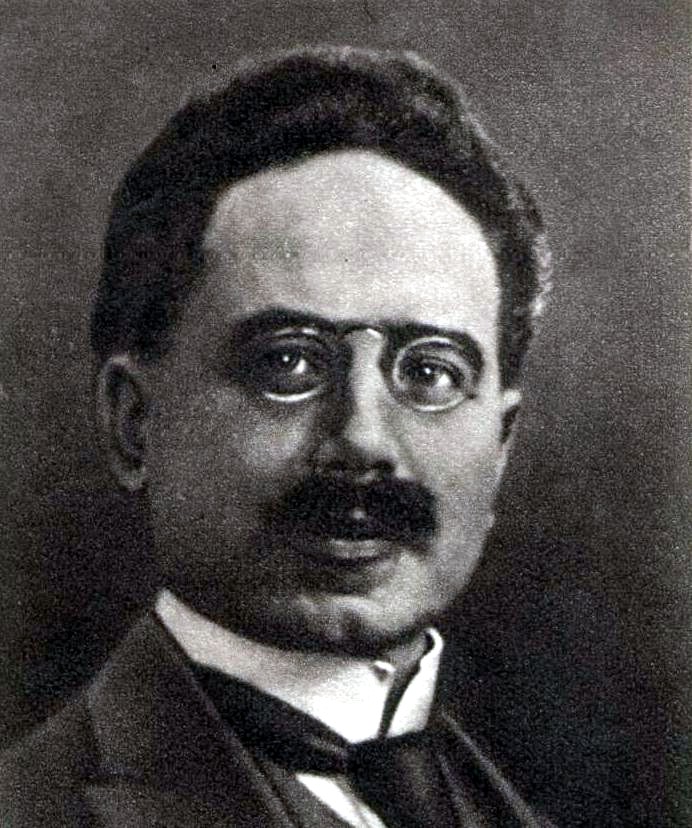
Karl Liebknecht's Anti-War May Day Manifesto (1916)--Down With The American Afghan War (2013)


Markin comment:
Every time you and I, we, get weary of rolling that big old rock up the hill, Prometheus –style, in fighting against the American imperium’s endless wars, now centrally focused on getting U.S/Allied (whatever is left in that dwindling pack) troops out of Afghanistan and its environs think about revolutionary German Social-Democrat leader (and later Spartacist leader and Communist Party founder) Karl Liebknecht and his trials and tribulations fighting against German imperialism in the heat of World War I at a time in Germany, and not just in Germany but on all sides, when opposition to war could get you shot, or thrown in the bastinado for good. Very few of us today in the anti-war struggle of the past dozen years (with the exception of Private Bradley Manning and precious few others) have faced that kind of decision to make a life or death statement. So every time you are standing alone, or in a small crowd, with your handmade hand-held poster, being ignored or worst laughed at remember that name, Karl Liebknecht. Oh yah, and remember we still have a fight on our hands right now- President Obama- Immediate Unconditional Withdrawal Of All American Troops From Afghanistan .


Karl Liebknecht-The Future Belongs to the People

Liebknecht's May Day Manifesto


THIS May Day Manifesto called the people of Berlin to the May Day Demonstration of 1916. He was sentenced to jail for expressions in this May Day Speech.

"Poverty and misery, need and starvation, are ruling in Germany, Belgium, Poland and Servia, whose blood the vampire of imperialism is sucking and which resemble vast cemeteries. The entire world, the much-praised European civilization, is falling into ruins through the anarchy which has been let loose by the world war.

"Those who profit from the war want war with the United States. To-morrow, perhaps, they may order us to aim lethal weapons against new groups of brethren, against our fellow-workers in the United States, and fight America, too. Consider well this fact: As long as the German people does not arise and use force directed by its own will, the assassination of the people will continue. Let thousands of voices shout 'Down with the shameless extermination of nations! Down with those responsible for these crimes!' Our enemy is not the English, French, nor Russian people, but the great German landed proprietors, the German capitalists and their executive committee.

"Forward, let us fight the government; let us fight these mortal enemies of all freedom. Let us fight for everything which means the future triumph of the working-classes, the future of humanity and civilization.

"Workers, comrades, and you, women of the people, let not this festival of May, the second during the war, pass without protest against the Imperialist Slaughter. On the first of May let millions of voices cry, 'Down with the shameful crime of the extermination of peoples! Down with those responsible for the War!' "

***********

Karl Liebknecht
The Future Belongs to the People

Liebknecht's May Day, 1916, Speech


Delivered at the Potsdamerplatz, Berlin, May 1, 1916

(Report by one present at the demonstration)

BERLIN, May 1. Very early in the morning, with three other comrades, I reached Hortensienstrasse, where Comrade Liebknecht lives. We enter No. 14, climb up the stairs, ring his bell. Comrade Liebknecht opens the door himself. He is thin, his hair looks unusually black and his face is deathly pale. He walks like a dead man, walking with grim steps. He leaves us and soon returns with his wife; she is a Russian. She nods welcome to us all. Suddenly a terrible fear comes to me. No one has spoken a word, yet we all feel that we are in the presence of a supreme moment. From Comrade Liebknecht's grim silence we judge that he is about to hurl prudence to the four winds and defy the Government.

He hands out, one to each of us, a copy of the speech which he will deliver. So far not one word has been spoken. While we are hurriedly reading his speech, which is to be delivered within a few hours, he remarks, "I have several thousand of these printed."

We have finished reading the prospectus which will make history and send him to prison. Then we go into conference. We have been with him just an hour. We leave him.

Shortly after 2 P.M. of the same May day, I have taken a hasty lunch at the Central Hotel. As I near the door I hear the footsteps of the great multitudes. As far as I can see, all the streets and side streets are full of surging, silently moving human beings; all moving in the direction where the May Day demonstration is to take place. These are men and women, mostly women. The men among them are mostly over fifty. Suddenly it becomes apparent to me that there are more children in the crowds than men and women together. As they march I notice that I cannot see one in the crowd who has a smile on her or his face. Along the route no one is cheering them. I had never seen such immense crowds in the streets of Berlin. Not even during the Agadir crisis had the streets of Berlin held such multitudes. The crowds move as though they are part of a funeral procession. They are all sad, very sad. I recognize a group of comrades in the crowd. I rush in and join them. Mund halten (keep your mouth shut) is the unwritten rule, and every one seems to observe it strictly.

Some one has turned the head of the procession into Unter den Linden. We do not know why; very few of us have noticed it, anyhow. We suddenly see a platoon of mounted guards dashing through the crowd, but they are riding on the sidewalk. The part of the procession that had been marching on the sidewalk rushes to the middle of the street in order to escape being trampled upon by the mounted guards. Another group of mounted guards rides past hurriedly, and still another follows. The people in the procession all about me do not seem to notice them. Not even a whisper one hears. On reaching the palace grounds I see in the distance five persons. From their elbows up they tower over the heads of the multitude surrounding them. I leave my friends and elbow my way through the thick crowd. I explain my impolite advance on the ground that I am a reporter on a party (Socialist) paper. I finally reach the spot where Comrade Liebknecht and other comrades are standing. The crowds are close where they are standing, and I cannot make out whether they are standing on a raised platform or in a motor car. I am about twenty or twenty-five feet from the doctor.

Suddenly one of the comrades near Dr. Liebknecht raises his hand and at once proceeds to speak. The multitude is anxious to hear him. Every one is sounding "Hush" in order to obtain silence and thus making more noise. Dr. Liebknecht uncovers his head; some one near by offers to relieve him of his hat. Deathly silence reigns all about the grounds. The interior of a cathedral cannot be more silent. The doctor begins: "Comrades and friends." They start to cheer him. He holds up his hand forbiddingly, then he resumes: "Some years ago a witty Socialist observed that in Prussia we Germans have three cardinal rights, which are: we can be soldiers, we can pay taxes and we can keep our tongues between our teeth. The Socialist who made this observation made it with a grim humor, but to-day the humor of it must be disconnected from it – it is all too grim. Especially in these days this observation is too true. To-day we are sharing these three great Prussian State privileges in full. Every German citizen is given the full privilege to carry a rifle in any manner. Even the Boy Scout has been incited to play the ridiculous role of a soldier. They have thus planted the spirit of hate deep in his youthful soul. Meanwhile the old Landsturmer is forced to perform forced labor in invaded countries, in spite of the fact that under the laws of the Imperial Constitution he cannot be called out for any other purpose than for the defense of the Fatherland.

"As for his second privilege – his right to pay taxes – in this respect the German citizen is, up to the present time, far ahead of his brothers in foreign lands whom he is engaged in exterminating. And yet more privileges of this kind are awaiting him in the days to come – after the end of the war. The high taxes which the German people have so far paid are insignificant compared to the great burdens which they must carry after the war, and for which their masters are daily preparing them with such touching delicacy of patriotic sentiment through the medium of the official press.

"The new Germany has the unquestionable right to hold its tongue between its teeth. Recently our official press has been flooded by authoritative and pharisaic exhortations to soldiers' wives that they must, for God's sake, not complain so much about the scarcity of food. Keep your mouth shut tight when hungry. Keep your mouth shut tight when your children are hungry, keep your mouth shut when your children want milk, keep your mouth shut when your children cry for bread, keep your mouth shut and write no letters to the front."

Outside of Germany these phrases might sound like the stock phrases of a professional agitator, but not so in Germany, at least not in those days. I carefully watched for the effect of these remarks all about me, and I saw no dry eyes.

Amid tense silence the doctor continued: "In a recent issue the mouthpiece of the Pharisees, the "Muenchener Neueste Nachrichten," complains thus (reading from a clipping)

" 'Our soldiers do not always receive from their dear ones at home the best encouragement to hold on. A soldier on furlough who, before obtaining leave, had performed for his Fatherland unflinchingly, went through many hardships with good humor, but after a visit home returned to the front with a sad face, worrying day and night about his dear ones and the pretended scarcity at home.'

" 'Pretended' scarcity certainly is palatable, especially when one is reminded of the fact that our police is weighing the bread, that butter is out of the market, that fat, meat and margarine have reached a price that is beyond the probable reach of the workingman!

"Another well-nourished Pharisee exhorts in the columns of the Norddeutsche Allgemeine Zeitung by asking, 'Where is scarcity to be found?' and no doubt after having partaken of a good dinner he preaches with these words: 'We must teach ourselves at home how to manage to get along in our homes with as little as possible. But of course in large families with children the small earnings of the breadwinner being now totally absent, this sum must be replaced by the creation of a relief fund so that there may not be any serious want.' Exactly, but under no circumstances must the people complain of hunger. It annoys the soldier terribly and cripples his fighting power. Therefore do not write complaining letters to the front. In other words, you wives of soldiers, hide the truth from your husbands; in fact, lie to them. "The old proverb says, `The mouth speaketh out of the fullness of the heart,' and if her children's stomach is empty it is hard for the wife not to mention to her far-away soldier husband that it is hard to provide for his children with food while he is offering his life for his country. But if it is not found possible for your masters to prevail upon you to 'keep your tongue between your teeth,' then they resort to a more practical means. They have a very simple means of stopping these annoying complaints. The Prussian censor is now supervising these letters of wives at home to their husbands at the front. They simply do not allow this objectionable correspondence to go through. Poor and unfortunate German soldier! He deserves pity! At the command of the militarist Government he has gone into the enemy country, and at the command of the Government he must steal from other nations. He is required to perform difficult services. The sufferings that he endures are past description. About him everywhere shells and bombs sow death and destruction. His wife and children at home are suffering want and hardship; she looks about her and finds her children crying for bread. She is desperate, but she must not appeal or complain to any one. She must hold her tongue and suffer inwardly. But how can she silence her children? She must not even share the sympathy of her husband at the front, because that cripples her soldier husband's fighting powers. Her soldier husband must `hold on' and 'steal' in the land of her neighbors. He must hold on and 'suffer' because the capitalists, the hurrah patriots and the armor-plate kings have willed it so. Every one must keep his or her tongue between the teeth, for the war profiteers must make money out of the want and misery of the wives and their husband soldiers at the front.

"By a lie the German workingman was forced into the war, and by like lies they expect to induce him to go on with war!" A mighty shout went up from a thousand throats – "Hurrah for Liebknecht."

Liebknecht raised his hand for silence. Then steadily, though knowing the cost, he said: "Do not shout for me, shout rather 'We will have no more war. We will have peace – now!' "
Scarcely had he finished speaking when, as if by magic, a tremendous tumult arose. Near the spot where the doctor and his friends had been standing the crowds surged back and forth. The great multitudes in the palace grounds had the appearance of an immense sea whose surface was every inch covered with human heads, those of men and women. The children became terrified. The shouts of the grown-ups and the terrified shrieks of the children added vehemence to the scene. The next moment I see Comrade Liebknecht pulled down from the stand. His friends also follow. Then I see fists raised. I suddenly discover that the jostling of the crowds about me has carried me further away from the spot where a riot is in progress. I again elbow my way toward where the doctor and his companions have been pulled down from the stand. I had made some progress when suddenly I find myself being swept backward by a huge human wave.

In spite of my wish to see what is going on behind me I am being carried away further and further. Several hundred thousand panic-stricken souls are rushing towards the streets and avenues that lead to the grounds. The scene is frightful. Every one is shouting. I steal a glimpse of the spot which is now the center of the sudden panic. I gasp with fright. I see numberless mounted soldiers with large black whips in their hands lashing the crowds. Their mounts are so close to the struggling and frightened men and women, yea, even children, that it is a miracle that thousands are not pinned to the ground. I cannot tell whether they are killed or whether they fainted. But there are many of them. I myself was forced to step over several persons. I tried to lift up a body, but in the next moment I was carried away. . . .

May Day evening. Twenty-five or thirty meet secretly at the home of a comrade in ---------- street. We all know what the report is. Herr Doctor is arrested. We are all sad, very sad. We have met to exchange views as to what step to take next. Every one is laboring with heavy thoughts within himself. The silence is sickening. With the exception of four the men who come together to exchange views are all soldiers in the active army. Not all of them are privates. We have spent the entire night, sometimes in heavy silence and again in deliberation. It is decided that we ---------- ---------- ----------.
Are the German workingmen thinking? Their present thoughts are tragic. They hurt.
Boston's International Workers Day 2013


BMDC International Workers Day Rally
Wednesday, May 1, 2013 at Boston City Hall
Gather at 2PM - Rally at 2:30PM
(Court St. & Cambridge St.)
T stops Government Center (Blue line, Green line)

To download flyer click here. (Please print double-sided)

Other May Day events:

Revere - @ City Hall - gather at 3:pmbegin marching at 3:30 (to Chelsea)
Everett - @ City Hall - gather at 3:pm begin marching at 3:30 (to Chelsea)
Chelsea - @ City Hall - rally a 3:pm (wait for above feeder marches to arrive) will begin marching at 4:30 (to East Boston)
East Boston - @ Central Square - (welcome marchers) Rally at 5:pm

BMDC will join the rally in East Boston immediately following Boston City Hall rally

Supporters: ANSWER Coalition, Boston Anti Authoritarian Movement, Boston Rosa Parks Human Rights Day Committee, Greater Boston Stop the Wars Coalition, Harvard No-Layoffs Campaign, Industrial Workers of the World, Latinos for Social Change, Mass Global Action, Sacco & Vanzetti Commemoration Society, Socialist Alternative, Socialist Party of Boston, Socialist Workers Party, Student Labor Action Movement, USW Local 8751 - Boston School Bus Drivers Union, Worcester Immigrant Coalition, National Immigrant Solidarity Network, Democracy Center - Cambridge, Cambridge, Cambridge/Somerville/Arlington United for Justice with Peace, International Socialist Organization, Community Church of Boston

From The American Left History Blog Archives (2007) - On American Political Discourse-On May Day Our Flag Is Still Red


Markin comment:


In 2007-2008 I, in vain, attempted to put some energy into analyzing the blossoming American presidential campaign since it was to be, as advertised at least, a watershed election, for women, blacks, old white anglos, latinos, youth, etc. In the event I had to abandon the efforts in about May of 2008 when it became obvious, in my face obvious, that the election would be a watershed only for those who really believed that it would be a watershed election. The four years of the Obama presidency, the 2012 American presidential election campaign, and world politics have only confirmed in my eyes that that abandonment was essentially the right decision at the right time. In short, let the well- paid bourgeois commentators go on and on with their twitter. I, we, had (have) better things to do like fighting against the permanent wars, the permanent war economies, the struggle for more and better jobs, and for a workers party that fights for a workers government . More than enough to do, right? Still a look back at some of the stuff I wrote then does not a bad feel to it. Read on.     

************


ON MAY DAY- OUR FLAG IS STILL RED- HONOR THE HAYMARKET MARTYRS

THIS YEAR MARKS THE 121TH ANNIVERSARY OF THE MAY DAY HAYMARKET FRAMEUPS. HONOR THE MEMORY OF AUGUST SPIES, ALBERT PARSONS, ADOLPH FISCHER, GEORGE ENGEL, LOUIS LINGG, MICHAEL SCHWAB, SAMUEL FIELDEN, OSCAR NEEBE- CLASS WAR VICTIMS OF AN EARLIER TIME.  ALSO REMEMBER LUCY PARSONS WHO CARRIED ON THE STRUGGLE FOR VINDICATION AFTER HER HUSBAND’S EXECUTION. LET US REDOUBLE OUR EFFORTS TO FREE TODAY’S CLASS WAR PRISONERS.

Politically, the writer of these lines is far distance from those of the Haymarket Martyrs. Their flag was the black flag of anarchism, the writer’s is the red flag of socialism. Notwithstanding those political differences, militants must stand under the old labor slogan that should underscore all labor defense work now as then- ‘An injury to one is an injury to all’. Unfortunately that principle has been honored far more in the breech than in the observance by working class organizations.

Additionally, in the case of the Haymarket Martyrs  today’s militants must stand  in solidarity and learn about the way those militants bravely conducted themselves before bourgeois society in the face of the witch hunt against them and their frame-up in the courts of so-called bourgeois ‘justice’. Not for the first time, and most probably not for the last, militants were railroaded by the capitalist state for holding unpopular and or/dangerous (to the capitalists) views. Moreover, it is no accident that most of the Haymarket Martyrs were foreigners (mainly Germans) not fully appreciative of the niceties of 19th century American ‘justice’. This same ‘justice’ system framed the heroic anarchist immigrant militants Sacco and Vanzetti in the early 20th century and countless other militants since then. As we struggle in the fight for full citizenship rights for immigrants today we should keep this in mind. Although, as we know, this American system of ‘justice’ will not forget the occasional uppity ‘native’ political dissenter either.

Most importantly, we must not forget that the Haymarket Martyrs at the time of their arrest were fighting for the establishment of a standardized eight hour work day. It is ironic that 120 years later this simple, rational, reasonable demand should, in effect, still be necessary to fight for by working people. All proportions taken into account since the 1880’s, a very high percentage of the working class still does not have this luxury- given the necessity of two wage-earner families, two job wage-earners, dramatic increases in commute time in order to gain employment, unpaid but mandatory work time (note especially the Walmartization of labor time) and a high rate of partially or fully unemployed able-bodied workers. To do justice to the memory of the Haymarket Martyrs this generation of militants should dust off another old labor slogan that used to be part of the transitional demands of the socialist movement- 30 hours work for 40 hours pay. TODAY THIS IS A REASONABLE DEMAND. Obviously such a demand cannot be implemented in isolation. To even propose such a demand means we need to build a workers party to fight for it. Moreover, and let us not have illusions about this; this capitalist state does not want to and will not grant such a demand. Therefore, we must fight for a workers government. That would be a true monument to the memory of the Haymarket Martyrs.

Rosa Luxemburg

The Idea of May Day on the March

(1913)


Written: First published in Liepziger Volkszeitung, April 30, 1913.
Published: From Selected Political Writings of Rosa Luxemburg, tr. Dick Howard (NY: Monthly Review Press, 1971).
Online Version: marxists.org April 2002.

In the middle of the wildest orgies of imperialism, the world holiday of the proletariat is repeating itself for the twenty-fourth time. What has taken place in the quarter of a century since the epoch-making decision to celebrate May Day is an immense part of the historical path. When the May demonstration made its debut, the vanguard of the International, the German working class, was breaking the chains of a shameful law of exception and setting out on the path of a free, legal development. The period of the long depression on the world market since the crash of the 1870s had been overcome, and the capitalist economy had just begun a phase of splendid growth which would last nearly a decade. At the same time, after twenty years of unbroken peace, the world breathed a sigh of relief, remembering the period of war in which the modern European state system had received its bloody baptism. The path seemed free for a peaceful cultural development; illusions, hopes of a reasonable, pacific discussion between labor and capital grew abundantly like green corn in the ranks of socialism. Propositions like “to hold out the open hand to the good will” marked the beginning of the 1890s; promises of an imperceptible “gradual move into socialism” marked its end. Crises, wars, and revolution were supposed to have been things of the past, the baby shoes of modern society; parliamentarism and unions, democracy in the state and democracy in the factory were supposed to open the doors of a new, better order.
The course of events has submitted all of these illusions to a fearful test. At the end of the 1890s, in place of the promised, smooth, social-reforming cultural development, began a period of the most violent and acute sharpening of the capitalistic contradictions – a storm and stress, a crashing and colliding, a wavering and quaking in the foundations of the society. In the following decade, the ten-year period of economic prosperity was paid for by two violent world crises. After two decades of world peace, in the last decade of the past century followed six bloody wars, and in the first decade of the new century four bloody revolutions. Instead of the social reforms – conspiracy laws, penal laws, and penal praxis; instead of industrial democracy – the powerful concentration of capital in cartels and business associations, and the international practice of gigantic lock-outs. And instead of the new growth of democracy in the state – a miserable breakdown of the last remnants of bourgeois liberalism and bourgeois democracy. Specifically in the case of Germany the fate of the bourgeois parties since the 1890s has brought: the rise and immediate, hopeless dissolution of the National Socialists; the split of the “radical” opposition and the reunification of its splinters in the morass of the reaction; and finally the transformation of the “center” from a radical peoples’ party to a conservative governmental party. The shifting in the development of the parties was similar in other capitalist countries. In general, the revolutionary working class sees itself today standing alone, opposed to a closed, hostile reaction of the ruling classes and their malicious tricks.
The sign under which this whole development, both economic and political, has been consummated, the formula back to which its results point, is imperialism. This is no new element, no unexpected turn in the general historical path of the capitalist society. Armaments and wars, international contradictions and colonial politics accompany the history of capitalism from its cradle. It is the most extreme intensification of these elements, a drawing together, a gigantic storming of these contradictions which has produced a new epoch in the course of modern society. In a dialectical interaction, both cause and effect of the immense accumulation of capital and the heightening and sharpening of the contradictions which go with it internally, between capital and labor; externally, between the capitalist states – imperialism has opened the final phase, the division of the world by the assault of capital. A chain of unending, exorbitant armaments on land and on sea in all capitalist countries because of rivalries; a chain of bloody wars which have spread from Africa to Europe and which at any moment could light the spark which would become a world fire; moreover, for years the uncheckable specter of inflation, of mass hunger in the whole capitalist world – all of these are the signs under which the world holiday of labor, after nearly a quarter of a century, approaches. And each of these signs is a flaming testimony of the living truth and the power of the idea of May Day.
The brilliant basic idea of May Day is the autonomous, immediate stepping forward of the proletarian masses, the political mass action of the millions of workers who otherwise are atomized by the barriers of the state in the day-to-day parliamentary affairs, who mostly can give expression to their own will only through the ballot, through the election of their representatives. The excellent proposal of the Frenchman Lavigne at the Paris Congress of the International added to this parliamentary, indirect manifestation of the will of the proletariat a direct, international mass manifestation: the strike as a demonstration and means of struggle for the eight-hour day, world peace, and socialism.
And in effect what an upswing this idea, this new form of struggle has taken on in the last decade! The mass strike has become an internationally recognized, indispensable weapon of the political struggle. As a demonstration, as a weapon in the struggle, it returns again in innumerable forms and gradations in all countries for nearly fifteen years. As a sign of the revolutionary reanimation of the proletariat in Russia, as a tenacious means of struggle in the hands of the Belgian proletariat, it has just now proved its living power. And the next, most burning question in Germany – the Prussian voting rights – obviously, because of its previous slipshod treatment, points to a rising mass action of the Prussian proletariat up to the mass strike as the only possible solution.
No wonder! The whole development, the whole tendency of imperialism in the last decade leads the international working class to see more clearly and more tangibly that only the personal stepping forward of the broadest masses, their personal political action, mass demonstrations, and mass strikes which must sooner or later open into a period of revolutionary struggles for the power in the state, can give the correct answer of the proletariat to the immense oppression of imperialistic policy. In this moment of armament lunacy and war orgies, only the resolute will to struggle of the working masses, their capacity and readiness for powerful mass actions, can maintain world peace and push away the menacing world conflagration. And the more the idea of May Day, the idea of resolute mass actions as a manifestation of international unity, and as a means of struggle for peace and for socialism, takes root in the strongest troops of the International, the German working class, the greater is our guarantee that out of the world war which, sooner or later, is unavoidable, will come forth a definite and victorious struggle between the world of labor and that of capital.

Rosa Luxemburg

What Are the Origins of May Day?

(1894)


Written: 1894. First published in Polish in Sprawa Robotnicza.
Published: From Selected Political Writings of Rosa Luxemburg, tr. Dick Howard, Monthly Review Press, 1971, pp. 315-16.
Online Version: marxists.org April, 2002.
Transcribed: http://www.ultrared.org/lm_mayday.html.
Proofed: by Matthew Grant.

The happy idea of using a proletarian holiday celebration as a means to attain the eight-hour day was first born in Australia. The workers there decided in 1856 to organize a day of complete stoppage together with meetings and entertainment as a demonstration in favor of the eight-hour day. The day of this celebration was to be April 21. At first, the Australian workers intended this only for the year 1856. But this first celebration had such a strong effect on the proletarian masses of Australia, enlivening them and leading to new agitation, that it was decided to repeat the celebration every year.
In fact, what could give the workers greater courage and faith in their own strength than a mass work stoppage which they had decided themselves? What could give more courage to the eternal slaves of the factories and the workshops than the mustering of their own troops? Thus, the idea of a proletarian celebration was quickly accepted and, from Australia, began to spread to other countries until finally it had conquered the whole proletarian world.
The first to follow the example of the Australian workers were the Americans. In 1886 they decided that May 1 should be the day of universal work stoppage. On this day 200,000 of them left their work and demanded the eight-hour day. Later, police and legal harassment prevented the workers for many years from repeating this [size] demonstration. However in 1888 they renewed their decision and decided that the next celebration would be May 1, 1890.
In the meanwhile, the workers’ movement in Europe had grown strong and animated. The most powerful expression of this movement occurred at the International Workers’ Congress in 1889. At this Congress, attended by four hundred delegates, it was decided that the eight-hour day must be the first demand. Whereupon the delegate of the French unions, the worker Lavigne from Bordeaux, moved that this demand be expressed in all countries through a universal work stoppage. The delegate of the American workers called attention to the decision of his comrades to strike on May 1, 1890, and the Congress decided on this date for the universal proletarian celebration.
In this case, as thirty years before in Australia, the workers really thought only of a one-time demonstration. The Congress decided that the workers of all lands would demonstrate together for the eight-hour day on May 1, 1890. No one spoke of a repetition of the holiday for the next years. Naturally no one could predict the lightning-like way in which this idea would succeed and how quickly it would be adopted by the working classes. However, it was enough to celebrate the May Day simply one time in order that everyone understand and feel that May Day must be a yearly and continuing institution [...].
The first of May demanded the introduction of the eight-hour day. But even after this goal was reached, May Day was not given up. As long as the struggle of the workers against the bourgeoisie and the ruling class continues, as long as all demands are not met, May Day will be the yearly expression of these demands. And, when better days dawn, when the working class of the world has won its deliverance then too humanity will probably celebrate May Day in honor of the bitter struggles and the many sufferings of the past.