Saturday, December 29, 2012

From The Pen Of Joshua Lawrence Breslin-Our Homeland The Sea


Funny, he, call him old man of the sea, although that appellation has been done to death in about sixteen different ways not all of them apt as that fits as good as any, thought as he watched out over another endlessly enchanted seascape, this time god-brokered, maybe god-forsaken  furious winds driving white-capped  waves thundering to ill-prepared but eagerly waiting to be taken like some overripe maiden beaches already filled with flotsam and jetsam, nature’s jimson,  from a million previous rages, nature rages now co-mingled with his own benighted rages, how much of his life had revolved around the sea, around trying to get a handles on the sea, trying to see, well, hell at this late date where he fit in, no, where he stood, okay. And then he thought this…
Maybe it was the sheer, hard fact, hard to get around fact anyway, of the transcontinental California night calling after too long an absence, the California be-bop, be-bop, be-bop, praise saint be-bop, our lord and king,  late 1960s night, summer of love night and its aftermath when all things were possible and when old Wordsworth had it right, had it poem right, to be young was very heaven, the eternal California be-bop night after years of Maine solitude, of Maine grey-blue-white washed, white-crested, white-capped, foam-flecked Atlantic ocean-flotsam and jetsam strewn waters. After all not all oceans are created the same, just look at the fury-driven ocean in front of him, no friend to man, to beast, or to god, not all oceans speak to one in the same way, speak that siren song whisper, speak hushed tones that no man (and here man means man or woman, okay) dare speak above, nature’s arbitrary law, although they are all old Father (or is it Brother now) Neptune’s thoughtful playgrounds. (Thoughtful for ten thousand thoughtful walks, ten thousand un-thoughtful walks, and eight thousand more or less, indifferent walks, twenty-eight thousand, more or less, chances anyway.

California’s, yes, white-washed, yes, white-crested, yes, white-capped, yes, foam-flecked speak to gentle, warm lapis lazuli blue wealth dreams of the quest, the long buried life long quest for the great blue-pink great American West night, blue-pinked skies of course. Yes maybe it was just that sheer hard fact, hard to get around still, that pushed him, old man of the sea him, out of Eastern white, white to hate the sight of white, snowed-indoors, Eastern gale winds blowing a man against the sand-pebbled seas, and into the endless starless, better, sunless night. Yes, maybe just a change of color, or to color, from the white white whiteness of the sea stretched ,white-etched night. Right down to the shoreline white where the waves devoured night and left their mark, their graffiti mark.

Maybe too it was the sheer, hard fact, he would no longer speak of hard to get facts around since that was enameled into his psyche now, of preparing, against the timetable of that Eastern white night, timetable set and etched by that shoreline outline and that fugitive lover who ravished her shoreline sands and then fled, this and that for the winter California day, and night, the ocean California that set the thoughts of the be-bop night (hell, more than be-bop, be-bop to the nth power suddenly came brain-storming in waves like that turbulent sea over him not seen or heard from since those first summer of love days), and the quest for the blue-pink skies humming once again in the, admittedly, older-boned voyager, voyeur (some snicker dirty old man and save such words as voyeur for the professionals) of dreamed once sultry, steamy nights.

And vivid memories of golden Butterfly Swirl and her sex, her seventeen different little tricks, learned, learned from who knows where, maybe mother ocean but certainly not her former seeking the perfect wave boyfriend- where would that fit into his timetable?  Such thoughts, such return thoughts a different proposition, a different proposition altogether, on most days, from preparing to face fierce Maine winter mornings, unaided by the graces, speak freely of the graces please, and forms nature provides its hardier creations. No thoughts today of heavy woolen coats, double-stitched, double-plied, doubled-vested, old nor’ easter worthy, or heavy woolen pants, same chino pants of youth, same black chino pants, no cuffs, except winter weight, not the always summer weight of no knowledge youth (inside sad joke), or heavy boots, heavy clunky rubbery boots mocking against the snow-felt, ocean-edged soft sand streets, or maybe, more in tune with aged-bone recipes heavy-soled, heavy-rubber soled (or was it rubber souled?) running shoes (also known in the wide world of youth as sneakers, better Chuck’s). Of scarves, and caps, full-bodied caps, better seaman’s caps, heavy, wool, dark blue, built to stand against the ocean-stormed waves crashing and thrashing against ships hulls, and gloves, gloves to keep your hands from frosty immobility I need not speak. Or will not speak. Of this I will speak…

A picture of Jimmy Leclerc, remember that name like you remember the seas, like you remember certain tales, like you remember, well, like you remember as best you can , that which somebody told you about but which you did not experience (although Jimmy experiences fill my soul, fill my sea-watching soul even today). Blessed, sainted, sanctified, cradled, born under a certain star, lucky maybe if you believe in making your own luck or having it thrust upon you ,Jimmy, young, maybe four or five, no, five, definitely five, school ready, school ready come fall, mucking around the summertime shoreline mucks, low tide, shoreline white- etched ravishes well up the beach, fetid smells from seven kinds of tanker-passing oil slicks, rancid chemicals from the cross-bay industrial plant, human mucks mixed in from ten thousand , ten thousand  (thanks, Sam Coleridge) sources seeping back to shore and mephitic (thanks, Norman Mailer) seeps as well from the close by marshes that guard the approached to the sea. Jimmy, a tow-headed, tow-headed kid, five, portending Adonis and ladies, maybe some Butterfly Swirl and her seventeen little tricks when he gets old enough to know of such tricks, know of teaching such tricks just in case he lands a neophyte, knowing from some savior older brother himself sent to sea at fourteen, or some other worthy sea-mate, that day, that picture day, walking toward the ever-present amateur clam diggers(or maybe professional but it is hard to see how they, or anyone could make a living out of  oil slicked, fetid, human mucked clams),high rubber boots, high almost to the crotch (although Jimmy would not have pointed that hard fact out), buckets, small buckets, portending small payloads, sea-rakes, sea-shovels, sea-backs and working against time before the relentless seas come back to cover their own.            

And just that day, that low tide and mucks days, he learned a valuable lesson from those vagrant gypsy clam-diggers (literally gypsies, Roma, if you prefer, but just plain ordinary gypsies then, and called so, mostly seen with travelling carnivals and on city sidewalks selling cheap roses for the lady, and maybe their daughters too, selling that is, for they used the clams in some special olio broth magic that kept their race alive in hard times) about only believing half (or less, but that was another lesson another time).He had heard, heard from some older boys who lived up the street (the name of the street not important, not important to the lesson, but maybe, naming will act as an omen, name Taffrail Road evoking long ago wooden ships and sea-farers worthy of the name, sea-ward cousins of that day’s gypsies) and who were interested in girls, as girls, as opposed to boys, and not like Jimmy, Jimmy even then as foils for his child-like schemes, not all evil, not at all, but not in entangling, intertwining way like they spoke of. He asked one of the gypsy diggers if he had seen any submarines around while he was digging. The digger spoken to called to his gyspy partner repeating Jimmy’s question and they both let out with a low groan laugh, then a more hearty one. The first man laughed some more and then said to Jimmy that while there were not many around anymore since the war (World War II for those who are keeping counts on wars, or just trying to keep them straight) since the bloody Germans has been defeated and good riddance (reflecting the decimation of his kindred in Europe who took a serious beating from the bloody bastard Nazis) but he said on certain moonless nights you could see objects that certainly looked like submarines so be watchful, and be careful. So for a couple of months thereafter whenever the moon was low or it was cloudy Jimmy looked out fiercely at the open sea and then after a while went on to other things.   
A moonless June night, circa 1961 Jimmy Leclerc is sitting in his brother borrowed  1957 two-toned Chevy (I know, I know said brother should be shot, or worst ,for letting anybody, even a brother, even a brother who spent the whole afternoon turtle-waxing the damn thing borrow his chariot) down at the far end of Seal Rock (name also not important except that Seal Rock says beach, says mystery and says, far end says, that this is the local lovers’ lane for the free-spirits who don’t mind the crowds of cars that dot this place on moonless June nights (and other times too)  or mind being seen in a spot that means only one thing, that you will be anywhere  from point one to point thirty Monday morning in Olde Saco High school before school “lav” talk, boys’ or girls’ lav accordingly. And this week coming Jimmy and Lorraine, Lorraine Dubois, will receive a number because Jimmy, who long since has learned to believe in making his own luck, has talked his ball and chain sweetie Lorraine into searching for submarines. And searching for them very closely, as it turned out in the back seat of that cherry ’57 Chevy.         

IN THE TIME OF THE AMERICAN EMPIRE?


IN THE TIME OF THE AMERICAN EMPIRE?

BOOK REVIEW

AMONG EMPIRES: American Ascendancy and Its Predecessors, Charles S Maier, Harvard University Press, Cambridge, Ma. 2006

With the demise of the former Soviet Union in 19991-92 and the attacks on Afghanistan and Iraq in the post- 9/11 period there has been an inordinate among of ink spilled in academic circles over the question of whether the United States has become the latest empire. In fact, this question has created something of a cottage industry. Professor Maier’s book is a contribution, and not the worst, to this controversy. Militants of this generation who understand what is wrong with the drift of American society must confront the question of the imperialistic nature of the United States head-on. For my generation, the generation of 68, the imperialistic nature of the United States was a given. The question then really centered on what to do about it. For a variety of reasons we were not successful in taming the monster. Each generation must come to an understanding of the nature of imperialist society in its own way. And fight it. Thus, this book is a good place to start to understand that question.

A lot of the current controversy in academic circles (government and military circles have no such difficulties) about whether there is an American Empire gets tangled up in comparisons with past empires. True, the American Empire does not look like previous empires. The real problem is trying to pigeonhole the contours of empire based on past experiences. As if the builders of each empire doe not learn something from the mistakes of previous empires. Bolshevik leader Vladimir Lenin long ago analyzed the basis contours of modern imperialism in his seminal work Imperialism- The Highest Stage of Capitalism. That outline, although in need of updating to reflect various, mainly technological, in the global capitalist structure remains an important document for militants today. By his or virtually any other definition the United States gets the nod.

But let’s get down to brass tasks. Hell, the American Empire, is the mightiest military machine the world has ever known defending a nationally-based global economic infrastructure. Previous empires, like the Roman and British, are punk bush league operations in comparison. Academics can afford to have an agnostic view about whether an empire exists or the effects of imperial power. However, when one’s door is kicked in by a foreign, heavily armed soldier in some god forsaken village in Iraq or Vietnam, or your city is flattened in order to ‘save’ it a ready definition of imperialism comes to mind. And a good one.

One of the issues that cloud the question of the American Empire is that there is no readily apparent imperialist ideology. In fact, it is argued, for historical reasons, that there is some kind of popular anti-imperialist ideology in America that has always countered the trend toward empire. I take exception to that notion. While there has always been a section of the chattering classes that has held this position it has never really taken popular root. What is really the dominating popular theme is more like-don’t tread on me. That is a very different proposition. And it can be seen most unequivocally when a war, any war, comes along and virtually everyone- from the groves of academia to the local barroom- gets on board. Then the imperialist fist is bared for all to see.

With that caveat, this writer recommends this book. Agnostism on the question of empire in acceptable in the academy. It is the nature of such an institution. Unless that heavily-armed soldier mentioned about comes kicking down those doors.    


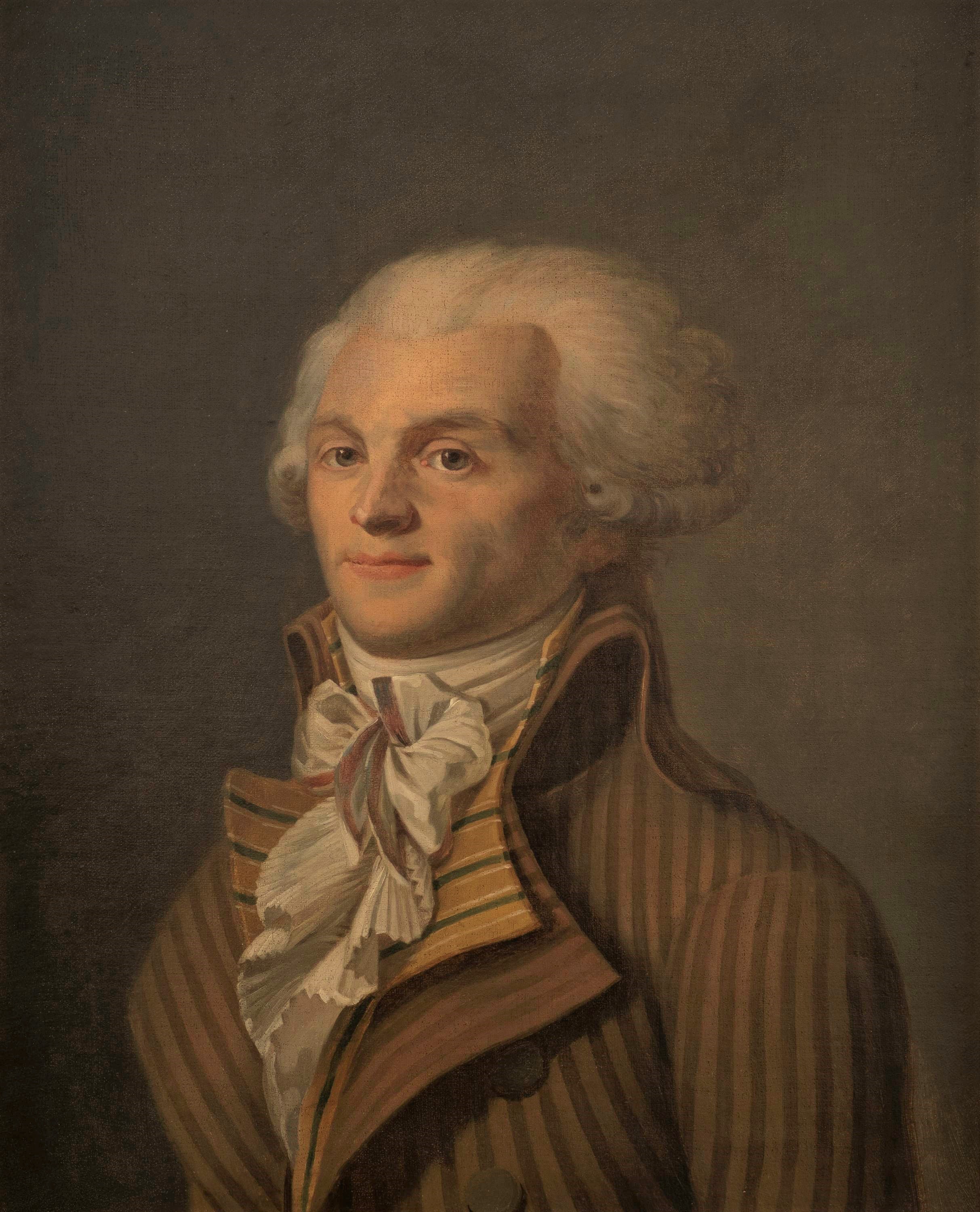
IN THE TIME OF THE GREAT FRENCH REVOLUTION- In Robespierre’s Time


BOOK REVIEW

THE TERROR-THE MERCILESS WAR FOR FREEDOM IN REVOLUTIONARY FRANCE, DAVID ANDRESS, FARRAR, STRAUS AND GIROUX, NEW YORK, 2005

This year marks the 223rd anniversary of the beginning of the Great French Revolution with storming of the Bastille on July 14th 1789. An old Chinese Communist leader, the late Zhou Enlai, was once asked by a reporter to sum up the important lessons of the French Revolution. In reply he answered that it was too early to tell what those lessons might be. Whether that particular story is true or not it does contain one important truth. Militants today at the beginning of the 21st century can still profit from an understanding of the history of the French Revolution.

There are many books that outline the history of that revolution. I have reviewed some of them in this space. Probably the most succinct overview, although it was written over one half century ago, is Professor Georges Lefebvre’s study. For those who want a more up-to-date overview of the main events and political disputes reflecting the tremendous increase in scholarship on the subject the book under review has a lot to recommend it. The author, a professor at the University of Portsmouth, England, covers all the main points from the pre-revolutionary problems confronting France at the time including, its terrible debt problems caused in the main by its support of the American Revolution to the political, social and, yes, sexual inadequacies of Louis XVI. As has been noted by many commentators on revolution, including the author and myself, one of the prerequisites for revolution is that the old regime can no longer govern in the same way. The personage of Louis XVI seemingly fits that proposition to a tee.

Professor Andress goes on to highlight the key events. Obviously, and most visibly the storming of the Bastille that opened up the cracks in the old monarchial regime. He details the struggle to create a constitutional monarchy through the various legislative assemblies that sought to carry out the reforms necessary to bring France into the modern age short of declaring a republic. And also the attempts, including by Louis himself, by forces of the old regime to return the old monarchy or stop the revolution in its tracks. When those efforts failed and the revolution began in earnest the Professor Andress goes into great detail analyzing the internal struggle by the revolutionaries, most notably the great fight between the Girondins and Jacobins for power, and the formation of the republic. After the defeat of the Girondins this led to the further fights to ‘purify’ the revolution among the Jacobin forces and the reign of the Robespierre-led Committee of Public Safety that consolidated the gains of the revolution through the ‘Reign of Terror’. Finally, the professor highlights the downfall and execution of Robespierre in 1794 represented the reaction that most revolutions exhibit when the political possibilities for further revolutionary moves is no longer tenable.

The author has done more than that though for those who are trying to understand the sometimes confusing political alignments in Paris and in the country. He discusses the voting patterns of the those in the various legislative assemblies; the role of the sans-culottes in pushing the revolution left; the falling out among the Jacobins; the international situation (meaning the immediate European one); and, most importantly, the reaction in non-Paris, the countryside that rebelled for various reasons against the central authority in the capital. Other subjects include the murder of Marat by Corday that set the revolution bloodily leftward, the Festival of the Supreme Being as an attempt to finally destroy the power of the Catholic Church and other reforms by the left-Jacobins to consolidate the revolution. The major negative of this work is political. As almost always in any discussion of the first five years of the French Revolution there is an almost fatalistic portrait of the emergence of Robespierre intertwined throughout all of the earlier events giving the impression that he was inevitably bound to take power. And, also inevitably, due to the excesses of the ‘Reign of Terror’ to lose it. This may be a good way to save one’s political soul but it is bad history. Revolutions, particularly great revolutions, are few and far between. They are messy affairs at the time and as seen through the historical lens. Nevertheless if the social tensions in society could always, or should always, be resolved in a nice non- violent parliamentary way there would be no revolutions. Damn, where would that leave us as the inheritors of the sans-culottes tradition?       


From The Pen Of Joshua Lawrence Breslin- When Girls Doo-Wopped In The Be-Bop 1960s Night, Take Two


I have, of late, been running back over some rock material that formed my coming of age listening music (on that ubiquitous, and very personal, iPod, oops, battery-driven transistor radio that kept those snooping parents out in the dark, clueless, and just fine, agreed), and that of my generation, the generation of ’68. Naturally one had to pay homage to the blues influences from the likes of Muddy Waters, Big Mama Thornton, and Big Joe Turner. And, of course, the rockabilly influences from Elvis, Carl Perkins, Wanda Jackson, and Jerry Lee Lewis on. Additionally, I have spent some time on the male side of the doo wop be-bop Saturday night led by Frankie Lymon and the Teenagers on Why Do Fools Fall In Love? (good question, right). I note that I have not done much with the female side of the doo wop night, the great ‘girl groups’ that had their heyday in the late 1950s and early 1960s before the British invasion, among other things, changed our tastes in popular music. I make some amends for that omission here.

One problem with the girl groups for a guy, me, a serious rock guy, me, is that the lyrics for many of the girl group songs, frankly, did not “speak to me.” After all how much empathy could a young ragamuffin of boy brought up on the wrong side of the tracks like this writer have for a girl who breaks a guy's heart after leading him on, yes, leading him on, just because her big bruiser of a boyfriend is coming back and she needs some excuse to brush the heartbroken lad off in the Angels' My Boyfriend’s Back. Or some lucky guy, some lucky Sunday guy, who breathlessly catches the eye of the singer in the Shirelles' Met Him On Sunday from a guy who, dateless Saturday night, was hunched over some misbegotten book, some study book, on Sunday feeling all dejected. And how about this, some two, or maybe, three-timing gal who berated her ever-loving boyfriend because she needs a good talking to, or worst, a politically incorrect "beating" in Joanie Sommers’ Johnny Get Angry.

So you get the idea, this stuff could not “speak to me.” Now you understand, right? Except, surprise, surprise foolish, behind the eight- ball, know-nothing youthful guy had it all wrong and should have been listening, and listening like crazy, to these lyrics because, brothers and sisters, they held the key to what was what about what was on girls’ minds back in the day, and maybe now a little too, and if I could have decoded this I would have had, well, the beginning of knowledge, girl knowledge. Damn. But that is one of the virtues, and maybe the only virtue of age. Yah, and also get this- you had better get your do-lang, do-lang, your shoop, shoop, and your best be-bop, be-bop into that good night voice out and sing along to the lyrics here. This, fellow baby-boomers, was our teen angst, teen alienation, teen love youth and now this stuff sounds great.


From The Pen Of Joshua Lawrence Breslin-Those Old John Garfield Blues- “Force Of Evil”- A Film Review

Click on the headline to link to a Wikipedia entry for John Garfield's Force Of Evil.

DVD Review

Force Of Evil, starring John Garfield, Thomas Gomez, Marie Windsor, MGM, 1948

… and they went east of Eden. Yah, the fall was tough, tough all the way around, no question. Especially for Cain and Abel who duked it out, no holds barred, for bragging rights about who was who in the new world order. That premise is the mist of time myth behind the film under review John Garfield’s classic film noir Force Of Evil. Here’s the skinny on this version of that old-time story and you can figure out who did right, who tried to do right ,and who got it completely wrong in this wicked old world.

Like I said things since the fall have been kind of tough, tough for most people, most people including a guy named Joe (played by Mister Garfield). Joe, like a fair number of guys was from hunger, 1930s Great Depression hunger, 1930s New York City hunger which might have been the worst kind, especially with the parents gone and an older brother taking care of you. A good, or trying to be good, older brother, Leo (played by Thomas Gomez), who denied his own worth and put Joe through law school which resulted in a big time job with a cushy law office on Wall Street for his wise guy younger brother . But see guys from hunger, unlike the Mayfair swells with the silver spoons who only scratch a little , are always scratching like crazy to get a little more ahead of that next guy. So Joe took the fall, took the fall as the legal eagle front guy for a New York City numbers crime syndicate. And as with all such syndicates economy of scale is important (in short, all the dough from their patch of earth in one pot, theirs) so Joe and his Mister work out a scheme to corner the then fairly democratic, if illegal, small time numbers market.

The problem is that old Leo is knee deep in the small time numbers racket and if he doesn’t play ball he will take a fall as the organization flexes it muscle, a fatal fall maybe. Joe tries to reason Leo to become an organization man, and he finally succumbs. Unfortunately, although there is a tendency for all capitalist enterprises to become monopolies, there is still competition out there from another syndicate who wants in on the lucrative numbers dream hit the big one market. And Leo is, in the end, the pigeon, the fall guy of fall guys. He wind up dead, very dead, under a bridge (come on you know what bridge) in the East River. That sparks a revival or moral courage in Joe who realizes that he, one way or the other, is responsible for Leo’s death. Of course a dame, a from hunger dame, Doris (played by Beatrice Pearson), a dame who he had big eyes for, who knows, knows almost Catholic good girl institutively that you can’t succumb to evil without becoming evil helps him along in his moral recovery. Still it was close thing, and a handy revolver and some cute tricks helped out. Like I say working your life out here east of Eden is a tough dollar, a tough dollar indeed.

Pardon Bradley Manning


Friday, December 28, 2012

Boston First Night- Copley Square New Year’s Eve Pardon Private Manning Stand-Out


Stand In Solidarity With Private Manning In Copley Square As We Celebrate The New Year, The Year Of Bradley’s Freedom. (This spot is now the traditional First Night spot for all those who want to stand against current wars, impeding wars, and for national liberation struggles so we will be among kindred spirits as people gather to watch the First Night parade that starts in the area later in the evening.)   

Let’s Redouble Our Efforts To Free Private Bradley Manning-President Obama Pardon Bradley Manning -Make Every Town Square In America (And The World) A Bradley Manning Square From Boston’s Copley Square To Berkeley to Berlin-Join Us In Copley Square (at the Boston Public Library, corner of Dartmouth and Boylston Streets ), Boston , Ma. For A Stand-Out For Bradley- First Night, Monday December 31st From 3:00-5:00 PM

***********

The Private Bradley Manning case is headed toward a late - winter trial now scheduled for March 2013. The recent news on his case has centered on the many (since last April) pre-trial motions hearings including defense motions to dismiss for lack of speedy trial (Private Manning’s pre-trial confinement is now at 900 plus days), dismissal as a matter of freedom of speech and minimal effect on alleged national security issues (issues for us to know what the hell the government is doing either in front of us, or behind our backs) and dismissal based on serious allegations of torturous behavior by the military authorities extending far up the chain of command while Private Manning was detained in Kuwait and at the Quantico Marine brig for about a year ending in April 2011. In December Private Manning himself, as well as others including senior military mental health workers, took the stand to detail those abuses.

Some more important recent news from the November 2012 pre-trail sessions is the offer by the defense to plead guilty to lesser charges (wrongful, unauthorized use of the Internet, etc.) in order to clear the deck and have the major (with a possibility of a life sentence) espionage /aiding the enemy issue solely before the court-martial judge (a single military judge, the one who has been hearing the pre-trial motions, not a lifer-stacked panel). Other news includes the increased media attention by mainstream outlets  around the case, as well as an important statement by three Nobel Peace Laureates  (including Bishop Tutu from South Africa) calling on their fellow laureate, United States President Barack Obama, to free Private Manning from his jails.

Since September 2011, in order to publicize Private Manning’ case, there have been weekly stand-outs (as well as other more ad hoc and sporadic events) in various locations in the Greater Boston area starting in Somerville across from the Davis Square Redline MBTA stop (renamed Pardon Bradley Manning Square for the stand-out’s duration) in Somerville on Friday afternoons and later on Wednesdays. Lately this stand-out has been held on each week on Wednesdays from 5:00 to 6:00 PM in order to continue to broaden our outreach at Central Square, Cambridge, Ma. (Small Park at the corner of Massachusetts Avenue and Prospect Street just outside the Redline MBTA stop, also rename Manning Square for the duration.) Join us. President Obama Pardon Private Manning Now!