Showing posts with label american civil war. Show all posts

Tuesday, February 12, 2013

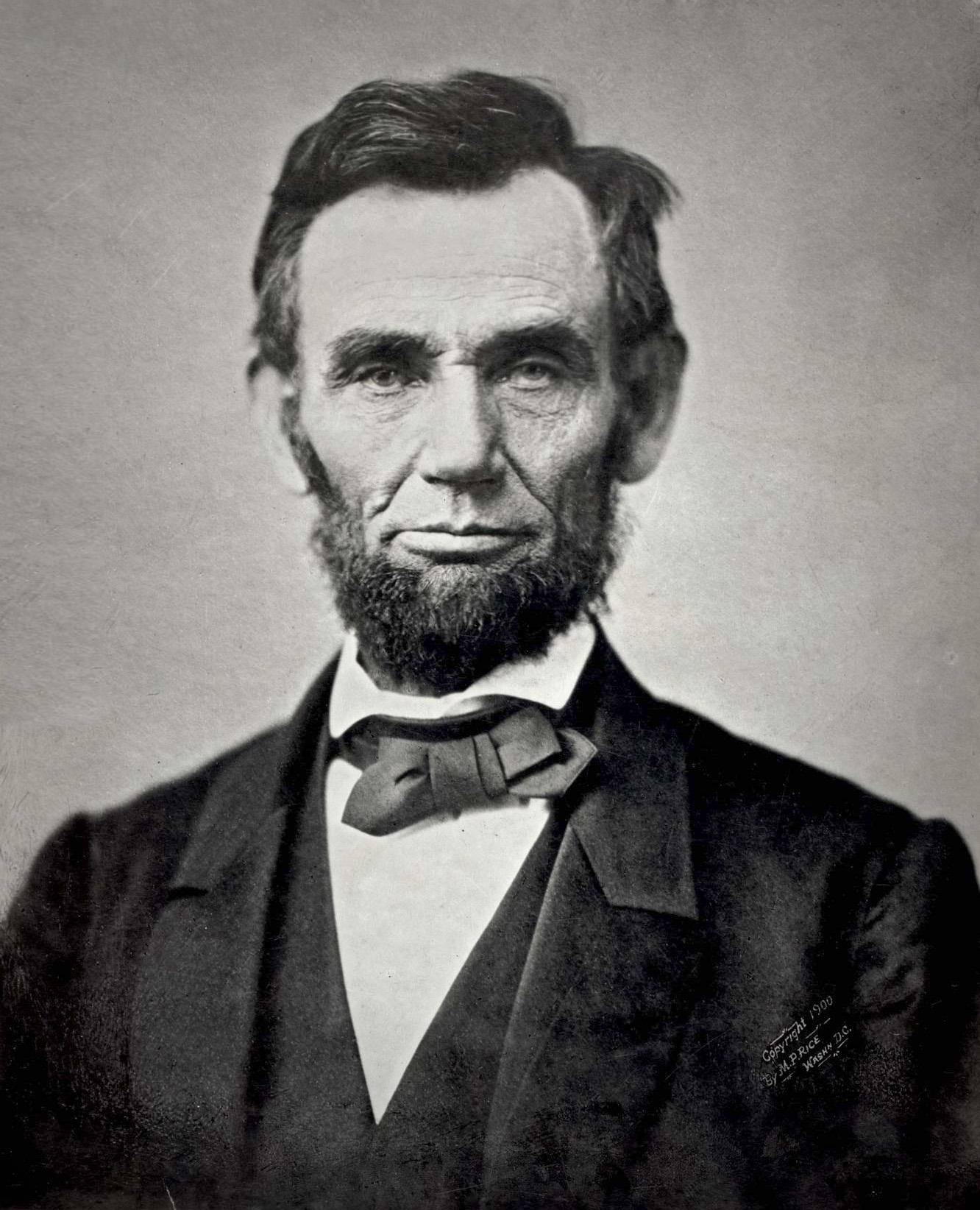
We Are Coming Father Abraham 300,000 Strong- In Honor Of Old Abe Lincoln On His Birthday

…he, Father Abraham he, pug-ugly he (damn, that age of photography, that Mathew Brady and his merry band, that damn warts and all pre-digital photography, when a painterly touch might have made him, well, just plain), yes, warts and all he (and thus no catch for gentile Kentucky bourbon daughters, or so it seemed), all Kentuck born and Illini-bred (where the best they could do was say nigra when talking about the slave problem. And later, much later the sons and grandsons of poor as dirt mountain boys, Harlan County roughs, picked that up nigra expression too, and went to their graves with that on their lips, jesus.), all keep the races split, let them, the blacks (nigras, remember) go back to Canaan land, go back to Africa, go to some not union place but keep them out of Chi town (sounds familiar) had a conversion, maybe not a conversion so much as a lining up his beliefs with his walk the walk talk.
So he ran for president, President of the United States, not as a son of William Lloyd Garrison (hell, no, he would still be stuck in Springfield or maybe practicing law in bell-weather podunk Peoria), or a righteous son of Captain John Brown, late of Kansas and Harpers Ferry (he had no desire to share the Captain’s blood-soaked fate), but to hold the union together, and to curb that damn land hunger slavery, that national abyss. And since they ran politics differently in those days (no women, latinos, nigras to fuss over, sounds familiar) and were able to touch up a picture or two he won, barely won but won. And then all hell broke loose, and from day one, from some stormy March day one, he had to bend that big long boney pug-ugly body to the winds, his winds.

And he did, not unequivocally, not John Brown proud to erase the dripping blood and canker sore from his homeland, but in a revolutionary way nevertheless, break down slavery’s house divided, broke it down, no quarter given when the deal went down. More like some latter day Oliver Cromwell (another warts and all man) pushing providence forward with a little kick. More like old Robespierre flaming the masses with the new dispensation, the new word slave freedom. Kept freeing slaves as he went along, kept pushing that freedom envelope, kept pushing his generals south and west and east and tightening , anaconda tightening, the noose on the old ways until Johnny Reb cried uncle, cried his fill when righteous Sherman and his cutthroat bummers got to work too. Yes, old Father Abraham, the last of the revolutionary democrats, the last of the serious ones, who couldn’t say black better that nigra, and never could, but knew the old enlightenment freedom word, knew it good.
…and now he belongs to the ages, and rightfully so, warts and all.
********
Workers Vanguard No. 946
6 November 2009

On Karl Marx, Abraham Lincoln and the Civil War

(Letter)

Massachusetts
30 August 2009

I had a few thoughts on your article “Honor Abraham Lincoln” (Workers Vanguard, No. 938). I just finished Eric Foner’s Reconstruction: America’s Unfinished Revolution, 1863-1877 and reread some articles by Marx on the US Civil War. One of the things that’s striking is that Marx gave what is basically (critical) political support to a capitalist party, by congratulating Lincoln on re-election (see Karl Marx on Lincoln Re-Election, supra). Fake socialists have a long history of looking to some supposedly progressive wing of the bourgeoisie, so it’s striking when Marx himself seems to support that view, and it needs to be put in perspective.

It was essential to give military support to the North, but political support presumes that a class is performing a historically progressive role that could not be performed by a more progressive class, the proletariat. This is actually a time when the concept of a “two stage revolution” makes sense, even though the term was not used at that time. The US working class was small, unorganized and without the social weight it would possess a generation or more later. Chattel slavery was heinous in itself, but beyond that, as Marx said, “Labor cannot emancipate itself in its white skin, wherein its black it is branded.” It was inconceivable that there would be an advance in the class struggle, in terms of unions, never mind socialist revolution, while slavery existed. The aftermath of the Civil War, in particular Radical Reconstruction, gave birth to labor struggles and a modest rise in socialist consciousness in the US. Reconstruction’s defeat, symbolized by the withdrawal of federal troops to crush the rail strike of 1877, ended capitalism’s progressive role.

Marx was also writing about the US before the experience of the Paris Commune. (I cannot find any writings by Marx or Engels dealing with Reconstruction.) Marx’s writings on the US Civil War, along with radical abolitionists like Frederick Douglass and the whole thrust of Radical Reconstruction, presumed that one could use the capitalist state for progressive ends. The Paris Commune proved that false, or at least put that historical era clearly at an end. That task today can be fulfilled only by the proletariat.

Joel

WV replies:

The Civil War—the Second American Revolution—was the greatest event in U.S. history. By defeating the South, the industrialized system in the North uprooted the nearly 250-year-old institution of chattel slavery and paved the way for the expansion of capitalist property relations from one end of North America to the other.

Joel rightly emphasizes that the Northern ruling class in the Civil War era played a historically progressive role at a time when the small and unorganized working class lacked the social weight to supplant bourgeois rule. He concludes correctly that the class struggle, unionization and the prospect of socialist revolution could not advance as long as slavery existed.

However, Joel intimates that there is a common thread between Karl Marx’s congratulations to Abraham Lincoln for his re-election to the presidency in 1864 and the reformists’ political support for “liberal” bourgeois forces today: “Fake socialists have a long history of looking to some supposedly progressive wing of the bourgeoisie, so it’s striking when Marx himself seems to support that view, and it needs to be put in perspective.”

Marx supported Lincoln because he was a bourgeois revolutionary in a period when, as Joel himself notes, the U.S. bourgeoisie was playing “a historically progressive role that could not be performed by a more progressive class, the proletariat.” Thus, this support has nothing whatsoever in common with the politics of today’s fake socialists, whose pro-Democratic Party program helps chain workers and the oppressed to their capitalist class enemies.

Joel correctly notes that the defeat of Reconstruction “ended capitalism’s progressive role.” Following the Civil War, the U.S. began to play an increasingly bellicose role abroad, waging war against Korea and clashing with its European competitors over Asia, the South Pacific and the Western Hemisphere. While the Republican Party had championed the emancipation of the slaves during the Civil War and supported the great expansion of black rights during Reconstruction, it was quickly becoming the party of the big capitalists, who had little interest in the rights and advancement of black people. The years of the Grant administration saw the creation of new corporations that were, as described by Henry Adams at the time, “more powerful than a sovereign State” (quoted in “On Henry Adams and Democracy,” New York Review of Books, 27 March 2003). Moreover, as we noted in Part One of “The Grant Administration (1869-1877) and the Rise of U.S. Imperialism” (WV No. 938, 5 June), we see in this period “shades of the imperial presidency to come.” By the late 19th century, the U.S. had become an imperialist power, bringing death and destruction to subject countries such as the Philippines.

Joel suggests that the Paris Commune of 1871, the first instance of the dictatorship of the proletariat in history, showed that one could no longer use the capitalist state for progressive ends. Actually, what the Paris Commune confirmed was that the proletariat, victorious in its social revolution, “cannot simply lay hold of the ready-made state machinery and wield it for its own purposes,” as Marx underlined in The Civil War in France (1871). What the Paris Commune showed was that the working class must smash the existing capitalist state apparatus and replace it with its own state, the dictatorship of the proletariat.

The real issue at hand, in the case of the U.S. Civil War, is the question of when the bourgeoisie as a class ceases to play a historically progressive role. For various historical reasons, that question played out differently in Europe and the U.S. In fact, as early as 1848, amid the European revolutions of that year, Marx skewered the conservatism of the German bourgeoisie, writing, “The German bourgeoisie developed so sluggishly, timidly and slowly that at the moment when it menacingly confronted feudalism and absolutism, it saw menacingly confronting it the proletariat and all sections of the middle class whose interests and ideas were related to those of the proletariat” (“The Bourgeoisie and the Counter-Revolution” [1848]).

The 1848 revolutions marked the period when the European bourgeoisies ceased to play a historically progressive role. Indeed, they feared the prospect of revolutionary upheaval more than the dominance of the landed nobility, and allied themselves with the aristocracy against the working and artisan masses in revolt. At the same time, the proletariat was still too weak to immediately vie for power. It was the experience of the betrayals by the bourgeoisies in the 1848 revolutions that led Marx to emphasize the necessity of organizing the proletariat in a party independent of all other classes.

In the case of the U.S., as Joel himself notes, the working class could not play an independent role so long as the institution of slavery continued to exist. The North’s momentous suppression of the slaveholders’ rebellion gave great impetus to the industrialization of the country and fostered the development of the proletariat—capitalism’s gravedigger. The Civil War and Reconstruction represented the last progressive acts of the U.S. bourgeoisie.

Joel asserts that the period of the Civil War—including Marx’s support to Lincoln—“is actually a time when the concept of a ‘two stage revolution’ makes sense, even though the term was not used at that time.” However, this poses the question in an ahistorical manner. Marx was not working within the framework of “two stage revolution.” To the contrary, for Marx, the Civil War was not the first stage of a revolution whose sequel would bring the working class to power but the culmination of the bourgeois revolution. The dogma of “two stage revolution,” as originally developed for tsarist Russia, held that because Russia was a backward country that had not yet undergone a bourgeois-democratic revolution, a bourgeois republic was necessary to achieve modernization and prepare the proletariat for taking power. But by the time the two-stage conception appeared on the scene, capitalism was no longer capable of playing a historically progressive role.

Discussing this stagist strategy, Russian revolutionary Leon Trotsky remarked: “The Menshevik idea of the alliance of the proletariat with the bourgeoisie actually signified the subjection to the liberals of both the workers and the peasants” (“Three Conceptions of the Russian Revolution” [1939]). All manner of Stalinists and fake socialists have sought to justify their “two stage” betrayals of the proletariat by pointing to Marx’s support to Lincoln and other similar instances. From the Mensheviks’ support to bourgeois liberalism during the 1917 Russian Revolution to the defeats of the Second Chinese Revolution in the late 1920s and the Spanish Civil War in the 1930s, the two-stage framework has always been a straitjacket for the working class and a program for bloody counterrevolution.

Everything depends on time, place and circumstance, as Engels was fond of saying. In contrast to the Republican Party of the early 1860s, which fought to uproot black chattel slavery, the capitalist Republican and Democratic Parties today are the gendarmes of world reaction. Imperialism can be put out of business only by a series of working-class revolutions that overthrow capitalism, expropriate the bourgeoisie and prepare the way for a communist future for all of humanity. We struggle to build internationalist revolutionary parties dedicated to that goal.
 

Tuesday, January 1, 2013

Poet’s Corner- On The 150th Anniversary Of The Emancipation Proclamation-“We Are Coming Father Abraham 200, 000 Strong”-Robert Lowell’s “For The Union Death” -


… “make way, make way, give way, the Massachusetts 54th Honor Guard is coming through, make way,” yelled a grizzled veteran, a grizzled veteran of his generation’s  own unloved war who had turned a strange corner for peace as he waited to form up to march on Armistice Day 2012 with the brethren against maddened war news, and talk of war. His mind swirled back not to unloved war fights and streets fights against war but to what meant his automatic call of a moment before at the sight of that honor guard.

Thoughts of long gone snickers and barbs in Richmond town (and not just Richmond town but cotton greedy commercial whigs of Boston, those who spoke only to Cabots and to god) when Andrews declared for a regiment (and Lincoln, hell, old cracker Lincoln to hear it told, called for chain break), snicker thoughts that three-fifth of a man, hah, are you kidding, would not, could not (lacking manly presence, and stinking to high heaven of humid, moist bellum cotton suns) fight to break chains to recover that missing two-fifth, thoughts of  rebel snicker that no white johnnie from some desolate Ohio River town or farm for love nor money would move one foot, move one inch, to break those chains, thoughts too of manly courage (nervous, hell, yes, nervous as every man is before bullet fights, jesus, what do you think ) before Wagner front, and tear-eyed thoughts of Captain Brown and his band of brothers before hellish Harpers Ferry fight, no rebel snickers that night.            

And thoughts too of still lonely Shiloh graveyards (or you name your hundred graveyards) solid blue bled in a grey land, a foreign grey land,  simple gravestones, maybe a hasty wooden cross when the dead piled up too high, names now getting harder to read for ancient eyes, and forgetful minds, thoughts of childhood postage stamps commemorations of such and such Grand Army of the Republic encampment, and then none, as time took its toll, thoughts of sturdy yeoman southern mountain men, kindred, who fought for the union, fought for Mister Lincoln, if not for his nigras, thoughts too of  stirring sights at Memorial Hall of scented wood-etched names , some class years decimated, of Harvard union fallen in the hundred battlefield graveyards, but thoughts too, immense thoughts, back to that childhood time desecrated statehouse Saint Gaudens relief and proud men, proud union men marching to hell, or glory.

Yah, some things are worth fighting for, and as his finished his thoughts and readied himself to march one more time against the monsters of war he wished, wished to high heaven, that his war, his unloved war, could have produced anything but cold black marble down in D.C. …               
For the Union Dead

Relinquunt Ommia Servare Rem Publicam.

The old South Boston Aquarium stands
in a Sahara of snow now. Its broken windows are boarded.
The bronze weathervane cod has lost half its scales.
The airy tanks are dry.

Once my nose crawled like a snail on the glass;
my hand tingled to burst the bubbles
drifting from the noses of the crowded, compliant fish.

My hand draws back. I often sign still
for the dark downward and vegetating kingdom
of the fish and reptile. One morning last March,
I pressed against the new barbed and galvanized

fence on the Boston Common. Behind their cage,
yellow dinosaur steamshovels were grunting
as they cropped up tons of mush and grass
to gouge their underworld garage.

Parking spaces luxuriate like civic
sandpiles in the heart of Boston.
a girdle of orange, Puritan-pumpkin colored girders
braces the tingling Statehouse,

shaking over the excavations, as it faces Colonel Shaw
and his bell-cheeked Negro infantry
on St. Gaudens' shaking Civil War relief,
propped by a plank splint against the garage's earthquake.

Two months after marching through Boston,
half of the regiment was dead;
at the dedication,
William James could almost hear the bronze Negroes breathe.

Their monument sticks like a fishbone
in the city's throat.
Its Colonel is a lean
as a compass-needle.

He has an angry wrenlike vigilance,
a greyhound's gentle tautness;
he seems to wince at pleasure,
and suffocate for privacy.

He is out of bounds now. He rejoices in man's lovely,
peculiar power to choose life and die-
when he leads his black soldiers to death,
he cannot bend his back.

On a thousand small town New England greens
the old white churches hold their air
of sparse, sincere rebellion; frayed flags
quilt the graveyards of the Grand Army of the Republic

The stone statutes of the abstract Union Soldier
grow slimmer and younger each year-
wasp-waisted, they doze over muskets
and muse through their sideburns…

Shaw's father wanted no monument
except the ditch,
where his son's body was thrown
and lost with his 'niggers.'

The ditch is nearer.
There are no statutes for the last war here;
on Boylston Street, a commercial photograph
shows Hiroshima boiling

over a Mosler Safe, the 'Rock of Ages'
that survived the blast. Space is nearer.
when I crouch to my television set,
the drained faces of Negro school-children rise like balloons.

Colonel Shaw
is riding on his bubble,
he waits
for the blessed break.

The Aquarium is gone. Everywhere,
giant finned cars nose forward like fish;
a savage servility
slides by on grease.

Robert Lowell


Saturday, December 22, 2012

From The Pen Of Joshua Lawrence Breslin-Alfred Hitchcock’s “The Paradine Case”- A Film Review


Click on the headline to link to a Wikipedia entry for the 1947 Alfred Hitchcock film, The Paradine Case.
DVD Review

The Paradine Case, starring Gregory Peck, Anne Todd, Alida Valli, Louis Jourdan, directed by Alfred Hitchcock, Selznick International Pictures, 1947

Okay, okay I ‘ll back off a little on my remark that on the basis of two recently reviewed Alfred Hitchcock films, The Wrong Man and I Confess, apparently the late thriller director had less that total admiration for the cops, the New York City and Quebec City cops anyway. Yah, the cops, the London cops, got it right, got it right up to the big step off as they collared their man, oops woman, wrapped it up tight, and let the long arm of justice take its course. But see there was dame involved, a femme fatale to boot so you can hardly blame a guy like me (or Hitchcock’s London cops for that matter under other circumstances) for not seeing what was clear as day in front of us. But it was a close thing anyway before the end, and some pretty big time lawyers, oops, barristers got egg on their faces before it was all over.

I better explain (and explain fast before some irate cop gives me, poor me, the third degree for complaining about their police procedures). See this mysterious woman, thisfemme fatale there is no other way to call it discreetly, was married to a mucky-mucky blind (age and infirmity blind) English rich gentleman named Paradine who wound up very, very dead one night having ingested a poisoned drink. Naturally his ever-loving wife, Mrs. Paradine (played by Alida Valli), young, fetching, restless, of indeterminate background, and, oh yah, a femme fatale, if I didn’t mention that before was the easy choice to step off for the caper. Mrs. Paradine though was not without financial resources and could and did hire the best up and coming criminal defense lawyer around town, oops again, barrister, Tony Keane(played by Gregory Peck), a very, very married barrister by the way. Married to an upper crust woman (played by Anne Todd) who was perhaps just a bit too stiff upper lip and earnest when all is said and done.

Naturally when a femme is on the prowl every guy within ten miles is fair game and, of course, Tony forgets every law 101 thing that got him to where he was including taking a big fall for Mrs. Paradine once she got her hooks into him. Those hooks included Tony, against all reason and evidence, trying to set up Colonel Paradine’s valet, Andre, as the fall guy (played by Louis Jourdan).That proved to be Tony’s undoing as Mrs. Paradine, turning out to be a good femme, or my idea of a good femme, won’t hear of letting Andre take the fall, especially after Tony has grilled Andre on the stand in court and as a result Andre commits suicide. That knowledge unravels Mrs. Paradine who admits in open court, against all reason since that all male jury was also swayable, that Andre was her lover and that she, and she alone, murdered her husband to run off with him.

Build those gallows high, very high indeed. Naturally the very earnest Mrs. Keane took her Tony back, or wanted to but you can see, see as clear as day, how even big time lawyers, oops once more, barristers could have gotten thrown off course when a femme is in the room. So what do expect of poor amateur like me who was secretly pulling for her just like I do for every femme, good or bad. But that too was a close thing.


Thursday, June 30, 2011

***In Honor Of Miss (Ms.) Lenora Sonos, Clintondale High School English Department, Circa 1961


"The quality of mercy is not strained. It droppeth as the gentle rain from heaven, Upon the place beneath" lines from Portia's speech to the court in William Shakespeare's Merchant of Venice

As Jimmy came across these above lines in the epilogue of a book that he was innocently, very innocently, reading about the sources of old time English playwright William Shakespeare’s sources for his various works he suddenly developed a 50th anniversary case of the nerves. And the source of those nerves was easily traceable, very easily traceable, to time spent in Miss Lenora Sonos’ classroom memorizing those very lines of the Bard.

Miss Lenora Sonos, Jimmy’s senior year English teacher made many people nervous. Who was he kidding, she made James Cullen, Jimmy, Class of 1961, and king hell king of the intramural bowling league (boys’ division) at old Clintondale High, nervous. Others can, on their own hook, come forth with their own benighted and heart-rendering testimony but she made him nervous before her class, nervous while in her class, nervous after leaving her class, and nervous in that occasional dark hour just before the dawn when he woke up, woke up with the sweats, became that book report due Monday morning bright and early was not coming together the way he wanted. Come on, again, who was Jimmy kidding, waking up with the sweats kidding, the way that she wanted it. The no rush, no night before it was due , well-thought out and drafted, concise, with some kind of original twist to it paper, and written like some come down from the mountain patriarchal tablet screed, or really an endlessly re-written version of that self-same screed.

And worst, worst than not being concise, worst than not having an original twist idea, was that you had to publicly defend your ideas in front of the whole class. But, once again who was Jimmy kidding, the class was child’s play, putty in his hands once he started throwing his obscure, arcane, in-your-face two thousand facts at them, and they retreated, or better, surrendered, white flags in hand. No, it was her, Miss Sonos, that he had to impress with his obscure, arcane, in-your-face knowledge but here was the rub, she had no surrender, or white flag, in her because she was privy to those two thousand facts, had in fact taught him a bunch of them, and had a few thousand additional ones in her own storehouse just waiting for Jimmy to make that one wrong move, the one wrong move that was inevitably to come from a young, still unformed, mind.

And worst, worst than public Sonos humiliation, worst than being at a lost for that original idea was to not be with her, to be with her one hundred percent, when she spoke, almost in a hushed whisper, of some piece of literature the virtues of which she endlessly drilled into the class, but really had her eyes set on him when doing so, or so he thought. (He found out later that that feeling was shared by every at least half-awake student in the class, the others were just ducking behind some book hoping not to be noticed.) As he thought of those books just now, he remembered the time, trying to be one hundred with her, when he blurred out that Holden Caulfield from The Catcher In The Rye “spoke” to him, spoke to him about his own teen alienation, spoke about what can a kid do when the cards are stacked against him in this cruel old world, a world he didn’t put together, spoke of teen angst in trying to find his place in the sun when everybody was pushing him in about six different ways and he was pushing himself in about seven.

And there Jimmy was, proud as a peacock, feeling like a junior-sized literary critic and then she, Miss Sonos in high dudgeon, lowered the hammer and dismissed the book, and the author, as so much hot air and New Yorker-style cheapjack kids’ short story, barely pabulum. And that was the end of it, for once Miss Sonos pronounced someone a mere short story writer, oblivion beckoned. She much preferred that her Jimmys tackle James T. Farrell, John Dos Passos, Ernest Hemingway, F. Scott Fitzgerald, Henry James, Flannery O’Connor, and Edith Wharton who although they too wrote short stories wrote novels, great novels, and therefore were not assigned to hellish depths. And you know in a funny way Jimmy had to admit that she was right, right in the sense that these other guys had a lot to say and that one should no put all their “literary light” eggs in one basket, although she was still wrong, wrong big time, about J.D. Salinger. Wrong that is if she is not now nearby, nearby this side of the grave.

But the worst time, the worst time of all, for Jimmy who was trying to hold his head up in that dark early 1960s Cold War working poor teen angst night was when she made him write a paper as a proponent of the then front line, flame-burning civil rights movement down South after he had written a short piece, a short diary-like piece, for her eyes only, one time. Not only that but he was going to be forced to argue his case against the editor of the school newspaper, a hot shot who had real literary ambitions and a father who was a professor, or something, over at the university. Now Jimmy, as he noted in his short piece, was in sympathy, secret sympathy, with the struggle of black people down South, and had linked that struggle with his own sense of what white working poor people needed to. Not all that deeply thought out then, but that was the gist of it. But see, the secret part was necessary because the best word, the absolutely best word that he ever heard anybody in Clintondale, young or old, call black people was “nigra,” like the neighborhood, the predominantly Irish and Italian Catholic neighborhood that he lived in, and breathed in, was down South itself.

And the most vitriolic voice around the neighborhood was that of his father, and his kindred, who resided nightly at the Old Gaelic Pub, egging on vicariously, while watching the barroom television news, the Bull Connors of the world. Jimmy tried, tried hard, to explain this all to Miss Sonos but she, unlike in other things, dismissed his pleas out of hand. Well, he gave that presentation, and if he didn’t win the debate points, the precious debate points, that he thought he was fighting for he made it clear that the he was on the other side of the road between the those who lived, thought and acted “nigra” and those who said 1960s “negro.” So there she was right again, although many bridges were burned that day.

As Jimmy nervously finished up musing over the exploits, the maybe un-heroic exploits, of Miss Lenora Sonos, he though about those lines from Portia’s speech to the court in Shakespeare’s The Merchant Of Venice, lines that she made the class memorize, although that memorizing business was not her style in general. And Jimmy chuckled to himself that did not, after all, have to look those sentences in that speech up, although if he was in court he would have to confess that he did look up to see if there was one or two p's in droppeth. He knew those lines and more from the master by heart. And that fact, that fact of remembrance, served to bring up something, something heroic about Miss Sonos. About what she said, said endlessly. Literature matters. Words matter. Jimmy had, on more occasions than he cared to remember, honored those ideas more in the breech than the observance but he tried to be guided by them. But they, no question, were planted there by Miss Sonos.

Thinking on it now though Jimmy realized that he not close to Ms. Sonos, certainly not her "pet". Perhaps she did not even really know who he was, although that bout over the civil rights paper may have turned the tables a little away from the truth of that notion. He did not know about today but back then the classes were very large and there were many minds to feed. So it was possible. Perhaps she did not even “like” him. That too was possible. Jimmy did not display his better side, the "better angel of his nature", in those days, on most days. However, Jimmy did know two things about her-literature matters, words matter. That more than balanced things out, Jimmy thought. And then he said in whisper, “Miss (Ms.) Lenora Sonos, wherever you are-thanks.”

Saturday, February 12, 2011

***In Honor Of Abraham Lincoln’s Birthday- Now He Belongs To The Ages- Doris Kearns Goodwin’s Abraham Lincoln- “Team Of Rivals: Abraham Lincoln's Political Genuis”- A Book Review

Book Review

Team Of Rivals: Abraham Lincoln's Poltical Genuis, Doris Kearns Goodwin, Simon &Schuster, New York, 2005


One would think as we celebrate, and rightly so, Abraham Lincoln’s birthday that everything that needs to be said about the man has been written, and written in profusion and to exhaustion. I believe that fact is essentially true, although that has not stopped all and sundry from taking a shot at reformulating, or “uncovering” the “real” Lincoln as the fairly recent attempts to win Lincoln for the “Homintern” (the English poet W.H. Auden’s term, not mine) on the question of his sexual preferences indicates. That said, after reading Doris Kearns Goodwin’s Team Of Rivals it is apparent that there are reformulations and there are reformulations. Here Ms. Goodwin has gathered much material that I have seen in other sources and tells a very interesting and detailed politically-etched story about the way that Abraham Lincoln was able to use his sharply-honed skills to weld together a presidential cabinet that, with few defections and fewer resignations, ran the Unionist side in the American Civil War. For those already familiar with battles, military victories and personalities, and grand strategies this is a very good inside look at the mechanics of how the Union victory was won. If that fight was a close thing at times it was not Lincoln’s lack of ability to stay the course and to push the fight forward that was to blame.

As I mentioned above most of the material used here, including many of the humorous (1860s humorous) anecdotes and parables that Lincoln was famous for, have seen the light of day in other sources, especially in poet and fellow Illinoisan Carl Sandburg’s old time multi-volume study. Where Ms. Goodwin shines is on the information about the fight for the formation of the Republican Party in the 1850s and in chronicling Lincoln’s almost compulsive desire from early on to mark his name in the stars. The struggle to create that new party, and the sketches of the men that were drawn to it, including Lincoln, out of the divergent political tendencies that were coming apart in the tradition Whig and Northern Democratic parties as a result of the pressures of the slavery question represented some of the most interesting parts of the book. The mix and matches of personalities and divergent political backgrounds that came together and formed its core, men like William Seward, Montgomery Blair, and Simon Chase joined by Unionist Democrats and Whigs like Edwin Stanton and Edward Bates, were those that Lincoln had to work with in order to form a coalition, a popular front if you like, that held together under his authority to get the necessary job done.

There has been some recent controversy over the question of Lincoln’s racial views and whether he was, personally, a racist or not. While that question is more germane than the once concerning his sexual preferences I believe that Ms. Goodwin has put paid to that question by her narrative. Clearly Lincoln, as he entered the presidency, had the typical racial views of his times, his white man’s times, no question. In that sense Seward, and more so, Chase held more “advanced” views and were more comfortable with working with blacks. The beauty of Lincoln, as a kicking and screaming late covert to “high” abolitionist positions is that he was able to transcend his own personal views.

In that sense Ms. Goodwin, however, may have underestimated the influence that the “team” had on Lincoln’s racial views, as they meshed together to turn what started as a straight up, although still historically important, struggle for the Union to the more important struggle to break slavery as a reputable modern form of servitude. The ups and downs of that struggle to focus the fight on abolition form the core of this book. If you are not familiar, beyond the general high school or college history books, on the subject of the American Civil War and you are not desperate to know, in detail, every battle, skirmish, and mere looking mean at each other across every picket line, or every military commander, drunk or sober, or much about what was happening politically on the Confederate side once the war started this book is for you. And if you want to have a well written political narrative of the hows and whys of Lincoln’s growing political authority during the Civil War and understand why War Minister Stanton’s statement after his assassination “now he belongs to the ages” rings true you had better read this one.