Showing posts with label motorcycles. Show all posts

Monday, January 28, 2013

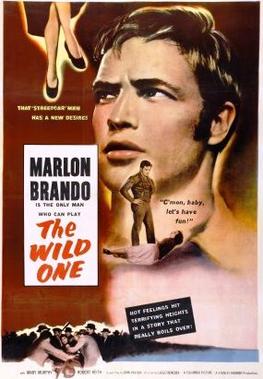
***In The Time Of The Hard Motorcycle Boys- “The Wild One” A Film Review-And More


DVD Review

The Wild One, Marlon Brando, Lee Marvin, produced by Stanley Kramer, 1954


Okay here is the book of genesis, the motorcycle book of genesis, or at least my motorcycle book of genesis. But, before I get to that let me make about seventy–six disclaimers. First, the whys and wherefores of the motorcycle culture, except on those occasions when they become subject to governmental investigation or impact some cultural phenomena, is outside the purview of the leftist politics that dominate my commentaries. There is no Marxoid political line, as a rule, on such activity, nor should there be. Those exceptions include when motorcyclists, usually under the rubric of “bad actor” motorcycle clubs, like the famous (or infamous) Oakland, California-based Hell’s Angels are generally harassed by the cops and we have to defend their right to be left alone (you know, those "helmet laws", and the never-failing pull-over for "driving while biker") or, like when the Angels were used by the Rolling Stones at Altamont and that ill-advised decision represented a watershed in the 1960s counter-cultural movement. Or, more ominously, from another angle when such lumpen formations form the core hell-raisers of anti-immigrant, anti-communist, anti-gay, anti-women, anti-black liberation fascistic demonstrations and we are compelled, and rightly so, to go toe to toe with them. Scary yes, necessary yes, bikes or no bikes.

Second, in the interest of full disclosure I own no stock, or have any other interest, in Harley-Davidson, or any other motorcycle company. Third, I do not now, or have I ever belonged to a motorcycle club or owned a motorcycle, although I have driven them, or, more often, on back of them on occasion. Fourth, I do not now, knowingly or unknowingly, although I grew up in working class neighborhoods where bikes and bikers were plentiful, hang with such types. Fifth, the damn things and their riders are too noisy, despite the glamour and “freedom” of the road associated with them. Sixth, and here is the“kicker”, I have been, endlessly, fascinated by bikes and bike culture as least since early high school, if not before, and had several friends who “rode”.Well that is not seventy-six but that is enough for disclaimers.

Okay, as to genesis, motorcycle genesis. Let’s connect the dots. A couple of years ago, and maybe more, as part of a trip down memory lane, the details of which do not need detain us here, I did a series of articles on various world-shaking, earth-shattering subjects like high school romances, high school hi-jinx, high school dances, high school Saturday nights, and most importantly of all, high school how to impress the girls( or boys, for girls, or whatever sexual combinations fit these days, but you can speak for yourselves, I am standing on this ground). In short, high school sub-culture, American-style, early 1960s branch, although the emphasis there, as it will be here, is on that social phenomena as filtered through the lenses of a working- class town, a seen better days town at that, my growing up wild-like-the-weeds town.

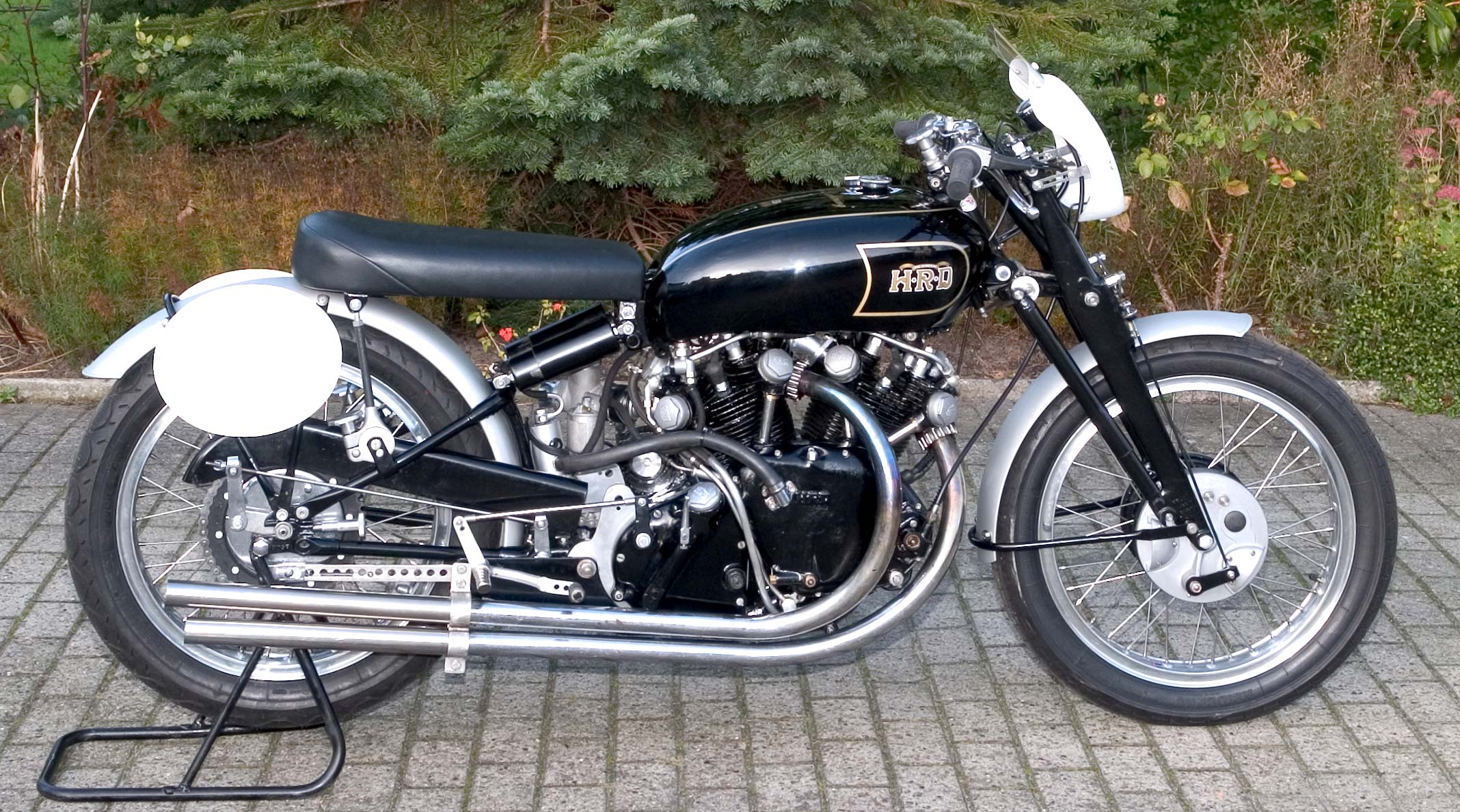
One of the subjects worked over in that series was the search, the eternal search I might add, for the great working class love song. Not the Teen Angel, Earth Angel, Johnny Angel generic mush that could play in Levittown, Shaker Heights or La Jolla as well as Youngstown or Moline. No, a song that, without blushing, one could call one’s own, our working- class own, one that the middle and upper classes might like but would not put on their dance cards. As my offering to this high-brow debate I offered a song by written by Englishman Richard Thompson (who folkies, and folk rockers, might know from his Fairport Convention days, very good days, by the way), Vincent Black Lightning, 1952. (See lyrics below.) Without belaboring the point the gist of this song is the biker romance, British version, between outlaw biker James and black-leathered, red-headed Molly. Needless to say such a tenuous lumpen existence as James leads to keep himself “biked" cuts short any long term“little white house with picket fence” ending for the pair. And we do not need such a boring finish. For James, after losing the inevitable running battle with the police, on his death bed bequeaths his bike, his precious “Vincent Black Lightning”, to said Molly. His BIKE, man. His BIKE. Is there any greater love story, working class love story, around? No, this makes West Side Story lyrics and a whole bunch of other such songs seem like so much cornball nonsense. His BIKE, man. Wow! Kudos, Brother Thompson.

Needless to say that exploration was not the end, but rather the beginning of thinking through the great American night bike experience. And, of course, for this writer that means going to the books, the films and the memory bank to find every seemingly relevant “biker” experience. Thus, readers were treated to reviews of such classic motorcycle sagas as “gonzo” journalist, Doctor Hunter S. Thompson’s Hell’s Angels and other, later Rolling Stonemagazine printed “biker” stories and Tom Wolfe’ Hell Angel’s-sketched Electric Kool-Aid Acid Test (and other articles about California subset youth culture that drove Wolfe’s work in the old days). And to the hellish Rolling Stones (band) Hell’s Angels “policed” Altamont concert in 1969. And, as fate would have it, with the passing of actor/director Dennis Hooper, the 1960s classic biker/freedom/ seeking the great American night film, Easy Rider. And from Easy Rider to the “max daddy” of them all, tight-jeaned, thick leather-belted, tee-shirted, engineer-booted, leather-jacketed, taxi-driver-capped (hey, that’s what it reminds me of), side-burned, chain-linked wielding, hard-living, alienated, but in the end really just misunderstood, Johnny, aka, Marlon Brando, in The Wild One.

Okay, we will cut to the chase on the plot. Old Johnny and his fellow“outlaw” motorcycle club members are out for some weekend “kicks” after a hard week’s non-work (as far as we can figure out, work was marginal for many reasons, as Hunter Thompson in Hell’s Angels noted, to biker existence, the pursue of jack-rolling, armed robbery or grand theft auto careers probably running a little ahead) out in the sunny California small town hinterlands.(They are still heading out there today, the last time I noticed, in the Southern California high desert, places like Twenty-Nine Palms and Joshua Tree.)

And naturally, when the boys (and they are all boys here, except for couple of “mamas”, one spurned by Johnny, in a break-away club led by jack-in-the-box jokester, Lee Marvin as Chino) hit one small town they, naturally, after sizing up the local law, head for the local café (and bar). And once one mentions cafes in small towns in California (or Larry McMurtry’s West Texas, for that matter), then hard-working, trying to make it through the shift, got to get out of this small town and see the world, dreamy-eyed, naïve (yes, naive) sheriff-daughtered young waitress, Kathy, (yes, and hard-working, it’s tough dealing them off the arm in these kind of joints, or elsewhere) Johnny trap comes into play. Okay, now you know, even alienated, misunderstood, misanthropic, cop-hating (an additional obstacle given said waitress’s kinships) boy Johnny needs, needs cinematically at least, to meet a girl who understands him.

The development of that young hope, although hopeless, boy meets girl romance relationship, hither and yon, drives the plot. Natch. Oh, and along the way the boys, after a few thousand beers, as boys, especially girl-starved biker boys, will, at the drop of a hat start to systematically tear down the town, for fun. Needless to say, staid local burghers (aka “squares”) seeing what amount to them is their worst 1950s “communist” invasion nightmare, complete with murder, mayhem and rapine, (although that “C” word was not used in the film, nor should it have been) are determined to “take back” their little town. A few fights, forages, casualties, fatalities, and forgivenesses later though, still smitten but unquenched and chaste Johnny (and his rowdy crowd) and said waitress part, wistfully. The lesson here, for the kids in the theater audience, is that biker love outside biker-dom is doomed. For the adults, the real audience, the lesson: nip the “terrorists” in the bud (call in the state cops, the national guard, the militia, the 82nd Airborne, The Strategic Air Command, NATO, hell, even the weren't we buddies in the war Red Army , but nip it, fast when they come roaming through Amityville, Archer City, or your small town).

After that summary you can see what we are up against. This is pure fantasy Hollywood cautionary tale on a very real 1950s phenomena, “outlaw” biker clubs, mainly in California, but elsewhere as well. Hunter Thompson did yeoman’s work in his Hell’s Angels to “discover” who these guys were and what drove them, beyond drugs, sex, rock and roll (and, yah, murder and mayhem, the California prison system was a “home away from home”). In a sense the “bikers”were the obverse of the boys (again, mainly) whom Tom Wolfe, in many of his early essays, was writing about and who were (a) forming the core of the surfers on the beaches from Malibu to La Jolla and, (b) driving the custom car/hot rod/drive-in centered (later mall-centered) cool, teenage girl–impressing, car craze night in the immediate post-World War II great American Western sunny skies and pleasant dream drift (physically and culturally). Except those Wolfe guys were the “winners”. The “bikers” were Nelson Algren’s “losers”, the dead-enders who didn’t hit the gold rush, the Dove Linkhorns (aka the Arkies and Okies who in the 1930s populated John Steinbeck’s Joad saga, The Grapes Of Wrath). Not cool, iconic Marlin-Johnny but hell-bend then-Hell Angels leader, Sonny Barger.

And that is why in the end, as beautifully sullen and misunderstood the alienated Johnny was, and as wholesomely rowdy as his gang was before demon rum took over, this was not the real “biker: scene, West or East. Now I lived, as a teenager in a working class, really marginally working poor, neighborhood that I have previously mentioned was the leavings of those who were moving up in post-war society. That neighborhood was no more than a mile from the central headquarters of Boston's local Hell’s Angels (although they were not called that, I think it was Deathheads, or something like that). I got to see these guys up close as they rallied at various spots on our local beach or “ran”through our neighborhood on their way to some crazed action. The leader had all of the charisma of Marlon Brando’s thick leather belt. His face, as did most of the faces, spoke of small-minded cruelties (and old prison pallors) not of misunderstood youth. And their collective prison records (as Hunter Thompson also noted about the Angels) spoke of “high” lumpenism. And that takes us back to the beginning about who, and what, forms one of the core cohorts for a fascist movement in this country, the sons of Sonny Barger. Then we will need to rely on our Marxist politics, and other such weapons.


*************


ARTIST: Richard Thompson
TITLE: 1952 Vincent Black Lightning
Lyrics and Chords


Said Red Molly to James that's a fine motorbike

A girl could feel special on any such like

Said James to Red Molly, well my hat's off to you

It's a Vincent Black Lightning, 1952

And I've seen you at the corners and cafes it seems

Red hair and black leather, my favorite color scheme

And he pulled her on behind

And down to Box Hill they did ride

/ A - - - D - / - - - - A - / : / E - D A /

/ E - D A - / Bm - D - / - - - - A - - - /

Said James to Red Molly, here's a ring for your right hand

But I'll tell you in earnest I'm a dangerous man

I've fought with the law since I was seventeen

I robbed many a man to get my Vincent machine

Now I'm 21 years, I might make 22

And I don't mind dying, but for the love of you

And if fate should break my stride

Then I'll give you my Vincent to ride

Come down, come down, Red Molly, called Sergeant McRae

For they've taken young James Adie for armed robbery

Shotgun blast hit his chest, left nothing inside

Oh, come down, Red Molly to his dying bedside

When she came to the hospital, there wasn't much left

He was running out of road, he was running out of breath

But he smiled to see her cry

And said I'll give you my Vincent to ride

Says James, in my opinion, there's nothing in this world

Beats a 52 Vincent and a red headed girl

Now Nortons and Indians and Greeveses won't do

They don't have a soul like a Vincent 52

He reached for her hand and he slipped her the keys

He said I've got no further use for these

I see angels on Ariels in leather and chrome

Swooping down from heaven to carry me home

And he gave her one last kiss and died

And he gave her his Vincent to ride


Thursday, January 24, 2013

From The Pen Of Frank Jackman- With Roger McGuinn’s “Ballad Of Easy Rider” In Mind, Take Two


This is the way Doug Powers told the story, Jeff’s story, the way he got it from Little Peach mostly, the road stuff, straight up, and then later when he checked up …

He, the ghost of… Peter Fonda he, Captain America he , Dennis Hooper, Bill The Kid he, Hunter Thompson he, Doctor Gonzo on an Indian he, James Ardie he, Vincent Black Lightning he, hell, Sonny Barger or one of one hundred grunge, nasty mothers keep your daughters indoors under lock and key Hell's Angels brethren he (as if that would help, help once she, the daughter, saw that shiny silver sleek Indian , Harley, Vincent, name it, whatever and did some fancy footwork midnight creep out that unlocked suburban death house ranchero house back door),  Jeff Crawford he, Norton he,  just wanted to drive down that late night Pacific coast highway. Where else in the American world could you have the hair-raising blown warm wind at your back and the sometimes hard-hearted, but mainly user-friendly, ocean at your right. Somehow Maine icy stretch Ellsworth Point did not make its case against that scenario. He knew those forlorn streets and back roads like the back of his hand but there was no going back, and no reason to since his divorce and his Ma dying.

Drive, ride really, motorcycle ride just in case you were clueless and thought that this was to be some sedan buggy family, dad and mom, three kids and Rover, car saga.  Maybe with his new sweet mama behind holding on to her easy rider in back, holding tight, her breasts rising and falling hard against his waiting back, and riding, laughing every once in a while at the square world, his old square world (and hers too, she used to serve then off the arm while attending some dink college when he fell into her at the local breakfast place), against the pounding surf heading south heading Seals Rock, Pacifica, Monterrey, Big Sur, Xanadu, Point Magoo, Malibu, Laguna, Carlsbad, LaJolla, Diego, south right to the mex border, riding down to the see, sea. Riding down to the washed sea, the sea to wash him clean. Her, she had nothing to be washed, hadn’t been out in life long enough to build up soul dirts, except maybe a little off-hand kinky sex she picked up somewhere and had curled his toes doing one night, and that didn’t count in the soul-washing department . Not in his book. Not some big old poet- wrangled washed clean either, some what did old ‘Nam Brad call it, some metaphor, if that was right, if that was how he remembered it, not for him, just washed clean.  

Easy, Jeff thought, just an easy rider and his sweet, sweet mama, her hair, her flaming red hair, or whatever color it was that week (he didn’t care what color really just as long as it was long. He had had enough of short- haired women all boyish bobbed, all snarling every which way, all kind of boyish do it this way and that way, all tense, and making him tense. He liked the swish of a woman’s hair in his face all snarly and flowing and letting things take their course easy. A ‘Nam lesson.) blowing against the weathers, against the thrust of that big old Norton engine, all tight tee- shirt showing her tiny breasts in outline that a shirt or sweater made invisible (he didn’t care, like a lot of guys around the bar, the biker hang-out, where he hung out over in Richmond, the Angel Tavern, the one run by Red Riley, about big breasts, or small), tight jeans (covering long legs which he did care about), tight. Maybe a quick stop off at Railroad Jim’s over on Geary before heading to ‘Frisco  land’s end Seals Rock and the trip south (and if he wasn’t in then Saigon Pappy’s, Billy Blast or Sunshine Sue’s) to cope some dope (weed, reefer, a little cousin cocaine to ease that ‘Nam pain, the one Charley kissed his way one night through his thigh when he decided to prove, prove for the nth time that he, Charley, was king of the night) to handle those sharp curves around Big Sur, and get her in the mood (she, ever since that midnight creep out Ma’s back door over in Albany a few months before when he had challenged her to do so when he wanted to test her to see if she was really his sweet mama, craved her cousin, craved it to get her into the mood, and just to be his outlaw girl).       

Yah, it was supposed to be easy, all shoreline washed clean (no metaphor stuff, remember, just ocean naked stuff), stop for some vista here (about a million choices, he would let her pick since this was her first run, her first working run), some dope there and then down to cheap Mexico, cheap dope, and a haul back norte and easy street, easy street, laying around with sweet mama, real name, Susan White, road moniker, Little Peach (an inside joke, a joke about a certain part of her anatomy that is all she would give out) until Red Riley needed another run, another run against the washed sea night.
Then it turned into one thing after another. He took a turn around Pacifica way too fast, went way over the edge with his right hand throttle (Little Peach so excited by this her first outlaw run she slipped her hands low, too low while he was making that maneuver, thinking, maybe, they were in bed and well you know things happen, distracting things, just bad timing) and skidded hair- pin twirl skidded off the on-coming road. Little Peach was hurt a little but the bike was dented enough to require some work at Loopy Lester’s (Red Riley had guys up, bike magic guys, up and down the coast) back in Daly City. So delay.

A couple of days delay too, they ran into rain down around Big Sur, pouring rain and Little Peach moaned about it and they had to shack up in a motel for a couple of days, days looking at that fierce ocean. More delay. Then he made his first serious mistake, short on funds he decided to rob a liquor store in Paseo Robles. Hell, not decided, he was hard-wired compelled to make that decision, hard –wired by his whole sorry, beautiful life, his father (a drunk) then mother (none too stable, a product of those too close Maine family relationships and those long, bad ass Maine winter nights) left him Maine dumped, his whore first wife from over in Richmond cheating on him with every blue jean guy in town while he was in ‘Nam, his very real ‘Nam pain (while saving Brad’s, metaphor Brad’s city boy, college boy sorry ass when Mister Charlie decided, probably hard-wired too to come prove who was boss of the night), and,  a little his dope habit (picked up courtesy of ‘Nam too, he was strictly always a whisky and beer man before). Little Peach, gentle in some womanly ways, no question, and the eternal ocean, gentle, when it co-operated, his only rays.

Hard-wired to just take now, take it fast, and get out fast.  Hell, it was easy he had been doing since he was about sixteen and just needed that first Harley some Ellsworth guy was selling, selling cheap, since was headed to Shawshank for a long stretch. That time he wasn’t even armed, easy. As so it went. Easy, except that time down in Rockland where the clerk flipped the alarm and the cops were just a block away. Yah, he didn’t figure that one right, not at any point. That was when he got the choice- three to five in county or ‘Nam. He hadn’t messed with that kind of thing in California since he hooked up with Red’s operation about a month after he got out of the VA hospital over in ‘Frisco.  

Trouble this time, the night he tried to rob the Paseo Robles liquor store, was the  owner, and he identified himself as the owner, must have thought he was Charley, shot at him, nicking him in the shoulder. He grabbed the owner’s gun in the tussle and bang, bang. Grabbed the dough (almost five thousand dollars in that two bit town), and the extra ammo under the counter and roared off, Little Peach trembling, into the Pacific highway night.                           
A serious mistake, for sure, one the cops kind of pressed the issue on. They caught up with him just outside Carlsbad, South Carlsbad down near the airport road, near the state park camp sites, where he was resting up a little (bleeding a little too). He had left Little Peach back in Laguna to keep her out of it and with most of the dough, telling her to get out of town on the quiet, to use the dough to go back to school, and have a nice life. He was okay that she didn’t argue a lot about staying, or getting all weepy about his fate. She had been his ray and that was enough, enough for what was ahead. So alone, not wanting to face some big step ahead, he wasn’t built for jails and chambers, not wanting to face another downer in his sorry, beautiful life, taking a long look at the heathered, rock strewn, smashing wave shoreline just below, he took out that damn gun, loaded the last of the ammo, doubled around to face the blockading police cars, and throttled –up his Norton. Varoom, varoom…     


Tuesday, January 22, 2013

***On The Nature of True Love-In Search Of The Great Working Class Love Song- With Donna Walker, North Adamsville Class Of 1964, In Mind,Take Two


This song is from YouTube performed by Thompson, although a stronger version is done on a cover by folk singer Greg Brown not there.

Said Red Molly to James that's a fine motorbike

A girl could feel special on any such like

Said James to Red Molly, well my hat's off to you

It's a Vincent Black Lightning, 1952

And I've seen you at the corners and cafes it seems

Red hair and black leather, my favorite color scheme

And he pulled her on behind

And down to Box Hill they did ride

Said James to Red Molly, here's a ring for your right hand

But I'll tell you in earnest I'm a dangerous man

I've fought with the law since I was seventeen

I robbed many a man to get my Vincent machine

Now I'm 21 years, I might make 22

And I don't mind dying, but for the love of you

And if fate should break my stride

Then I'll give you my Vincent to ride
 

Come down, come down, Red Molly, called Sergeant McRae

For they've taken young James Adie for armed robbery

Shotgun blast hit his chest, left nothing inside

Oh, come down, Red Molly to his dying bedside

When she came to the hospital, there wasn't much left

He was running out of road, he was running out of breath

But he smiled to see her cry

And said I'll give you my Vincent to ride


Says James, in my opinion, there's nothing in this world

Beats a 52 Vincent and a red headed girl

Now Nortons and Indians and Greeveses won't do

They don't have a soul like a Vincent 52

He reached for her hand and he slipped her the keys

He said I've got no further use for these

I see angels on Ariels in leather and chrome

Swooping down from heaven to carry me home

And he gave her one last kiss and died

And he gave her his Vincent to ride

********* 
The search, the everlasting search as it turned out, for the great working class love song, was prompted by a question that Peter Paul Markin had been asked about a few years before from some old North Adamsville high school classmates who had contacted him to cut up old torches via a circuitous route, hell, a byzantine route, or byzantine –worthy, that he would describe some other time since to stop for it then would have snagged the question to death - what music were you listening to back in the day? Back in the early 1960s day when the music was exhausted and they were waiting, waiting impatiently, or he was, for some fresh breeze to come from somewhere after Elvis died (or might as well have died, died army died, died Follywood movie died, squaresville died, when he retired his hips, his snarl, and his nerve and let Tin Pan Alley rather than the back street juke joint down in black night Clarksville or some honkytown, good old boy honkytown bar in back alley Memphis turn his head) , Jerry Lee was busted up with some second cousin(and the hoped for mantle-passing faded after the blast promise of High School Confidential on the back of a flatbed truck turned to ashes and a corny reefer-free B-film, a premature jailbreak minute turned to ashes in our collective youthful mouths not then used to such mortalities), Chuck was out of circulation for messing with Mister’s women (a more serious lesson but what did we, white kids all, all, to a person,  know of such race things, race divides, race records, miscegenation, lust , all we knew was Roll Over Beethoven and approved) , and we were stuck with a batch of songs and singers who made us want to head back to mother womb 1940s music, some Inkspots, pre-doo-wopping, some Lena Horne stormy weather , or some such, that at least had good melodies.

Well, for him at that point at least that subject was totally exhausted. He no longer wanted to hear about how his dear AARP-enrolled classmates (distaff side , he presumed) fainted over Teen Angel (the saga of  some dippy frail who was so off-center that she flipped out when she found out her boy’s class ring was back in some railroad track stalled car-and she went back, RIP angel), Johnny Angel (just some hormonal hyperbole about some side-burn corner boy with tight white tee-shirt, tight jeans, tight, but don’t tell her that), or Earth Angel (ditto on the tight, but girl tight, the only girl tight that counted, cashmere sweater, skirt tight). Christ there were more angels around then than could fit on the head of a needle or fought it out to the death in John Milton’s epic revolutionary poem from the seventeenth century , Paradise Lost. Moreover, he had enough of You're Gonna Be Sorry, I'm Sorry, and Who's Sorry Now. What was there to be sorry about, except maybe some minute hurt feelings, some teenage awkward didn’t know how to deal with some such situation or, in tune with the theme here, some mistake that reflected their working class-derived lacks, mainly lacks of enough time, energy and space to think things over without seven thousand parents and siblings breaking the stream. And a little discretionary dough would have helped(dough for Saturday night drive-ins, drive-in movies, hell, even Saturday night dance night down by the shore everything’s all right) to take some teen angel somewhere other than the damn walk to the seawall down Adamsville Beach.    

And no more of Tell Laura I Love Her, Oh Donna, and I Had A Girl Her Name Was Joanne, or whatever woman's name came to mind. Sweet woman, sweet mama. sweet outlaw mama, or just waiting to be an outlaw sweet mama in some forlorn midnight Edward Hooper coffee shop waiting for the next best thing to show up and get the hell out of Dudsville, USA (or universe) Red Molly, all dolled up in her black leather put them all to shame, yah, she put them all to shame. (and set off by her flaming red hair making every boy dream, dream restless night dreams, until James took over and then you had best not look, not if you wanted to keep your place in the sun, or breathe to find your own leather tight woman. Guys tried, guys tried and failed as guys will, so be forewarned. ) So it was time, boys and girls, to move on to other musical influences from more mature years, say from the post-traumatic stress high school years.

But why the search for the great working -class love song? Well, hello! The old town, old beloved North Adamsville, was (and is, as far as Peter Paul could tell from a recent trip back to the old place) a quintessential beat down, beat around, beat six ways to Sunday working -class town (especially before the deindustrialization of America which for North Adamsville meant the closing of the shipyards that had left it as a basically low-end white collar service-oriented working -class town, dotted with ugly, faux-functional white collar office-style parks and malls to boot making a mockery of the granite origins of the place). The great majority of the tribe in those days came from working- class or working poor homes. Most songs, especially popular songs, then and now, reflected a kind of "one size fits all" lyric that could apply to anyone, anywhere. What he was looking for was songs that in some way reflected that working- class ethos that was still embedded in their bones, that caused their hunger even now, whether they  recognized  it or not.

Needless to say, since Peter Paul had had posed the question, he had his choice already prepared. As will become obvious, if the reader has read the lyrics above, this song reflected his take on the corner boy, live for today, be free for today, male angst in the age old love problem. However, any woman was more than free to choice songs that reflected her female angst angle (ouch, for that awkward formulation) on the working- class hit parade.

And a fellow North Adamsville female classmate did proposing Bruce Springsteen’s version of Jersey Girl and here was Peter Paul’s response to the interchange on this choice:

“Come on now, after reading these lyrics above is any mere verbal profession of undying love, any taking somebody on a ride at some two-bit carnival down on the Jersey shore going to make the cut. (Big deal, he was not going to hang with his corner boys, who he was heartily tired of anyway, or walk the streets looking for hookers to be with his honey. That was something for her to appreciate, she was better than some whore, Jesus.) I am thinking here of the working class song suggested to me by a female classmate , Bruce Springsteen's cover version of Tom Waits’ Jersey Girl where they go down to the Jersey seashore to some amusement park to while the night away in good working- class style, cotton candy, salt water taffy, win your lady a doll, ride the Ferris wheel, tunnel of love, hot dog, then sea breeze love , just like our Paragon Park nights, some buying of a one carat gold ring like every guy on the make is promising to do for his honey if she…, or some chintzy, faded flowers that melt away in the night, or with the morning dew going to mean anything? Hell, the guy here, the guy in Vincent Black Lightning 1952, bravo James, was giving her, his Red Molly, HIS bike, his bike, man. No Wild One, Easy Rider, no women need apply bike night. HIS bike. Case closed.”

The reader might think, well, big deal he gave her his bike as a dying declaration, taking such an action as so-so and just a guy trinket love thing, not the stuff of eternity. No way. He knew of at least one female, Donna, Donna of the tight cashmere sweater and tight, tight black skirt, of the raven black hair, noted above in the dedication, who might relate to this song. Who knew that her Johnny, Johnny Shine, when he came up and scooped her away from tough guy corner boy Red Radley one cloudy night and roared off into the world on his Indian that he would play the gallant for her, and when he fell he became a local legend.  And she kept his bike as a shrine to his memory. Peter Paul also knew at least one male, who shall remain nameless, who snuck out the back door of old North Adamsville High with another classmate, a female classmate, to ride his bike, and a few others things, down by the secluded beach things, during school hours back in the day. It was in the air in those heroic days. So don't think Peter Paul had forgotten his medication, or something, when he called this a great working class love song. Romeo and Juliet by what’s his name, Shakespeare, was nothing but down in the ditch straight punk stuff compared to this. And as Peter Paul insisted on repeating for the slow learners here, the guy, his boy, his universal corner boy James, in the song gave her HIS bike, man. That is love, no question.


Friday, November 30, 2012

From The Pen Of Joshua Lawrence Breslin- Out In The Be-Bop 1950s Night- The Time Of Motorcycle Bill


There was a scourge in the land, in the 1950s American land. No, not the dreaded but fatalistically expected BIG ONE that would send old mother earth back to square one, or worst, coming from the Russkies. Sure that was in the air and every school boy and girl had their giggling tales of having to hide, hide ass up, under some desk or other useless defense in air raid drill preparations for that eventually. Sure, as well, the air stunk of red scare, military build-up cold war “your mommy is a commie turns her in.” But that was not the day to day scare for every self-respecting parent from Portland to the Pacific. That was reserved for the deadly dreaded motorcycle scare that had every father telling his son to beware of falling under the Marlon Brando sway and spiraling down to a life, a low life of crime and debauchery (of course said son not knowing of the word, the meaning of debauchery, until much later just shrugged his innocent shoulders). More importantly every mother, every blessed mother, self-respecting or not (with a gentle nod from Dad) warned off their daughters against this madness and perversity.

Of course that did not stop the sons from mooning over every Harley that rode the ride down Main Street, Olde Saco (really U.S. Route One but everybody called it Main Street and it was) or the daughters from mooning (and maybe more) over the low- riders churning the metal on those bad ass machines. Even prime and proper Lily Dumont, the queen of Saint Brigitte’s Catholic Church rectitude on Sunday and wanna-be “mama” every other waking minute of late. And the object of her desire? One “Motorcycle Bill,” the baddest low- rider in all of Olde Saco.

Now baddest in Olde Saco (that’s up in ocean edge Maine for the heathens and others not in the know) was not exactly baddest in the whole wide world, nowhere as near as bad as say Sonny Barger and his henchmen outlaws- for- real bikers out in Hell’s Angels Oakland as chronicled by Doctor Gonzo (before he was Gonzo), Hunter S. Thompson in his saga of murder and mayhem sociological- literary study Hell’s Angels. But as much is in life one must accept the context. And the context here is that in sleepy  dying mill town Olde Saco mere ownership, hell maybe mere desire for ownership, of a bike was prima facie evidence of badness. So every precious daughter was specifically warned away from Motorcycle Bill and his Vincent Black Lightning 1952 (although no mother, and maybe no daughter either, could probably tell the difference between that sleek English bike and a big pig Harley). But Madame  Dumont felt no need to do so with her sweet sixteen Lily who, maybe, pretty please maybe was going to be one of god’s women, maybe enter the convent over in Cedars Of Lebanon Springs in a couple of years after she graduated from Olde Saco High along with her Class of 1960.            

But that was before, walking home to Olde Saco’s French- Canadian (F-C) quarter, the Acre, on Atlantic Avenue with classmate and best friend Clara Dubois, Lily heard the thunder of Bill’s bike coming up behind them, stopping, Bill giving Lily a bow, and them revving the machine up and doing a couple of circle cuts within a hair’s breathe of the girls. Then just a suddenly he was off, and Lily, well, Lily was hooked, hooked on Motorcycle Bill, although she did not know it, know it for certain until that night in her room when she tossed and turned all night and did not ask god, or any of his associates, to guide her in this matter.   

One thing about living in a sleepy old town, a sleepy old dying mill town, is that everybody knows everybody’s business at least as far as any person wants that information out on the public square. Two things are important before we go on. One is that everybody in town that counted which meant every junior and senior class high schooler in Olde Saco knew that Bill had made a “play” for Lily. And the buzz got its start from none other than Clara Dubois who had her own hankerings after the motorcycle man (her source of wonder though was more, well lets’ call it crass than Lily’s, Clara wanted to know if  Bill was build, build with sexual power like his motorcycle. She had innocently, perhaps, understood the Marlon mystique). The second was that Bill, other than his bike, was not a low life low- rider but just a guy who liked to ride the roads free and easy. See Bill was a freshman over at Bowdoin and he used the bike as much to get back and forth as to do wheelies in front of impressionable teenage girls from the Acre.     

One day, a few days after their Motorcycle Bill “introduction,” when Lily and Clara were over at Seal Rock at the end of Olde Saco Beach (not its real name but given it because it was the local lovers’ lane and many things had been sealed there including a fair share of “doing the do”) Bill came up behind them sans his bike. Now not on his bike, without a helmet, and carrying books, books of all things, he looked like any student except maybe a little bolder and a little less reserved. He started talking to Lily and something in his demeanor attracted her to him. (Clara swore, swore on seven bibles, that Lily was kind of stand-offish at first but Lily says no.)  They talked for a while and then Bill asked Lily if she wanted a ride home. She hemmed and hawed but there was just something about him that spoke of mystery (who knows what Clara thought). She agreed and they walked a couple of blocks to where he was parked. And there Lily saw that Vincent Black Lightning 1952 of her dreams. Without a word, without anything done except to tie her hair back she climbed on the back of the bike at Bill’s beckon. And that is how one Lily Dumont became William Kelly’s motorcycle “mama.”  

Wednesday, October 17, 2012

From The Pen Of Joshua Lawrence Breslin-Motorcycle Days, Circa 1958


Yes, 1958 was a good time to be a motorcycle boy, a de facto, de jure wild boy according to the chattering, clueless, disapproving parents of the time, especially the parents of impressionable teenage girls (and not just teenage girls either if they, the parents, had had a clue what was going on over at State U with the twenty somethings, including their Janie, when the music and liquor got going and the wild boys showed up to get it on). Of course parents didn’t count, count for much anyway, when trends, moods, and what was cool got discussed in front of night time mom and pop variety stores where corner boys of all descriptions and attitudes held forth. Or Doc’s Drugstore, after school, high school, of course, lesser grades need not bother to show up except maybe in early morning to get some candy bar or other sweet to get them through until growing time lunch, where all manner of school boy and girl went for a soda and snack but mainly to hear some latest tune, maybe some hot Jerry Lee wild boy mad man thing, seventeen times in Doc’s amped up super juke box. In those quarters motorcycle wild boys were cool, if maybe just a little dangerous.

 And maybe just slightly illegal too as their parents’ cops (as part of that parent-police-teacher-priest-politician-hell-maybe even mom and pop variety store owner authority continuum) frowned, no more than frowned, when some local detachment of the Devils’ Disciples’ roared through the Adamsville Beach boulevard night. The sight of flashing blue lights on the boulevard usually meant one thing. Some wild boy had his exhaust system too loud, or he wasn’t wearing a helmet, or he switched lanes without signaling, or maybe for just being ugly, cop’s eyes ugly, or some lame thing like that. Those small civic sins only added to the mystique though. Especially on sultry summer nights when the colors passed turning every guy’s eyes, even mine, to listen to that power and to set every girl, impressionable or not, to thinking, thinking Wild Boy Marlon Brando thinking about what was behind that power.  

See before Tom Wolfe and Hunter Thompson put everybody straight about the seamy side of motorcycle life, life-style motorcycle life with its felonies and mayhem, Marlon and his wild boys (and maybe throw in James Dean and his “chicken run” cars although they were a little too tame to be as revered as the motorcycle boys were) had cleaned up the wild boy scene, made it okay to an easy rider, made it sexy. Not the weekend warrior flip turns and wheelies and then Monday morning back to the bank stuff but real alienated Johnnies just like you and me. Old Marlon had made alienated wild boys cool. Old sexy white tee-shirt, maybe a pack of Luckies rolled up one sleeve, a cap rakishly turn at an angle on his head, but mainly an attitude, an attitude of distain, hell, maybe hatred, toward that ever present authority that told every kid, every boy and girl that you had better take what you can when you can because it won’t be there long. And that slight snarl that accompanied every word. Yah, cool, cool daddy cool.       

And the girls, wells, they were doing that wondering, wondering about what was behind that power thrust, as those leather jackets and engineer boots roared by. To the detriment of her date while sitting in the front seat of his father’s borrowed plain vanilla boxed tail fin car that he had had to almost declare a civil war to get for the evening and promise to mow some future lawn as compensation.  Jesus. Or worst, infinitely worst, seeing that metal, chrome and fire pass by after her date, her car-less date, had just walked her over to the beach to sit on that cold stony seawall. Her eyes flamed red, as she almost flagged down some local easy rider as he passed by just to get some kicks, and maybe freedom.     

It wasn’t always low-down grunges who occupied the flamed night either. Every town probably had it story, many more that one, of some wild boy motorcycle boy who ruled the roost, who took what he needed, or better, wanted and said the hell with civilization. Yah, a real outlaw, an outlaw way outside the system like North Adamsville wild boy James Preston, a guy they still talk about, although not when tender ears are around. Back in 1957, maybe 1958 that was all the talk, all the talk that counted among anguish and alienated teen like I said when Pretty James Preston got his chopper. Damn, I can still hear that explosion when he gunned that pedal even now.

See, Pretty James Preston (and nobody called him, as far as I know, anything else except that exact designation) had Elvis-like looks to go with his outlaw snarl. Dark hair combed back like Elvis (but don’t ever use that comparison, not if you don’t want to fight, fight whip chains fight or cut knives just so you know), black kind of Spanish eyes, long and tall, wiry some would say, but tough as a kid from the wrong side of the tracks could be. Nobody messed with Pretty James Preston (see, hell, even fifty years or more later I still call him that just in case, just in case his chain-wielding ghost is still around). So tough that he, around ordinary citizens, was almost civilized. He could afford to be and because it cost him nothing in his world calculus that was that.     

So naturally every high school girl, even women since at that time Pretty James Preston was about twenty-one, had some tough nights up in her lonely room thinking about that wild boy. Now maybe not everyone, okay, North Adamsville was not that small a town but let’s say any girl (or young woman) who thought she had a shot, or maybe half a shot, at his favors was having sweaty summer nights. Even Mimi Murphy, my girlfriend, my faithless girlfriend. Now Mimi was maybe not the dish of the town, with her flaming red hair and her slender, maybe skinny is better, body but she had a certain something, a certain, smile, a certain style about her that made some guys who you would never ever think would give her a second look (like I did to my delight) were intrigued by her. Including one Pretty James Preston.    

So one summer night after I walked Mimi, yes, car-less walked, Mimi over to the seawall down at the Seal Rock end of old Adamsville Beach I (we) heard that roar, that roar that meant only one thing- Pretty James Preston was coming down the boulevard full throttle. I turned around and before I knew it there he was stopped in front of us as we sat on the seawall. I swear I don’t remember him saying word one to Mimi (or me). Maybe a nod, maybe they had some secret karmic thing, I don’t know. All I know is that the queen of Sacred Heart Church (Roman Catholic) for number of novenas said in the old days, some white veil aura always present, one of the smartest girl in our class and, also probably the closest thing we had to a quirky girl in our class walked over to Pretty James Preston and his strange and powerful Vincent Black Lighting and straddled her long legs on back saddle of the bike. And into the night they roared.     

But see that strange bike, that British-made exotic Vincent Black Lightning (which later proved to have been stolen, not by Pretty James but someone else, and then ferreted over from England to take its place in North Adamsville lore) was the undoing of Pretty James Preston (although not to hold you in suspense not of Mimi Murphy, not officially). Pretty James was leading kind of a double life. Let me explain, or try to, the way I heard it from some sources that I trusted (not Mimi, for I never really saw her to speak to after that fateful roar off into the Pretty James night).

In order to keep up his bike, his chopper Pretty James Preston robbed, robbed persons, places and things if you like. Not around North Adamsville since he was too well known (although after it was all over a few people around town admitted that he had robbed them, robbed them at gun-point and they were too scared to say anything. Maybe true, maybe not.). But around, a gas station here, a mom and pop variety store there, a couple of department stores, a few wealthy homes over in Millsville, maybe jack-roll a drunk if things got desperate. Not much dough but steady.

Then one day we heard that Pretty James Preston had stepped up his act. Banks, or rather a bank, the Granite City National Bank branch over in Braintree. And that was his downfall. Somehow he bungled the job, or some alarm went off, or some rum brave cop got religion and before he could get out the door Pretty James was shot, shot six ways to Sunday. Dead, DOA, done. The only thing left to say is that somebody thought they saw a skinny, long haired, redheaded  girl in a leather coat and dungarees standing across the street from the bank and when they turned around after looking away upon  hearing the shots the girl were gone. They later found the Vincent Black Lightning over in the Adamsville projects kind of mashed up. The red-headed girl, my Mimi, was not seen around town again. (Rumors, small rumors swirled for a few months about her fate, some reported that she was in a convent up North, others that she was holed up doing tricks in some high –end whorehouse in Boston but I never got very far with the few leads I had and soon gave it up.)   Yes, Pretty James Preston was an outlaw from his first to last breath. And you wonder why they still talk about him with hushed breath.

The music too befit the motorcycle wild boy time of end of time times, the times when it seemed every little mishap in some godforsaken corner of this wicked old world turned into a major crisis causing everybody at some invisible authority’s urging to head for the air raid shelters and keep their heads down. And their butts up. Jerry Lee wild man piano stuff, always ready to break out, jail break out ever since he popped the question in high school confidential, Chuck leering at sweet little sixteens and you know what I mean, Eddie Cochran giving us a summer time blues anthem to hang our hopes on, and all kinds of one hit wonders trying to put a dent in our angst, our special teen angst that was ready to boil over, to break out and be free. Free from that invisible hand authority.     

No wonder the wild boys had a field day. Those impressionable girls, maybe Mimi too although we never talked about such things, jesus no, worried they would never get to “do it” but were fearful to “do it” nevertheless in that Pill-less world. And guys hoping that the girls were worrying about not “doing it” before the world exploded egged them on although not with as much concern as necessary about consequences. The wild boys, those easy riders, though said “take no prisoners” and that was attractive, that and that promise of power that had many a girl restless late at night.  

So no wonder too some young thing in the Jody Reynolds’ song “Endless Sleep” , maybe worried about getting pregnant after she let lover boy go further than she (and he) expected decided to go down to that sunless beach and let old Neptune have his way with her. And he, lover boy, maybe with a wild boy sensibility on the surface but more the weekend warrior when the deal went down, went looking for the dizzy dame, his dizzy dame and left old Neptune in the lurch. And many years later, maybe in some dream remembrance, they would throw the old records on the turntable, amp up the teen angst, the teen alienation, then sit back and listen to maybe the last minute in the 1950s when free-wheeling rock and roll blasted the night away. And the motorcycle boys held forth in the thundering night.


Wednesday, October 10, 2012

From The Pen Of Joshua Lawrence Breslin-Motorcycle Days, Circa 1958


Click on the headline to link to a YouTube film clip of Jody Reynolds performing his teen angst classic Endless Sleep.

CD Review

The Rock and Roll Era: 1958, various artists, Time-Life Music, 1987


Yes, 1958 was a good time to be a motorcycle boy, a de facto, de jure wild boy according to the chattering, clueless, disapproving parents of the time, especially the parents of impressionable teenage girls (and not just teenage girls either if they had a clue what was going on over at State U with the twenty somethings, including their Janie, when the music and liquor got going and the wild boys showed up to get it on). Of course parents didn’t count, count for much anyway, when trends, moods, and what was cool got discussed in front of night time mom and pop variety stores where corner boys of all descriptions and attitudes held forth. Or at after school, high school of course lesser grade need not bother to show up except maybe in early morning to get some candy bar or other sweet to get them through until growing time lunch, Doc’s Drugstore where all manner of high school boy and girl went for a soda and snack but mainly to hear some latest tune, maybe some hot Jerry Lee wild boy mad man thing, seventeen times in Doc’s amped up super juke box. In those quarters motorcycle wild boys were cool, if maybe just a little dangerous.

And maybe just slightly illegal too as their parents’ cops (as part of that parent-police-teacher-priest-politician-hell-maybe even mom and pop variety store owner authority continuum) frowned, no more than frowned, when some local detachment of the Devils’ Disciples’ roared through the Adamsville Beach. The sight of flashing blue lights on the boulevard meant usually one thing. Some wild boy had his motor too loud, or he wasn’t wearing a helmet, or he switched lanes without signaling, or maybe for just being ugly, cop’s eyes ugly, or some lame thing like that. Those small civic sins only added to the mystique though. Especially on sultry summer nights when the colors passed turning every guy’s eyes, even mine, to listen to that power and to set every girl, impressionable or not, to thinking, thinking Wild Boy Marlon Brando thinking about what was behind that power.

See before Tom Wolfe and Hunter Thompson put everybody straight about the seamy side of motorcycle life, life-style motorcycle life with its felonies and mayhem, Marlon and his wild boys (and maybe throw in James Dean and his “chicken run” cars although they were a little too tame to be as revered as the motorcycle boys were) had cleaned up the wild boy scene, made it okay to an easy rider, made it sexy. Not the weekend warrior flip turns and wheelies and then Monday morning back to the bank stuff but real alienated Johnnies just like you and me. Old Marlon had made alienated wild boys cool. Old sexy white tee-shirt, maybe a pack of Luckies rolled up one sleeve, a cap rakishly turn at a n angle on his head, but mainly an attitude, an attitude of distain, hell, maybe hatred, toward that ever present authority that told every kid, every boy and girl that you had better take what you can when you can because it won’t be there long. And that slight snarl that accompanied every word. Yah, cool, cool daddy cool.

And the girls, wells, they were doing that wondering, wondering about what was behind that power thrust, as those leather jackets and engineer boots roared by. To the detriment of their date while sitting in the front seat of his father’s borrowed plain vanilla box tail fin car that he had to almost declare a civil war to get for the evening and promise to mow some future lawn as compensation. Jesus. Or worst, infinitely worst, having, her date car-less, just been walked over to the beach to sit on that cold seawall. Her eyes flamed red, as she almost flagged down some local easy rider as he passed.

And the music befit the time of end of time times, the times when it seemed every little mishap in some godforsaken corner of this wicked old world turned into a major crisis causing everybody at some invisible authority’s urging to head for the air raid shelters and keep their heads down. And their butts up. Jerry Lee wild man piano stuff, always ready to break out, jail break out ever since he popped the question in high school confidential, Chuck leering at sweet little sixteens and you know what I mean, Eddie Cochran giving us a summer time blues anthem to hang our hopes on, and all kinds of one hit wonders trying to put a dent in our angst, our special teen angst that was ready to boil over, to break out and be free. Free from that invisible hand authority.

No wonder the wild boys had a field day. Those impressionable girls worried they would never get to “do it” but were fearful to “do it” nevertheless in that Pill-less world. And guys hoping that the girls were worrying about not “doing it” before the world exploded egged them on although not with as much concern as necessary about consequences. The wild boys, those easy riders, though said “take no prisoners” and that was attractive, that and that promise of power that had many a girl restless late at night.

So no wonder as well some young thing in the Jody Reynolds’ song Endless Sleep , maybe worried about getting pregnant after she let lover boy go further than she (and he) expected decided to go down to that sunless beach and let old Neptune have his way with her. And he, lover boy, maybe with a wild boy sensibility on the surface but more the weekend warrior when the deal went down, went looking for the dizzy dame, his dizzy dame and left old Neptune in the lurch. And many years later, maybe in some dream remembrance, they would throw the old records on the turntable, amp up the teen angst, the teen alienation, then sit back and listen to maybe the last minute in the 1950s when free-wheeling rock and roll blasted the night away. And the motorcycle boys held forth in the thundering night.

Wednesday, July 6, 2011

***Out In The Corner Boy Night- Rock 'Em Daddy, Be My Be-Bop Daddy-But Watch Out-Belatedly For Elvis Presley


Click on the headline to link to a YouTube film clip of Elvis Presley performing a sassy, sexy, alternate version of One Night, One Night Of Sin.

CD Review

Rockin’ Bones, Four CD set with booklet, various artists, Rhino Records, 2006


This is the way Betsy McGee, an old time, very old time Clintondale Elementary School flame (locally known as the Acre school, and everybody knew what you were talking about, everybody around Clintondale anyway), and now (1961, in case anybody reads this later) a fellow sophomore classmate at North Clintondale High, wanted the story told, the story of her ill-fated brother, twenty-two year old John “Black Jack” McGee so this is the way it will be told. Why she wanted me to tell the story is beyond me, except that she knows, knows even in her sorrows, that I hang around with corner boys, Harry’s Variety Store corner boys, although I am more like a “pet,” or a “gofer,” than a real corner boy. But that story has already been told, told seven ways to Sunday, so let’s get to Black Jack’s story.

John “Black Jack” McGee like a million guys who came out of the post-World War II Cold war night and came out of the no prospect projects, in his case the Clintondale Housing Project (the Acre, okay, and hell’s little acre at that to save a lot of fancy sociological talk stuff), looking for kicks. Kicks anyway he could get them to take the pain away, the pain of edge city living if he was asked, by the way, politely asked or you might get your head handed to you on a platter asked. Needless to say Black Jack was rough stuff, rough stuff even when he was nothing but another Acre teenage kid, with a chip, no, about seven chips, on his wide shoulders. Needless to say, as well, there was nothing that school could teach him and he dropped out the very day that he turned sixteen. As a sign of respect for what little North Clintondale High taught him threw a rock through the headmaster’s window and then just stood there. The headmaster did not made peep one about it (he was probably hiding under his desk, he is that kind of guy) and Black Jack just walked away laughing. Yes, Black Jack was rough stuff, rough stuff all the way around. That story made him a legend all the way down to the Acre school, and so much so that every boy, every red-blooded boy, in her class made his pitch to get along with Betsy.

The problem with legends though is unless you keep pace other legends crowd you out, or somebody does some crazy prank and your legend gets lost in the shuffle. That’s the way the rules are, make of them what you will. And Black Jack, wide shouldered, tall, pretty muscular, long brown hair, and a couple of upper shoulder tattoos with two different girls’ names on them was very meticulous about his legend. So every once in a while you would hear a rumor about how Black Jack had “hit” this liquor store or that mom and pop variety store, small stuff when you think about it but enough to stir any red-blooded Acre elementary schoolboy’s already hungry imagination.

And then all of sudden, just after a nighttime armed gas station robbery that was never solved, Black Jack stepped up in society, well, corner boy society anyway. This part everyone who hung around Harry’s Variety knew about, or knew parts of the story. Black Jack had picked up a bike (motorcycle, for the squares), and not some suburban special Harley-Davidson chrome glitter thing either but a real bike, an Indian. The only better bike, the Vincent Black Lightning, nobody had ever seen around, only in motorcycle magazines. And as a result of having possession of the “boss” bike (or maybe reflecting who they thought committed that armed robbery) he was “asked” (if that is the proper word, rather than commissioned, elected, or ordained) to join the Acre Low-Riders.

And the Acre Low-Riders didn’t care if you were young or old, innocent or guilty, smart or dumb, or had about a million other qualities, good or bad, just stay out of their way when they came busting through town on their way to some hell-raising. The cops, the cops who loved to tell kids, young kids, to move along when it started to get dark or got surly when some old lady jaywalked caught the headmaster’s 'no peep' when the Low Riders showed their colors. Even “Red” Doyle who was the max daddy king corner boy at Harry’s Variety made a very big point that his boys, and he himself, wanted no part of the Low-Riders, good or bad. And Red was a guy who though nothing, nothing at all, of chain-whipping a guy mercilessly half to death just because he was from another corner. Yes, Black Jack had certainly stepped it up.

Here’s where the legend, or believing in the legend, or better working on the legend full-time part comes in. You can only notch up so many robberies, armed or otherwise, assaults, and other forms of hell-raising before your act turns stale, nobody, nobody except hungry imagination twelve-year old schoolboys, is paying attention. The magic is gone. And that is what happened with Black Jack. Of course, the Low-Riders were not the only outlaw motorcycle “club” around. And when there is more than one of anything, or maybe on some things just one, there is bound to be a "rumble" (a fight, for the squares) about it. Especially among guys, guys too smart for school, guys who have either graduated from, or are working on, their degrees from the school of hard knocks, the state pen. But enough of that blather because the real story was that the Groversville High-Riders were looking for one Black Jack McGee. And, of course, the Acre Low-Riders had Black Jack’s back.

Apparently, and Betsy was a little confused about this part because she did not know the “etiquette” of biker-dom, brother John had stepped into High-Rider territory, a definite no-no in the biker etiquette department without some kind of truce, or peace offering, or whatever. But see Black Jack was “trespassing” for a reason. He had seen this doll, this fox of a doll, this Lola heart-breaker, all blonde hair, soft curves, turned-up nose, and tight, short-sleeved cashmere sweater down at the Adamsville Beach one afternoon a while back and he made his bid for her. Now Black Jack was pretty good looking, okay, although nothing special from what anybody would tell you but this doll took to him, for some reason. What she did not tell him, and there is a big question still being asked around Harry’s about why not except that she was some hell-cat looking for her own strange kicks, was that she had a boyfriend, a Groversville guy doing time up the state pen. And what she also didn’t tell him was that the reason her boyfriend, “Sonny” Russo, was in stir was for attempted manslaughter and about to get out in August. And what she also did not tell him was that Sonny was a charter member of the High-Riders.

Forget dramatic tension, forget suspense, this situation, once Sonny found out, and he would, sooner or later, turned into “rumble city," all banners waving, all colors showing. And so it came to pass that on August 23, 1961, at eight o’clock in the evening the massed armies of Acre Low-Riders and Groverville High-Riders gathered for battle. And the rules of engagement for such transgressions, if there is such a thing, rules of engagement that is rather than just made up, was that Sonny and Black Jack were to fight it out in a circle, switchblades flashing, until one guy was cut too badly to continue, or gave up, or… So they went back and forth for a while Black Jack getting the worst of it with several cuts across his skin-tight white tee-shirt, a couple of rips in his blue jeans, bleeding but not enough to give up. Meanwhile true-blue Lola is egging Sonny on, egging him on something fierce, like some devil-woman, to cut the love-bug John every which way. But then Black Jack drew a break. Sonny slipped and John cut him, cuts him bad near the neck. Sonny was nothing but bleeding, bleeding bad, real bad. Sonny called it quits. Everybody quickly got the hell out of the field of honor, double-quick, Sonny’s comrades helping him along. That is not the end of the story, by no means. Sonny didn't make it, and in the cop dust-up Lola, sweet Lola, told them that none other than lover-boy Black Jack did the deed. And now Black Jack is earning his hard knock credits up in stir, state stir, for manslaughter (reduced from murder two).

After thinking about this story again I can also see where, if I played my cards right, I could be sitting right beside maybe not-so-old-flame Betsy, helping here through her brother hard times, down at the old Adamsville beach some night talking about the pitfalls of corner boy life while we are listening to One Night of Sin by Elvis Presley; Boppin’ High School Baby by Don Willis; Long Blonde Hair, Rose Red Lips by Johnny Powers (watch out Johnny); Sunglasses After Dark by Lo Lou Darrell Rhodes (Clintondale's pizza parlor max daddy Frankie Doyle’s favorite song); Red Hot by Bob Luman (yes, red hot); Long Gone Daddy by Pat Cupp; Put Your Cat Clothes On by Carl Perkins; Duck Tail by Joe Clay; Switch Blade Sam by Jeff Daniels (maybe not); Susie-Q by Dale Hawkins; Who Do You Love by Ronnie Hawkins; Summertime Blues by Eddie Cochran; Rumble Rock by Kip Taylor, Whole Lot Of Shakin’ Going On by Jerry Lee Lewis; and, Get Hot Or Go Home by John Kerby on the old car radio. What do you think?

Monday, May 9, 2011

***On The Nature of True Love-In Search Of The Great Working Class Love Song- With Donna Walker, North Adamsville Class Of 1964, In Mind


1952 Vincent Black Lightning-Richard Thompson

This song is on YouTube performed by Thompson, although a stronger version is done on a cover by folk singer Greg Brown.

Said Red Molly to James that's a fine motorbike
A girl could feel special on any such like
Said James to Red Molly, well my hat's off to you
It's a Vincent Black Lightning, 1952
And I've seen you at the corners and cafes it seems
Red hair and black leather, my favorite color scheme
And he pulled her on behind
And down to Box Hill they did ride

Said James to Red Molly, here's a ring for your right hand
But I'll tell you in earnest I'm a dangerous man
I've fought with the law since I was seventeen
I robbed many a man to get my Vincent machine
Now I'm 21 years, I might make 22
And I don't mind dying, but for the love of you
And if fate should break my stride
Then I'll give you my Vincent to ride

Come down, come down, Red Molly, called Sergeant McRae
For they've taken young James Adie for armed robbery
Shotgun blast hit his chest, left nothing inside
Oh, come down, Red Molly to his dying bedside
When she came to the hospital, there wasn't much left
He was running out of road, he was running out of breath
But he smiled to see her cry
And said I'll give you my Vincent to ride

Says James, in my opinion, there's nothing in this world
Beats a 52 Vincent and a red headed girl
Now Nortons and Indians and Greeveses won't do
They don't have a soul like a Vincent 52
He reached for her hand and he slipped her the keys
He said I've got no further use for these
I see angels on Ariels in leather and chrome
Swooping down from heaven to carry me home
And he gave her one last kiss and died
And he gave her his Vincent to ride

Today's subject, as noted in the headline, the search for the great working class love song is prompted by a question that I have been asked about before from old North Adamsville high school classmates recently- what music were you listening to back in the day? Well, for me at least that subject is totally exhausted. I no longer want to hear about how you fainted over Teen Angel,Johnny Angel,or Earth Angel. Christ there were more angels around then than could fit on the head of a needle or fought it out to the death in John Milton’s epic poem, Paradise Lost.

Moreover, enough of You're Gonna Be Sorry, I'm Sorry, and Who's Sorry Now. What was there to be sorry about, except maybe some minute hurt feelings, some teenage awkward didn’t know how to deal with some such situation or, in tune with today’s theme, some mistake that reflected our working class-derived lacks, mainly lacks of enough time, energy and space to think things over without seven thousand parents and siblings breaking the stream.

And no more of Tell Laura I Love Her, Oh Donna, and I Had A Girl Her Name Was Joanne, or whatever woman's name comes to mind. Old sweet woman Red Molly, all dolled up in her black leather, puts them all to shame, ya, puts them all to shame. So it is time, boys and girls, to move on to other musical influences from our more mature years, say from our post-traumatic stress high school years.

But why, as the headline suggests, the search for the great working class love song? Well, hello! Our old town, our old beloved North Adamsville, was (and is, as far as I can tell from a very recent trip back to the old place) a quintessential beat down, beat around, beat six ways to Sunday working class town (especially before the deindustrialization of America which for North Adamsville meant the closing of the shipyards that has left it now as a basically low-end white collar service-oriented working class town, dotted with ugly, faux-functional white collar office-style parks to boot). The great majority of us came from working class or working poor homes. Most songs, especially popular songs, then and now, reflect a kind of "one size fits all" lyric that could apply to anyone, anywhere. What I was looking for was songs that in some way reflected that working class ethos that is still in our bones, that cause our hunger even now, whether we recognize it or not.

Needless to say, since I posed the question, I have my choice already prepared. As will become obvious, if you have read the lyrics, this song reflects my take on the corner boy, live for today, be free for today, male angst in the age old love problem. However, any woman is more than free to choice songs that reflect her female angst angle (ouch, for that awkward formulation) on the working class hit parade.

And a fellow female classmate did proposing Bruce Springsteen’s version of Jersey Girl and here is my response:

Come on now, after reading these lyrics above is any mere verbal profession of undying love, any taking somebody on a ride at some two-bit carnival going to make the cut. I am thinking here of another working class song suggested to me by a female classmate , Bruce Springsteen's cover version of Tom Waits’ Jersey Girl where they go down to the Jersey seashore to some amusement park to while the night away in good working class style, cotton candy, salt water taffy, win your lady a doll, ride the ferris wheel, tunnel of love, hot dog, then sea breeze love , just like our Paragon Park nights, some buying of a gold ring like every guy on the make is promising to do for his honey if she…, or some chintzy, faded flowers that melt away in the night, or with the morning dew going to mean anything? Hell, the guy here, bravo James, is giving her, his Red Molly, HIS bike, his bike, man. No Wild One, Easy Rider, no women need apply bike night. HIS bike. Case closed.

And you think that is so-so and just a guy trinket love thing, not the stuff of eternity. No way. I KNOW of at least one female, noted above in the dedication, who might relate to this song. I also know at least one male, who shall remain nameless, who snuck out the back door of old North Adamsville High with another classmate, a female classmate, to ride his bike during school hours back in the day. So don't think I have forgotten my medication, or something when I call this a great working class love song. Romeo and Juliet is nothing but down in the ditch straight punk stuff compared to this. And I repeat, for the slow learners here, the guy, my boy, my corner boy James, in the song gave her HIS bike, man. That is love, no question.

Monday, March 1, 2010

***The Gas Wars, Circa 1964-How Much Was The Price Of A Gallon Of Gasoline?

Click on the headline, but only after you have read this entry and after you have made your guess, to link to a "1960s Flashback" Website for the answer. For those who graduated in other decades you can link from there. Thanks, Internet


This entry was originally posted on the Classmates site in March 2008. Revised and updated March 2010.

How much did it cost for a gallon of gasoline in 1964? In the interest of "speaking" to the wider "North Quincy Graduate" audience on "Facebook" just pick your year of graduation


Oil at $100 a barrel. Gasoline over three dollars per gallon at the pump (Remember this was written in March, 2008. AJ). No, do not worry, this is not intended to be the start of a political screed about the need to bring the 'Seven Sisters' oil monopolists to heel or to break up the international oil cartels, although those are very good ideas. Remember at the beginning of this series of commentaries I promised that I would not be political, at least not overtly so. All I want to ask today is whether, through the mist of time, you remember how much gasoline cost when you went to "fill 'er up" in high school.

Now this question requires some honesty on your part. Please, no Googling the "Quincy Patriot Ledger" or "The Boston Globe" to search their archives of the time. Nor should you use a calculator to factor back the effect of the rate of inflation on oil since 1964 to come up with an answer. Dear readers, this is not some torturous calculus problem. What you basically need to do is to remember some numbers from when you were daydreaming out the window in study hall. Or when you went out the door onto Hancock Street after school.

What is this guy talking about? Just this. Unless you were a total grind and always had your nose in a book then the answer merely requires that you had looked out the window. Directly across the street from the school were two gas stations (I believe somewhere near the MBTA parking lot and the MacDonald's are now) that were always in competition with each other. They, and I am not making this up for I do not have such a vivid imagination, actually were having very public price wars to bring in customers by REDUCING the price of their gas. But enough hints. Your answers, please?

P.S. For later, post-North Quincy MBTA, graduates you are left to your own resources about finding the gas prices.

Tuesday, December 29, 2009

***In Search Of The Great Working Class Love Song- With Donna W., Class Of 1964, In Mind

*In Search Of The Great Working Class Love Song- With Donna W., Class Of 1964, In Mind
http://www.youtube.com/watch?v=q7bXBOfgvJ4&feature=related

Click on to the headline to link to a "YouTube" film clip of Richard Thompson performing his classic working class love song, "1952 Vincent Black Lighting".

Al Johnson, Class Of 1964, comment:

Yes, I know, just when you thought it was safe to, discretely, peruse this page without having to be bombarded by some outlandish commentary from a fellow classmate here he is again asking those infernal, eternal questions. Well, yes. For some time now I have been doing a little of this and a little of that, including some writing, in order to make ends meet. But now I have time for some serious writing and so it goes.

Today's subject is prompted by a question that I have been asked about before - what music were you listening to back in the day? Well, for me at least that subject is exhausted. I no longer want to hear about how you fainted over "Teen Angel,""Johnny Angel,"or "Earth Angel". Moreover, enough of "You're Gonna Be Sorry," "I'm Sorry," and "Who's Sorry Now". And no more of "Tell Laura I Love Her," "Oh Donna," and "I Had A Girl Her Name Was Joanne," or whatever woman's name comes to mind. It is time, boys and girls, to move on to other musical influences from our more mature years.

But why, as the headline suggests, the search for the great working class love song? Well, hello! Our old town was (and is, as far as I can tell from a very recent trip to the old place) a quintessential working class town (especially before the deindustrialization of America). At least the great majority of us came from working class or working poor homes. Most songs, especially popular songs, reflect a kind of "one size fits all" lyric that could apply to anyone. What I am looking for is songs that in some way reflect that working class ethos that is still in our bones, whether we recognize it or not.

Needless to say, since I have posed the question, I have my choice already prepared. As will become obvious, once you read the lyrics, this song reflects my take on the male angst in the age old love problem. However, any woman classmate is more than free to choice songs that reflect her female angst angle (ouch, for that awkward formulation) on the class hit parade.

1952 Vincent Black Lightning-Richard Thompson

This song is on "YouTube" performed by Thompson, although a stronger version is done on a cover by folk singer Greg Brown.

Said Red Molly to James that's a fine motorbike
A girl could feel special on any such like
Said James to Red Molly, well my hat's off to you
It's a Vincent Black Lightning, 1952
And I've seen you at the corners and cafes it seems
Red hair and black leather, my favorite color scheme
And he pulled her on behind
And down to Box Hill they did ride

Said James to Red Molly, here's a ring for your right hand
But I'll tell you in earnest I'm a dangerous man
I've fought with the law since I was seventeen
I robbed many a man to get my Vincent machine
Now I'm 21 years, I might make 22
And I don't mind dying, but for the love of you
And if fate should break my stride
Then I'll give you my Vincent to ride

Come down, come down, Red Molly, called Sergeant McRae
For they've taken young James Adie for armed robbery
Shotgun blast hit his chest, left nothing inside
Oh, come down, Red Molly to his dying bedside
When she came to the hospital, there wasn't much left
He was running out of road, he was running out of breath
But he smiled to see her cry
And said I'll give you my Vincent to ride

Says James, in my opinion, there's nothing in this world
Beats a 52 Vincent and a red headed girl
Now Nortons and Indians and Greeveses won't do
They don't have a soul like a Vincent 52
He reached for her hand and he slipped her the keys
He said I've got no further use for these
I see angels on Ariels in leather and chrome
Swooping down from heaven to carry me home
And he gave her one last kiss and died
And he gave her his Vincent to ride

Come on now, after reading these lyrics is any mere verbal profession of undying love, any taking somebody on a ride to some two-bit carnival (I am thinking of Bruce Springsteen's "Jersey Girl" here) , some buying a gold ring or some chintzy flowers going to mean anything? Hell, the guy is giving her HIS bike, his bike, man. Case closed.

Added note: I KNOW of at least one female, not on this class list here, who might relate to this song. I also know at least one male, also on not this list, who snuck out the back door of NQHS with another classmate to ride his bike during school hours back in the day. So don't think I have forgotten my medication, or something. And I repeat, the guy in the song gave her HIS bike, man. That is love, no question.